


Antique Mountain Lake Picture
An antique mountain lake picture brings vast alpine peaks and quiet waters indoors, offering a romantic window into nineteenth-century scenery.
Antique Mountain Lake Picture
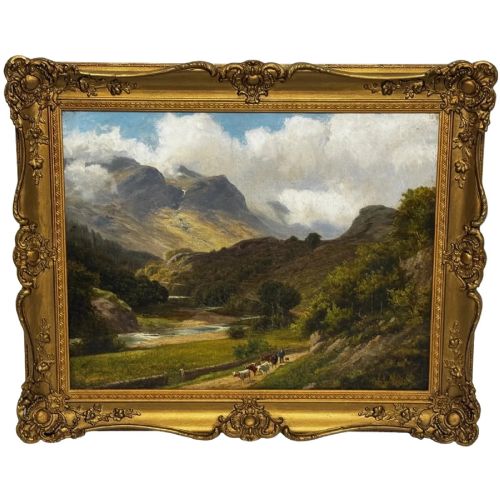
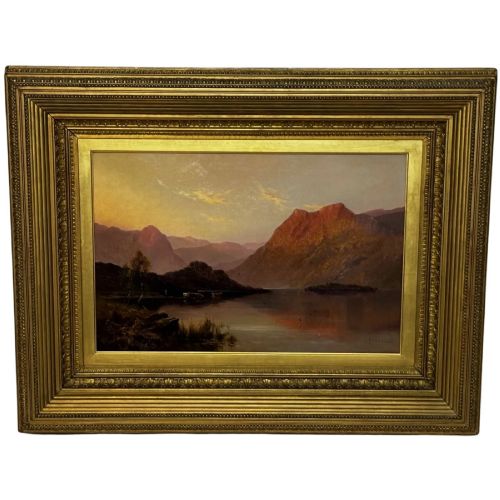
When you search for an antique mountain lake picture, you encounter framed fine art focused on dramatic topography, placid water, and expansive skies. These works capture specific European and British landscapes, from Scottish highlands to the Austrian Alps.
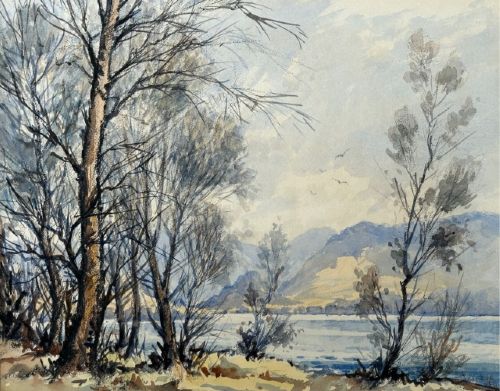
The versions you are most likely to meet on this page date from the nineteenth century through the early twentieth century. They arrive as oil paintings on canvas or panel, alongside framed watercolours and pen-and-ink drawings.
Many compositions pair snow-capped mountains with reflective lakes, sometimes featuring cattle, geese, or solitary figures near the shore. Artists recorded these scenes during the Victorian and Edwardian periods, working within established romantic and pastoral traditions.
How they were made
Painters applied oil paint or watercolour onto prepared canvas, paper, or panel to build depth in sky and water. Brushwork ranges from tight, detailed academic rendering to looser strokes characteristic of plein-air sketching.
Many of these works retain their period frames constructed from wood and moulded gesso, often finished in gold leaf or gilt paint. Glazing appears on works on paper, protecting delicate watercolours and drawings behind glass.
Canvas and gesso appear alongside watercolour and pen-and-ink across nineteenth-century and Edwardian landscape paintings.
What varies in quality
Quality rests upon the artist's ability to handle atmospheric perspective, capturing the heavy mist on distant peaks and the subtle play of light upon water. Stronger works command attention through confident brushwork and balanced compositional harmony.
The preservation of the paint surface and the originality of the frame dictate the integrity of the piece. Untouched canvas surfaces with stable pigment and period-appropriate giltwood frames elevate the standing of a painting.
Alfred Fontville de Breanski Jr·Frank Hider·Giulio Cecchini·John Douglas Perrett·Edward Horace Thompson·Alfred de Breanski·Benjamin Williams Leader·Gustave De Breanski·Percy Lancaster
The Antique Mountain Lake Picture Glossary
- Canvas
- A heavy woven fabric stretched across a wooden frame to serve as a support for oil paint. It provides a flexible yet durable surface favoured by nineteenth-century landscape artists.
- Gesso
- A plaster mixture applied to wood frames or canvas surfaces to prepare them for gilding or painting. It allows craftsmen to carve intricate decorative moulding.
- Giltwood
- Wood carved and coated with gold leaf or metallic gilt paint. This finish creates the bright, reflective borders common on Victorian picture frames.
- Watercolour
- A paint consisting of pigment suspended in a water-based solution, typically applied to paper. It produces translucent washes ideal for capturing pale mountain skies.
- Pastoral landscape
- An artistic genre depicting idealized rural scenery, often featuring gentle agriculture, livestock, or quiet lakes. These scenes evoke a calm harmony between humans and nature.
Antique Mountain Lake Picture: Frequently Asked Questions
How do I date an antique mountain lake picture?
Dating relies upon stylistic cues, costume details in any figures, and the construction methods of the stretcher and frame. Canvas types and written inscriptions on the reverse often provide further chronological markers.
Many nineteenth-century works carry signatures, dates, or artist biographies inscribed on the frame or stretcher bars by later owners or galleries.
Are these paintings executed on canvas or panel?
The selection includes oil paintings rendered on woven canvas as well as works on paper and card. Canvas supports dominate the larger framed oils.
Smaller studies occasionally utilise wooden panels or thick millboard as a rigid foundation for pigment.
Where were these landscape scenes usually painted?
Artists painted locations across the British Isles, including the Lake District and Scottish Highlands. Continental destinations such as the Austrian Alps and Italian lakes also appear frequently.
Painters travelled to these scenic regions to sketch en plein air before finishing large canvases in their studio spaces.
How should I hang and light an oil painting?
Hang oil paintings away from direct sunlight and steady heat sources to protect the canvas and pigment from drying out. A stable indoor climate prevents warping in both the stretcher and the frame.
Use dedicated picture lights with low heat emission to illuminate the canvas without risking damage to the delicate oil layers.