


Large Copper Jam Pot
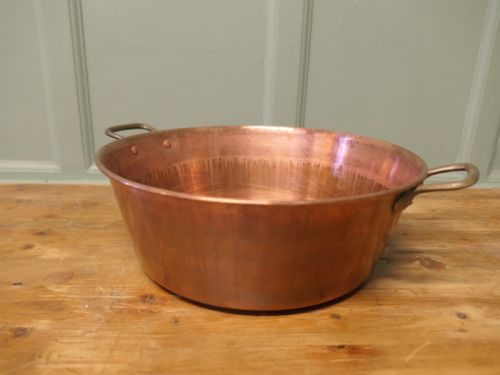
These large copper jam pot examples are heavy kitchen vessels shaped for preserving fruit over a hearth or range.
Large Copper Jam Pot
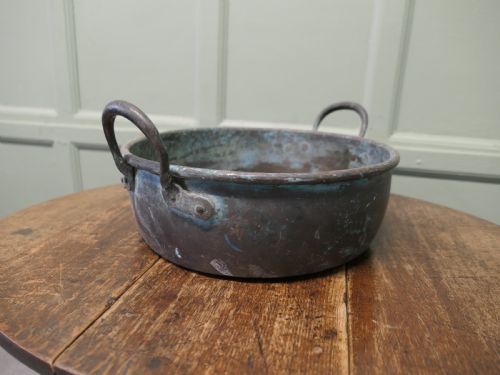
A large copper jam pot brings heavy domestic cookware into modern spaces as both a functional kitchen vessel and a decorative container. These pieces typically appear as preserving pans, bowls, basins, cauldrons, saucepans, and cream setting pans.
Most items belong to the nineteenth century, with examples dating from the George III and Victorian eras. They range from rustic farmhouse styles to double-handled pans and swinging iron handle cauldrons.
How they were made
Articles are forged primarily from copper, often combined with brass, tin, and wrought iron for handles and structural elements. Makers shaped the heavy metal sheets into deep vessels designed to withstand direct heat.
Handles and fittings show traditional blacksmithing methods, fastened securely to the heavy copper bodies with rivets or forged directly into swinging bails.
Materials recorded across the inventory include copper, brass, iron, wrought iron, and tin.
What varies in quality
Heavier metal gauge and substantial weight distinguish the finer specimens from lighter utility vessels. Thickness in the copper body ensures even heat distribution across the base and walls.
Hand-finished details, such as neatly turned rims, embossed brass elements, and robust wrought iron attachments, elevate the standard of manufacture.
Hodges and Sons·Liptons
The Large Copper Jam Pot Glossary
- Cauldron
- A large deep pot with a swing handle intended for suspension over an open fire. These heavy pieces usually include wrought iron fittings.
- Cream setting pan
- A shallow domestic vessel used in dairies for separating cream from milk. These items present wider diameters and gentler slopes.
- George III
- A historical period spanning the later eighteenth and early nineteenth centuries. Pieces from this era often display specific early hand-beaten characteristics.
- Victorian Country
- A stylistic classification reflecting robust nineteenth-century domestic utilitarian objects. These items prioritise sturdy construction over ornate decoration.
Large Copper Jam Pot: Frequently Asked Questions
How were these pans originally used?
These vessels sat directly on hearths or stoves to boil large quantities of fruit and sugar. The wide openings allowed moisture to evaporate quickly during preserving.
They also served general kitchen and dairy duties, including heating water and setting cream.
What is the difference between a pan and a cauldron?
Pans usually feature fixed side handles or double loops for lifting with two hands. They remain stable on flat surfaces.
Cauldrons incorporate a swinging wrought iron handle designed for hanging over an open fire. Their bases often round downwards.
How do I date an older copper piece?
Dating relies on construction methods, handle attachments, and stylistic markers recorded in the titles. George III examples point towards the transition into the nineteenth century.
Victorian pieces show distinct nineteenth-century manufacturing traits and heavier forged iron components.
Can I use these vessels for cooking today?
Many of these antique items retain their original metal construction and structural integrity. However, buyers often use them as planters, vessels, or decorative kitchenware.
Check the interior lining and metal condition before attempting any food preparation.
Where should I display a large copper pan?
Their substantial size and warm metallic tones suit hearth settings, floor placements, or large rustic tables. They function well as planters or storage basins.
Pairing them with iron or wooden furniture highlights their farmhouse origins.