
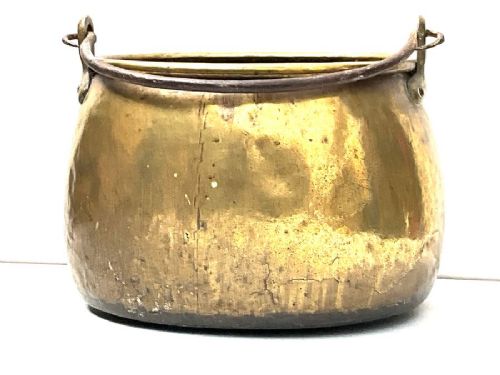


Antique Brass Handle Pan
These antique brass handle pan examples are robust vessels of copper, brass, and iron that bring practical utility and warmth to any hearth or kitchen.
Antique Brass Handle Pan
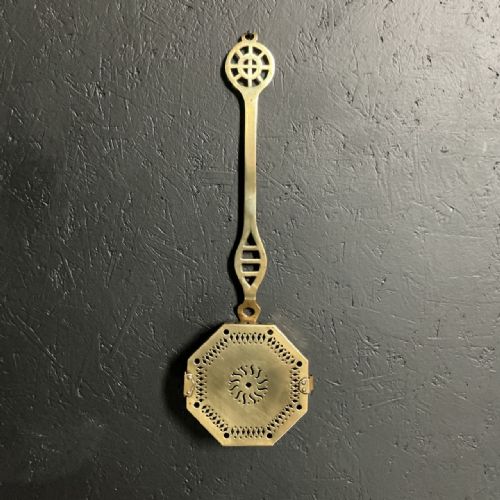
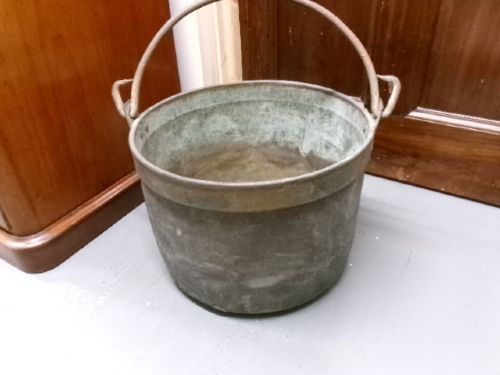
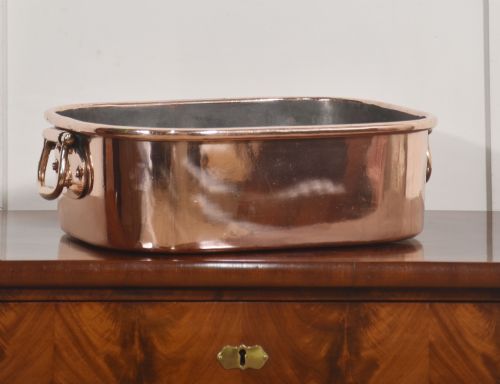
When you search for an antique brass handle pan, you encounter utility metalware spanning the Georgian, Victorian, and earlier periods. The selection here ranges from preserves pans and heavy saucepans to chestnut roasters and warming pans.
How they were made
The makers formed these vessels primarily from sheet copper and beaten brass, often integrating sturdy iron handles and wrought iron components for structural strength. Metalworkers utilised riveting and hammering techniques to join handles and assemble bodies.
Surface finishes include polished copper and mottled brass, whilst older items exhibit hand-engraved details on lids and handles. The combination of cast brass, bronze, and tin lining reflects the functional demands of kitchenware and fireside accessories.
Listings span from the seventeenth century through the Georgian and Victorian eras, utilising copper, brass, iron, and bronze.
What varies in quality
The distinction between standard utility items and finer examples lies in the weight of the metal and the presence of hand-finishing. Heavy gauge brass and thick copper indicate superior substance built to withstand heavy hearth use.
Design execution also separates pieces, visible in the proportion of the handles, the neatness of the riveting, and any engraved decoration. Superior specimens retain their original swing handles and structural integrity without excessive patching.
The Antique Brass Handle Pan Glossary
- Jam pan
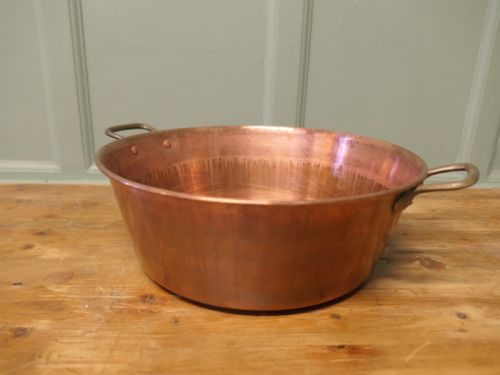
- A deep circular basin used for boiling fruit and sugar, frequently formed from heavy copper with secure side handles. These vessels needed to distribute heat evenly across open fires.
- Chestnut roaster
- A specialised perforated or solid lidded pan designed for roasting chestnuts over hot coals. They often feature hinged lids and long handles.
- Skillet
- A small cooking vessel raised on short legs or fitted with a long handle for use directly over hearth embers. Many incorporate iron and brass construction.
- Preserving pan
- A wide-rimmed vessel designed for fruit preservation and confectionery, usually constructed from heavy copper or brass to prevent burning.
Antique Brass Handle Pan: Frequently Asked Questions
How were these pans used?
These vessels served diverse roles in the historic kitchen, from boiling preserves and heating milk to roasting chestnuts over open hearths. Warming pans were specifically filled with hot coals to warm beds before sleeping.
Heavier pans managed daily cooking tasks on stoves and fires, whilst smaller vessels functioned as saucepans or chambersticks depending on their specific form.
How do I date an antique pan?
Dating relies on observing construction methods, handle attachments, and material choices. Earlier pieces from the seventeenth and eighteenth centuries often feature hand-beaten surfaces, engraved handles, and iron fittings.
Victorian examples frequently display heavier machine-rolled sheets, uniform riveting, and polished copper finishes that reflect industrial production methods.
How do I clean an antique brass pan?
Maintenance depends on whether you prefer a bright polished finish or a patinated surface showing its age. Gentle cleaning with mild soap and warm water removes dust without disturbing historic surfaces.
Avoid harsh abrasive compounds that strip away the natural colour and historical wear accumulated over centuries of use.
Can I still cook with them?
While many copper and brass pans remain structurally sound, original pieces often lack modern food-safe linings or have worn tin interiors. Using them for display or decorative hearth storage is generally recommended.
If intended for culinary use, professional re-tinning of the interior surface is necessary to ensure safe food preparation.