


Victorian Copper Jam Pan
These heavy copper pans combine honest 19th-century utility with warm metallic tones that anchor a modern country kitchen.
Victorian Copper Jam Pan
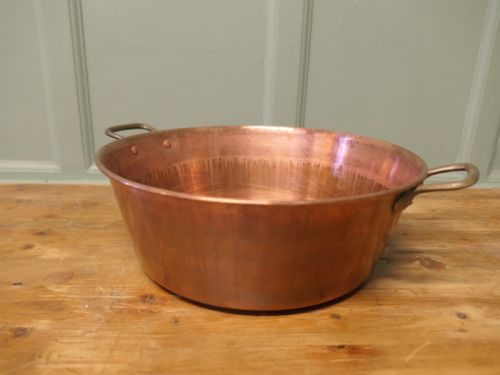
A victorian copper jam pan is a heavy, open vessel designed for boiling fruit and sugar over an open fire or range. These pieces sit comfortably within rural and country kitchen traditions, serving as both cookware and decorative bowls.
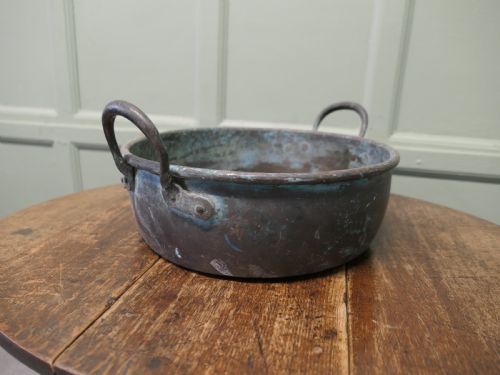
The selections here span standard preserving vessels alongside cauldrons, cream setting pans, and twin-handled bowls. Most examples date from the 19th century, carrying the dents and marks of actual domestic use.
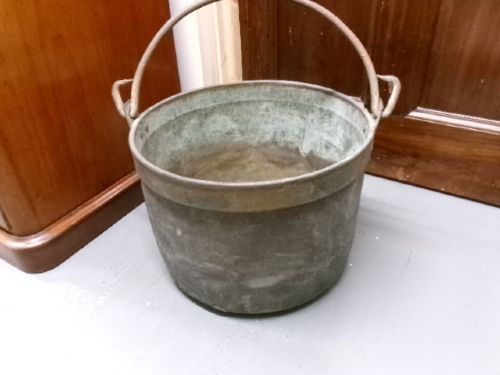
Forms vary from wide, straight-sided basins to deep vessels fitted with iron or brass swing handles. Buyers often repurpose them as planters or fireside accessories once their kitchen days are done.
Construction and Materials
Makers formed these vessels primarily from heavy sheet copper, often beating the metal by hand to achieve the required depth and rigidity. Rivets secure the handles, typically fashioned from iron, brass, or wrought iron, ensuring strength under heavy loads.
Many examples feature rolled rims for structural integrity, whilst surviving marks reveal the hand-finished nature of each piece. The combination of warm copper and dark iron creates the distinct utilitarian aesthetic found in these kitchenwares.
Listings feature copper combined with brass, iron, and wrought iron across the Victorian period.
Evaluating Quality
Quality rests in the thickness of the metal sheet and the integrity of the riveted joints. Thicker copper resists warping under heat, maintaining a stable base for hearth or stove use.
The proportion of the handles and the crispness of the hand-beating distinguish standard utility vessels from finer workshop productions. Heavy brass or wrought iron mounts indicate superior original specification.
Hodges & Sons
The Victorian Copper Jam Pan Glossary
- Preserving pan
- A wide, open metal vessel specifically shaped for boiling fruit preserves and jams evenly. The shallow depth allows steam to escape efficiently during rapid boiling.
- Cauldron
- A deep cooking vessel with a rounded base, usually suspended or fitted with a swing handle. These pieces were designed for open hearth cooking.
- Swing handle
- A movable arched handle attached to opposing sides of a pan by fixed lugs. It drops flat against the vessel when not in use.
- Cream setting pan
- A wide, shallow basin utilised in dairies to allow cream to rise to the top of milk before skimming. These typically feature broad rims for ease of lifting.
- Wrought iron
- Iron heated and hammered into shape by hand, resulting in a fibrous texture and high strength. It appears frequently on these pieces for heavy-duty handles.
Victorian Copper Jam Pan: Frequently Asked Questions
What were copper jam pans used for?
These vessels were built for boiling large quantities of fruit and sugar to make preserves over an open fire or stove. Copper conducts heat evenly, preventing sugar from burning at the base during long simmering sessions.
Over time, many of these pans moved from active kitchens into pantries and dining spaces. Today, people use them around the home for holding logs by the fireplace or as large planters.
How do I date a 19th century pan?
Dating relies on observing construction details such as hand-cut dovetail seams, heavy copper gauge, and the style of the riveted iron or brass handles. Earlier examples often display more irregular hand-beating marks across the body.
Makers' stamps, where present, offer clues to specific workshops active during the Victorian period. Comparing the weight and handle attachment style helps place a piece within the 19th century.
Can I still cook with antique copper?
Many antique pans were originally lined with tin to prevent food from reacting with the copper metal. This lining wears away with centuries of scrubbing and use.
If you plan to cook with a vintage pan, check the interior condition carefully. Most buyers today prefer to display them unlined as decorative objects.
How should I clean copper pans?
Regular dusting and gentle washing with warm soapy water keep the metal clean without removing the natural patina. Avoid harsh abrasive pads that scratch the soft copper surface.
Specialist metal cleaners can restore a bright finish if you prefer a polished look. Many collectors choose to leave the dark, aged coloration intact.