


Hand Hammered Copper Basin
These hand hammered copper basin examples bring honest nineteenth-century utility indoors, offering rich warmth and heavy metalwork that collectors prize for everyday display.
Hand Hammered Copper Basin
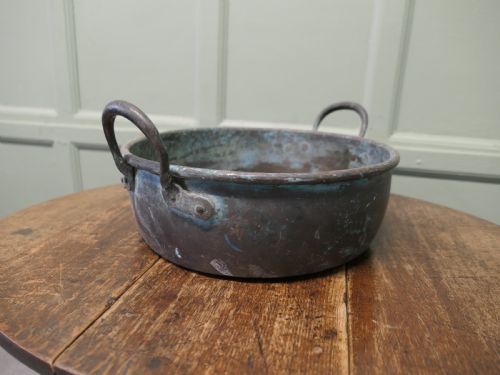
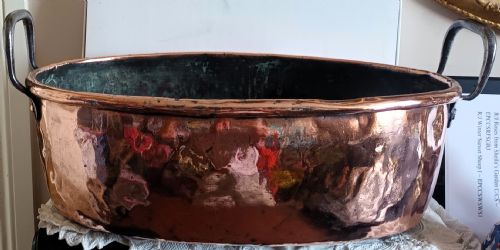
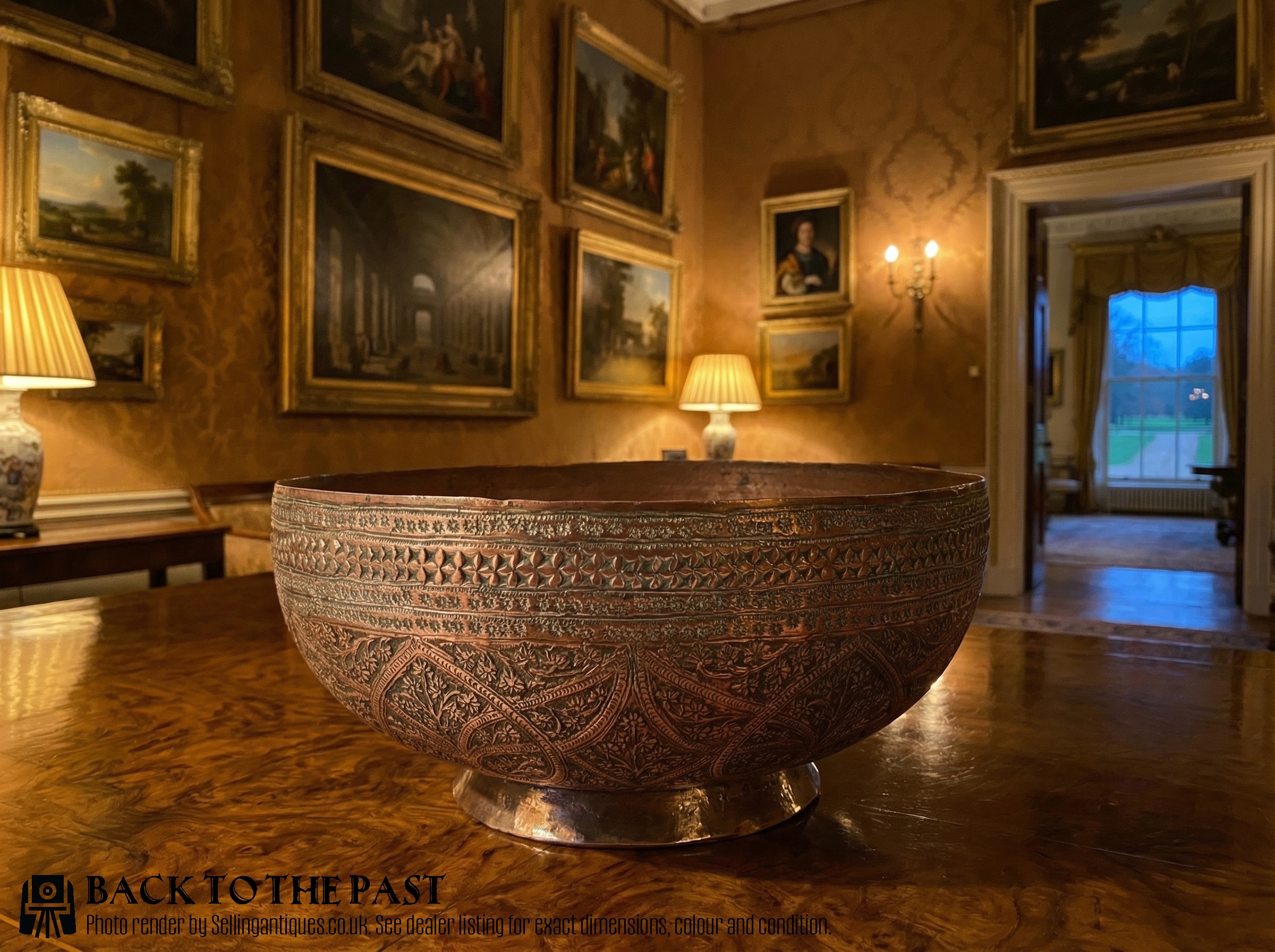
When you search for a hand hammered copper basin, you are looking at nineteenth-century vessels designed for practical kitchen, dairy, or horticultural tasks. These utilitarian objects include large preserving pans, cream setting pans, cooking vessels, and jardiniere planters shaped by hand.
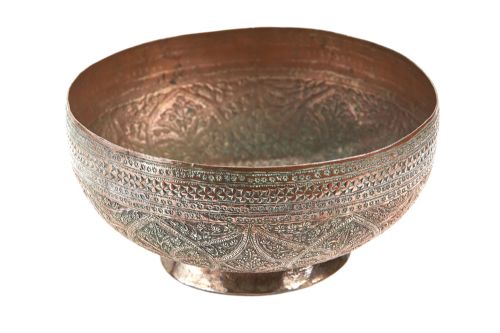
The most common versions met on this page are nineteenth-century English cream setting pans and large preserving bowls. Pieces span styles from Georgian and Victorian country to Arts and Crafts and Anglo-Indian origins, reflecting both domestic use and decorative metalwork.
How they were made
The construction relies fundamentally on heavy copper, shaped and joined with iron, wrought iron, brass, or tin fittings. Artisans beat the metal by hand to form deep bowls, cooking pots, and vessels designed to withstand daily heat and labour.
Surface texture comes directly from the hammering process, leaving distinct marks across the copper body. Certain pieces feature embossed brass elements or sit upon dedicated stands, combining functional metalwork with decorative craft.
Hand Hammered Copper Basin Retail Price Guide 2026
Typical asking prices for hand hammered copper basin among the pieces listed under this phrase on Sellingantiques today, from the lower quarter to the upper quarter. They describe what is for sale here now, not the wider market.
Current listings feature nineteenth-century copper, iron, brass, and tin across Georgian, Victorian, Arts and Crafts, and Anglo-Indian styles.
What varies in quality
Quality rests upon the weight of the metal and the integrity of the hand-hammered form. Heavier copper preserving pans and robust cooking vessels show a substantial gauge that retains its structural strength far better than lighter utilitarian wares.
The finesse of the surface finish and the proportion of the vessel separate standard kitchen utility from finer decorative items. Pieces with integrated brass detailing or clean Arts and Crafts lines demonstrate a higher degree of intentional design.
The Hand Hammered Copper Basin Glossary
- Cream setting pan
- A wide, shallow basin historically used in dairies to allow cream to rise to the surface of milk. These heavy copper vessels are now sought after for display.
- Preserving pan
- A large, deep cooking vessel designed for boiling fruit and sugar, typically fitted with a strong handle. They show heavy hammering marks from nineteenth-century workshop production.
- Jardiniere
- An ornamental pot or stand for holding plants and flowers. In copper and brass, these items bring warm metallic tones into interior spaces.
Hand Hammered Copper Basin: Frequently Asked Questions
What were copper basins used for?
These vessels served demanding practical roles in nineteenth-century kitchens and dairies. Preserving pans boiled fruit and sugar, while cream setting pans held milk.
Other forms acted as cooking pots or held plants as jardinieres. Their sturdy metal construction was built entirely for daily labour.
How do I date a copper basin?
Dating relies on observing construction methods, handle attachments, and stylistic markers recorded in nineteenth-century examples. Georgian and Victorian pieces often display distinct hand-beating patterns.
Makers utilised thick gauge copper before industrial rolling processes standardised production. Comparing weight and rim formation helps distinguish earlier utilitarian forms.
Are these basins safe for cooking?
Most antique vessels were manufactured with internal tin linings to prevent direct contact between food and copper. Over long periods of use, this lining can wear thin.
Collectors generally treat these nineteenth-century items as decorative objects rather than active cookware. Assessing the interior condition determines whether a piece remains suitable for culinary tasks.
How should I clean antique copper?
Maintenance depends entirely on whether you prefer a bright polished shine or an aged patina. Gentle cleaning preserves the historic character and the texture of the hand hammering.
Harsh chemical abrasives remove the subtle surface oxidation built up over centuries. Regular dusting and occasional soft wiping keep the metal stable in modern interiors.
Where were these copper items made?
The pieces originate from various domestic and international workshops spanning the nineteenth century. English Georgian and Victorian country pieces sit alongside continental European and Indian examples.
Regional metalworking traditions dictated the specific shape of the handles, rims, and overall vessel proportions. This geographical variety adds distinct character to each individual bowl.