
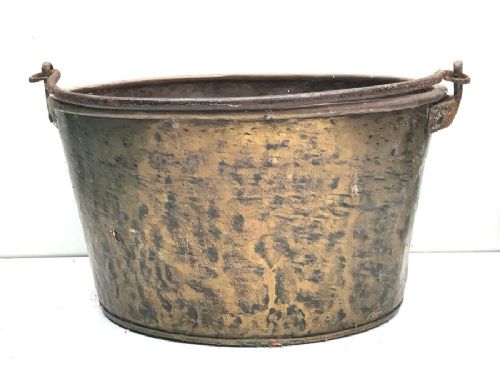
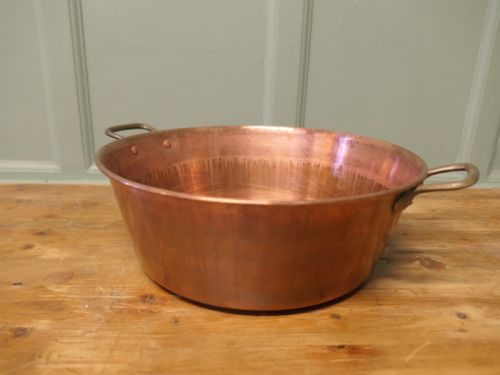
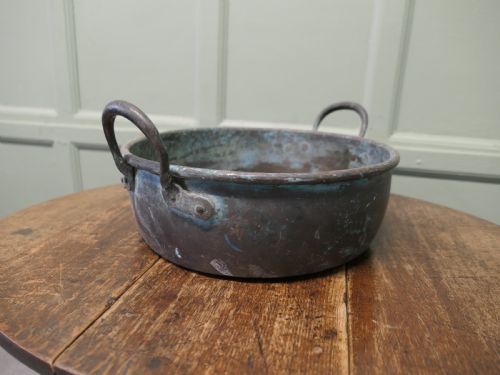
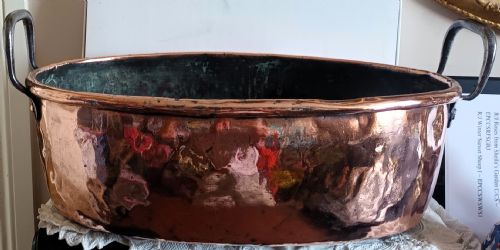


Copper Jam Basin
A copper jam basin is a heavy kitchen vessel designed for fruit preserving, prized for its ability to conduct heat evenly across the base.
Copper Jam Basin
A copper jam basin is a robust kitchen vessel intended for heating fruit and sugar over an open fire or stove. When you search for a copper jam basin, you encounter deep pans and preserving vessels originating from the Georgian, Victorian, and later nineteenth-century periods. These items served a practical function in domestic dairies and large estate kitchens before becoming decorative interior objects.
The pieces listed here appear primarily as large preserving pans, cream setting pans, and deep bowls with reinforced rims. Most examples date from the nineteenth century or the Georgian era, displaying utilitarian forms intended for heavy daily service. You also find specialised pieces like duck roasting pans and double-handled cooking vessels alongside standard preserving pans.
Materials and construction
The primary material across these listings is heavy sheet copper, chosen for its rapid and even thermal conductivity during preserving. Makers shaped the metal manually, often joining seams with meticulous riveting or dovetailing to withstand intense heat and heavy stirring. Iron and wrought iron frequently appear as handles or reinforcement bands, providing structural rigidity to large vessels.
Some examples incorporate brass for handles or decorative elements, while bronze and tin line the interiors of specific cooking dishes. The combination of beaten copper bodies with iron handles reflects standard metalworking techniques of the eighteenth and nineteenth centuries. Each vessel displays the hammer marks and surface textures characteristic of manual fabrication.
Some historic jam pans bear the faint scars of centuries-old wooden spoons stirring vigorously against their copper walls.
Judging quality in copper cookware
Quality in a copper jam basin rests upon the thickness of the metal plate and the rigidity of the rim. Heavier gauge copper resists warping under high heat and maintains structural integrity through decades of use. Superior examples show substantial weight and precise forming at the edges rather than thin, pliable sheeting.
The method of handle attachment and the quality of the ironwork also distinguish standard utilitarian items from finer pieces. Well-secured handles fastened with robust rivets indicate careful workshop production. The presence of makers' marks or specific workshop stamps further elevates the standing of an individual vessel.
Hodges & Sons
The Copper Jam Basin Glossary
- Jam pan
- A deep metal vessel with a wide opening designed specifically for boiling fruit and sugar. The wide surface area allows excess moisture to evaporate quickly during the preserving process.
- Cream setting pan
- A wide, shallow bowl used historically in dairies to allow cream to rise to the top of milk. These pans feature generous diameters and flat bases.
- Dovetailed seam
- A method of joining sheet metal where interlocking fingers are hammered together and sealed. This technique provides exceptional strength along the walls of heavy cooking vessels.
- Wrought iron
- Iron that has been heated and worked with tools by a blacksmith. It is tougher and more fibrous than cast iron, making it ideal for sturdy handles.
Copper Jam Basin: Frequently Asked Questions
What was a copper jam basin used for?
These vessels were employed primarily for boiling fruit and sugar to make preserves, jams, and jellies in domestic kitchens. The conductive properties of copper prevented burning by distributing heat uniformly across the base.
They also functioned in rural households for various heavy-duty cooking tasks over open hearths or early stoves, requiring durable materials that could withstand daily use.
How do I clean a copper jam basin?
Maintenance typically involves using traditional metal polishes or a mixture of salt and acid to remove oxidation and restore the warm metallic glow. Harsh abrasives should be avoided to preserve the historic surface texture.
Many collectors prefer to leave a natural aged patina on decorative pieces rather than polishing them to a bright finish.
How can I tell a Georgian pan from a Victorian one?
Georgian examples often display hand-beaten surfaces with distinct joinery techniques, reflecting earlier artisan production methods. The weight and specific style of the iron handles can also offer clues to the manufacturing date.
Victorian pieces frequently show more standardised manufacturing processes while retaining heavy copper gauges and robust riveted construction.
Can I still use these pans for cooking?
While historic copper pans were designed for food preparation, vintage vessels often require interior retinning before modern culinary use. Many buyers choose to display them as decorative items or plant containers instead.
Evaluating the condition of the interior metal surface is essential if you intend to prepare food in antique cookware.