

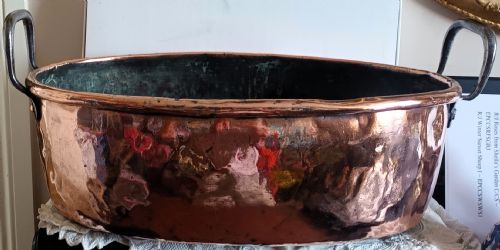


Large Copper Preserving Pan
These large copper preserving pan examples are heavy kitchen vessels shaped for fruit and dairy, bringing warmth and utility to modern rooms.
Large Copper Preserving Pan
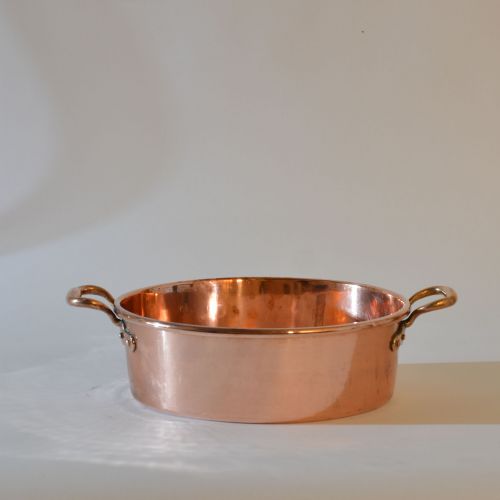
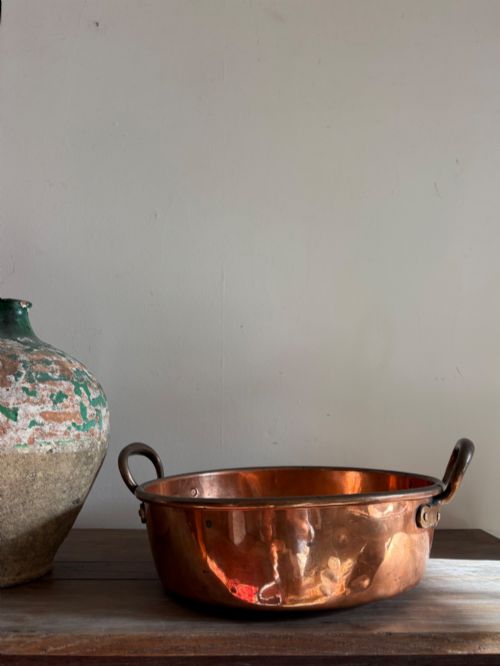
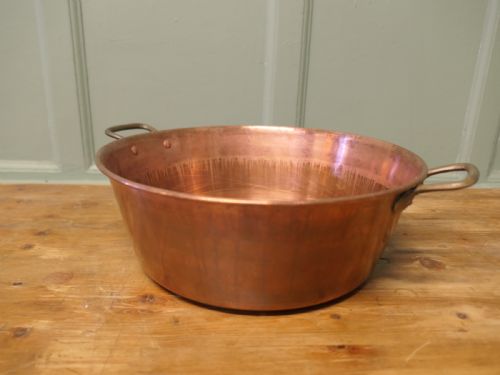
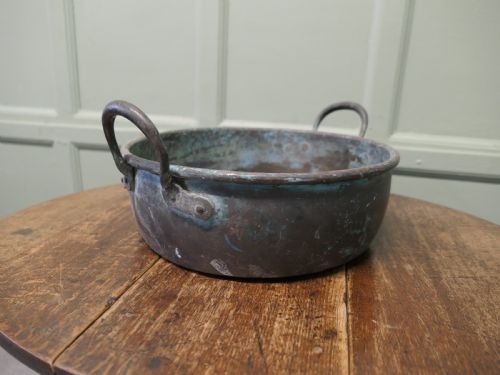
When you search for a large copper preserving pan, you are looking at substantial kitchen vessels designed for boiling fruit with sugar or setting cream. These pieces span the Georgian and Victorian eras, taking the form of deep bowls and basins intended for heavy domestic work.
The version you are most likely to meet on this page is a Victorian or George III double-handled pan in heavy copper. They arrive from English country houses and farmhouses, often showing the generous proportions needed for large-scale domestic cookery.
Beyond standard preserve pans, the selection includes cream setting pans and deep cooking vessels that share the same robust metalwork. Each piece carries the marks of its kitchen origins, whether handled with wrought iron or finished with simple brass mounts.
How they were made
These vessels rely on heavy sheet copper hammered and formed into deep bowls and basins. The metal distributes heat evenly, which was essential for boiling preserves without scorching the fruit.
Handles in iron, wrought iron, or brass are secured firmly to the copper body to bear the weight of heavy contents. Tin linings were often applied to the interior surfaces to prevent chemical reactions with acidic fruits and dairy.
Large Copper Preserving Pan Retail Price Guide 2026
Typical asking prices for large copper preserving pan among the pieces listed under this phrase on Sellingantiques today, from the lower quarter to the upper quarter. They describe what is for sale here now, not the wider market.
What varies in quality
Quality in these vessels rests upon the thickness of the copper sheet and the integrity of the original construction. Heavier gauge metal maintains its shape better under heat and decades of kitchen use.
Finely finished handle attachments and crisp proportions separate workshop pieces meant for large households from standard utility wares. The distribution of weight and the smoothness of the hammered bowl indicate the skill of the metalworker.
Hodges & Sons
The Large Copper Preserving Pan Glossary
- Preserving pan
- A wide, deep bowl designed specifically for boiling fruit jam and preserves. Its shape encourages rapid evaporation of moisture.
- Cream setting pan
- A shallow vessel utilised in dairies to allow cream to rise to the surface of milk. These pieces offer a wider brim than standard jam pans.
- Wrought iron
- Tough, malleable iron worked by hand into handles and mounts. It appears frequently on earlier kitchen vessels for its strength.
- George III
- The period from seventeen sixty to eighteen twenty, marked by robust domestic metalwork and clean proportions. Pieces from this time show distinct hand-hammered surfaces.
- Victorian Country
- A style reflecting nineteenth-century rural utility and heavy domestic craftsmanship. Items from this tradition prioritise function and solid materials.
Large Copper Preserving Pan: Frequently Asked Questions
What were large copper preserving pans used for?
These vessels were built for boiling large batches of fruit with sugar to make jam and preserves. Their wide mouths allowed steam to escape efficiently while the metal spread heat evenly across the base.
Beyond jam making, certain variants served as cream setting pans in dairies. Their substantial capacity made them central tools in large nineteenth-century kitchens.
How do I date a copper preserving pan?
Dating relies on observing construction methods, handle materials, and the style of the hammered basin. Georgian and George III pieces often display heavier hand-formed bodies, while Victorian examples frequently feature robust iron or brass handles.
Reference to periods like the nineteenth century helps anchor the piece, though kitchen wares often evolved slowly in design. Examining the joinery and overall heft provides the clearest indication of age.
Are these copper pans safe for modern cooking?
Many antique pans were originally lined with tin to separate the copper from acidic ingredients like fruit. Over generations of use and cleaning, this interior lining often wears thin or disappears entirely.
Buyers intending to cook should check the condition of the interior surface. Many collectors prefer to display them as decorative objects in modern kitchens.
How should I clean a vintage copper pan?
Cleaning copper depends on whether you wish to maintain a bright polished finish or preserve a dark historic patina. Traditional copper cleaners remove tarnish quickly, though many prefer gentle soapy water to protect the aged surface.
Avoid abrasive scourers that can scratch the soft metal and alter the texture left by nineteenth-century hammers. Regular dusting and occasional gentle wiping keep the metal stable.