
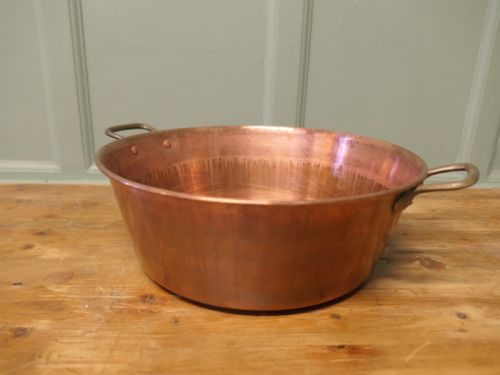
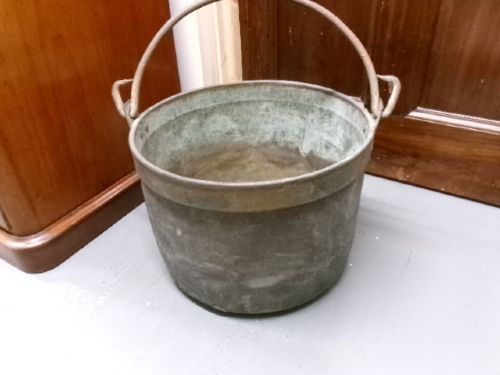
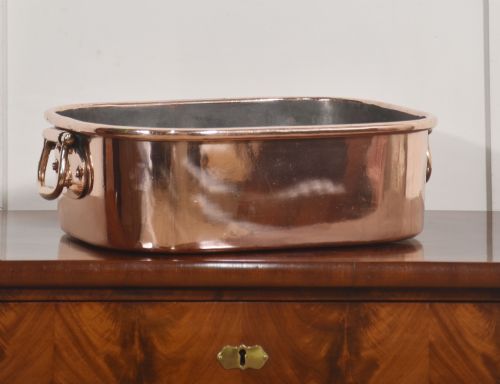


Brass Handle Copper Pan
These brass handle copper pan examples bring genuine warmth and enduring utility to any interior.
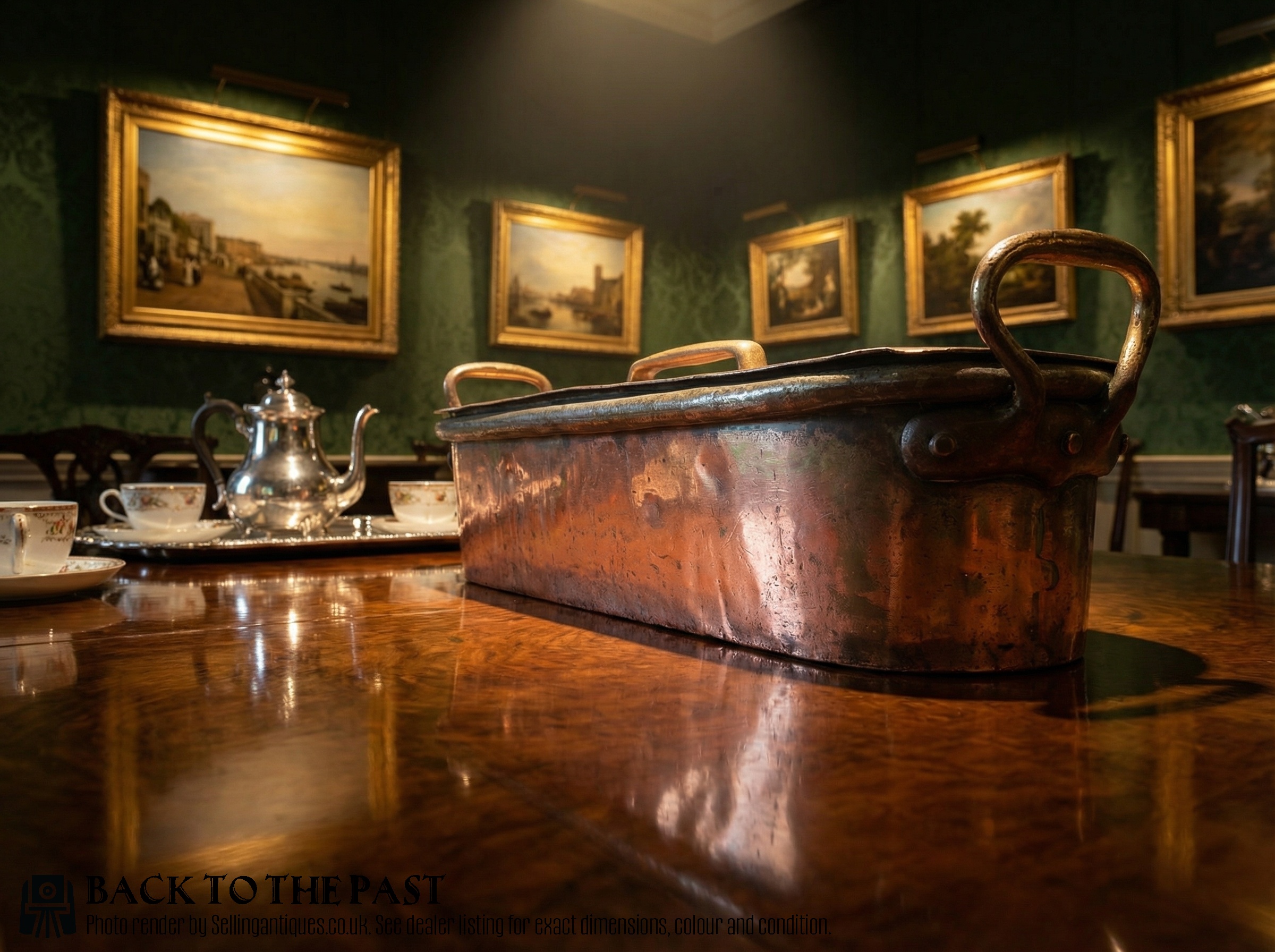
Brass Handle Copper Pan
A brass handle copper pan search uncovers heavy kitchen metalware from the Georgian, Victorian, and Arts and Crafts periods, designed for serious daily use over open hearths and stoves. These vessels range from fish kettles and duck roasting pans to jam preserving pans and swing-handled cauldrons, each bearing the marks of traditional domestic labour.
The version a buyer meets most often on this page is the nineteenth-century preserving pan or jam pan, usually formed with riveted handles of cast brass or iron. They appear alongside rarer forms such as cream setting pans, warming pans, and breakfast collections, reflecting the varied needs of historic kitchens.
Originating predominantly from English workshops, these utensils combine the thermal conductivity of copper with robust structural fittings in brass, bronze, and iron. Collectors and home cooks alike prize them for their rich patination and direct connection to nineteenth-century culinary traditions.
How they were made
The body of each vessel relies on beaten or sheet copper, chosen for its ability to distribute heat evenly across the base and sides. Workshops shaped these metal sheets by hand, often joining seams with traditional riveting techniques that remain visible on the interior and exterior.
Handles and fittings utilise cast brass, iron, or bronze, securely attached with heavy rivets to withstand the weight of boiling preserves or heavy fish. Tin linings frequently coat the interior surfaces of cooking vessels to prevent direct contact between food and reactive copper.
Brass Handle Copper Pan Retail Price Guide 2026
Typical asking prices for brass handle copper pan among the pieces listed under this phrase on Sellingantiques today, from the lower quarter to the upper quarter. They describe what is for sale here now, not the wider market.
Duck roasting pans remind us that historic kitchenware had to accommodate whole waterfowl with absolute dignity.
What varies in quality
Substance and gauge set the finer examples apart from lighter domestic wares, with thicker copper walls offering superior durability and thermal performance. The handling of the metal, from the smoothness of the hammered surface to the proportion of the brass mounts, dictates the visual harmony of the piece.
The integrity of the original construction matters deeply, particularly the weight of the cast brass handles and the neatness of the riveting. Pieces retaining their early surface patination and uncompromised structural form stand firmly at the upper end of the range.
The Brass Handle Copper Pan Glossary
- Preserving pan
- A wide, open vessel designed for boiling fruit and sugar, typically featuring a rounded base and sturdy side handles for lifting.
- Fish kettle
- An elongated, oblong cooking vessel equipped with a lid and internal draining rack, intended for poaching whole fish.
- Cauldron
- A deep, round pot with a swing handle, traditionally hung over an open hearth or set upon feet near the fire.
- Patina
- The natural surface oxidation and mellow sheen acquired by copper and brass over centuries of handling and exposure to air.
- Jam pan
- A specialised preserving vessel with wide proportions to encourage rapid evaporation during fruit jam production.
Brass Handle Copper Pan: Frequently Asked Questions
Can I still cook with a vintage copper pan?
Many of these vessels retain their structural integrity and thermal properties, making them suitable for use if properly maintained. Historic pieces intended for food preparation generally require an intact interior tin lining.
Modern cooks often use them for preserving or presentation, taking care to respect the age and historical nature of the metal.
How do I clean and polish copper safely?
Routine maintenance involves gentle washing with warm soapy water and thorough drying to prevent water spots. Traditional copper cleaners or lemon and salt pastes restore brightness, though many collectors prefer leaving a mellow, aged patina.
Harsh abrasives should be avoided to protect the historic surface texture and prevent thinning of the metal.
What is the difference between a jam pan and a preserving pan?
These terms often describe the same wide, open vessel utilised for boiling high-sugar mixtures that require constant stirring and rapid evaporation. Preserving pans sometimes encompass a broader range of widths and handle configurations.
Both forms prioritize a shallow depth and sturdy brass fittings to safely manage heavy, bubbling contents.
How can I tell a Victorian pan from a Georgian one?
Georgian examples often display hand-beaten characteristics and specific handle attachments tied to eighteenth-century workshop practices. Victorian pieces frequently show the results of early industrial standardisation while retaining hand-riveted brass mounts.
Comparing the weight, handle shape, and construction methods helps clarify the likely period of manufacture.