


Large Copper Preserve Basin
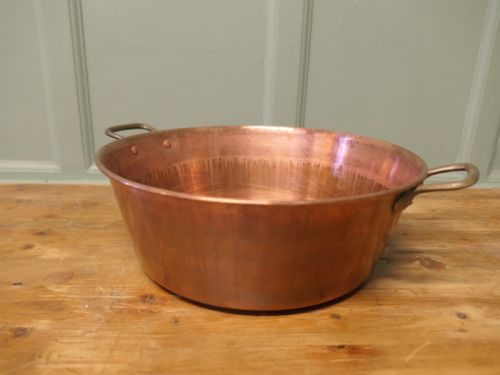
These large copper preserve basin examples are heavy kitchen vessels designed for boiling fruit and sugar over an open fire.
Large Copper Preserve Basin
A large copper preserve basin is a deep round container built for domestic and farmhouse kitchen use during the Georgian and Victorian eras. These items appear across nineteenth-century periods, alongside specific George III examples and Victorian country styles.
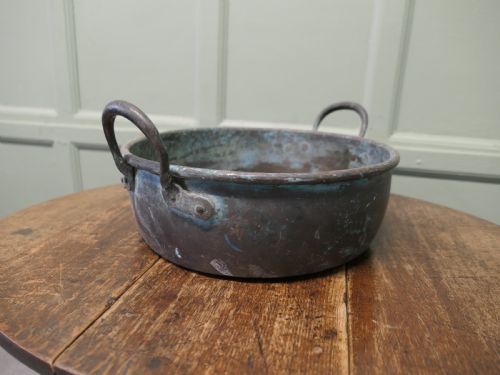
Most pieces on this page take the form of heavy jam pans, cream setting pans, or deep cooking vessels. They are found with single handles, double handles, or wrought iron additions, reflecting their practical working origins.
Materials and Construction
Makers formed these basins using hammered copper sheets, often combining brass or iron for handles and rims. The metalwork relies on robust construction methods suited to heavy culinary labour.
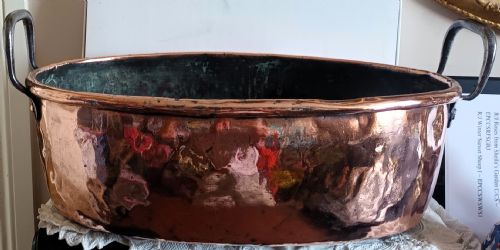
Surface textures show the hand-beaten marks of nineteenth-century metalworkers, maintaining structural integrity across large cooking pots and bowls.
Some nineteenth-century cooks likely stirred their sticky jam while keeping one eye on the dairy cream settling nearby.
Judging Quality and Craftsmanship
Quality rests in the thickness of the metal plate and the clean sweep of the basin wall. Superior pieces maintain an even gauge of copper from base to rim without excessive thinning.
The finish of the handles and the integration of iron or brass mounts distinguish standard kitchenware from finer workshop productions of the period.
Hodges & Sons
The Large Copper Preserve Basin Glossary
- Preserving pan
- A wide, deep vessel designed for boiling fruit with sugar to make jams and preserves. The broad top allows rapid evaporation of moisture.
- Cream setting pan
- A shallow or wide pan utilised in dairies for holding milk while cream rises to the surface. These pieces often feature specific spout or rim formations.
- Wrought iron
- Iron beaten into shape by hand, frequently utilised for the sturdy handles attached to heavy copper cookware. It provides a contrasting dark texture against the warm metal.
- Georgian
- The architectural and decorative period spanning the reigns of the first four Georges, noted here in George III examples. Items from this era show specific early manufacturing traits.
Large Copper Preserve Basin: Frequently Asked Questions
What were large copper preserve basin items used for?
These vessels were built for boiling large batches of fruit and sugar over heat to produce jams and preserves. Their wide mouths allowed steam to escape quickly during the boiling process.
They also served general culinary and dairy functions in large country kitchens, including cream setting and heavy cooking tasks.
How do I date a large copper preserve basin?
Dating relies on observing construction details such as hand-beaten marks, dovetail seams, and the style of the attached handles. Georgian and Victorian pieces show distinct shifts in metal thickness and form.
Comparing the rim and base construction against known period styles helps narrow the decade of manufacture.
Are these pans safe for modern cooking?
Many antique vessels were lined with tin to prevent copper from reacting with acidic foods like fruit. Buyers intending to cook should check the interior surface condition carefully.
Unlined copper requires careful maintenance and is often displayed as decorative kitchenware rather than used for daily meals.
How should I clean a copper preserve basin?
Maintenance involves gentle cleaning with traditional metal polishes or a mixture of salt and acid to remove oxidation. Harsh abrasives will scratch the soft metal surface.
Many collectors prefer to leave a natural aged patina rather than polishing the copper to a bright shine.