


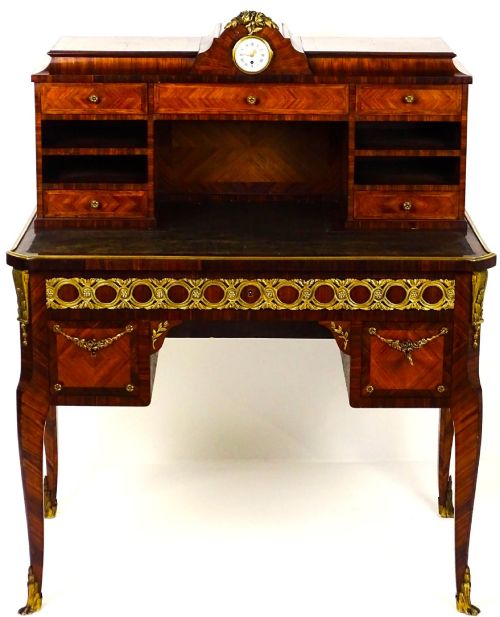
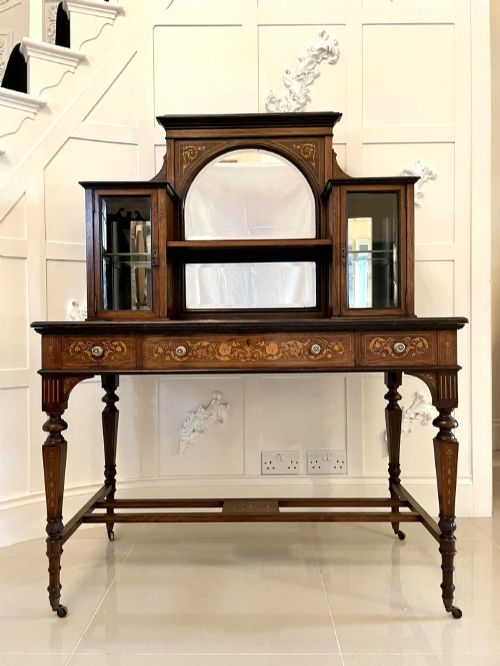
Ladies Writing Bureau
These compact ladies writing bureau items offer private writing spaces and refined small furniture forms suited to period home interiors.
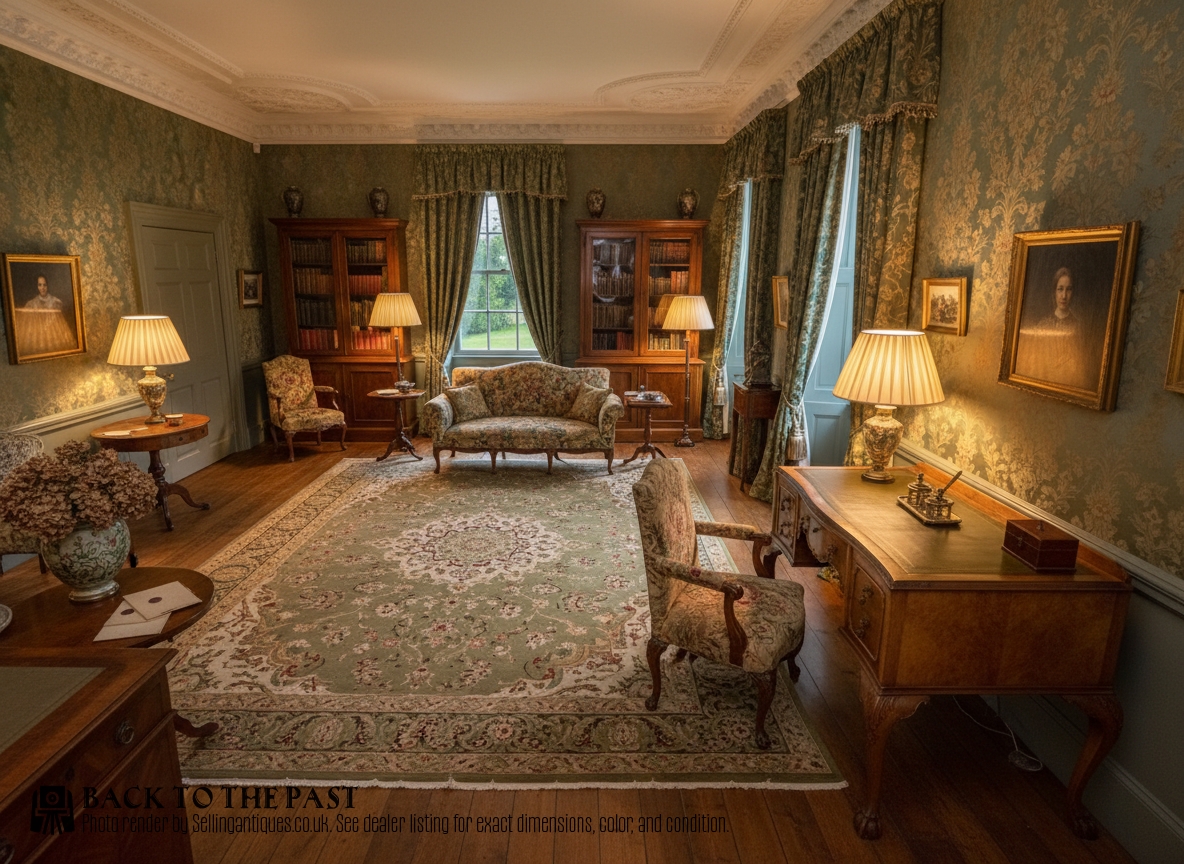
Ladies Writing Bureau
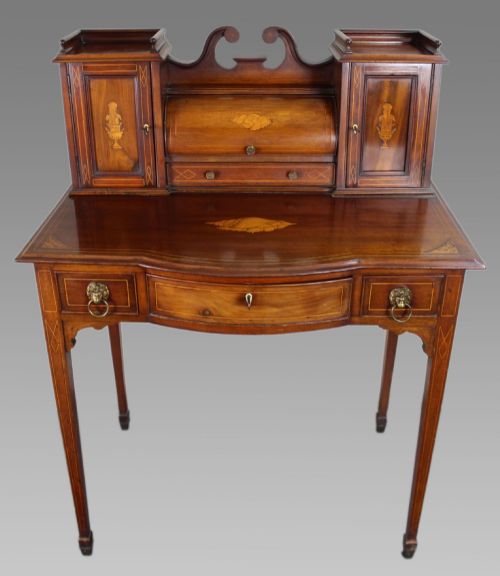
A ladies writing bureau brings together compact writing compartments, drop-front flaps, and fitted interiors designed for personal correspondence. The pieces appearing here span the nineteenth century, the Edwardian period, and early twentieth-century revivals.
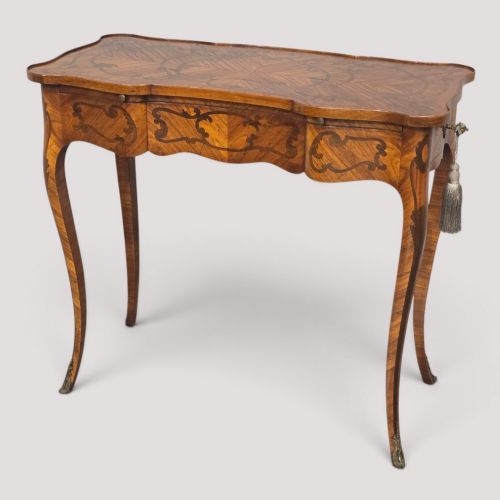
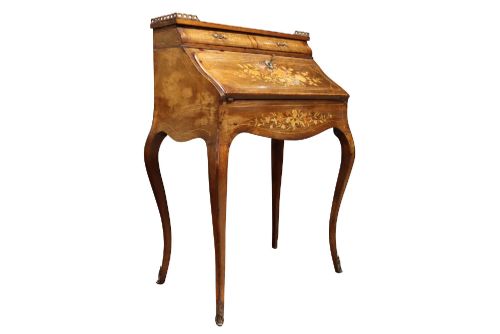
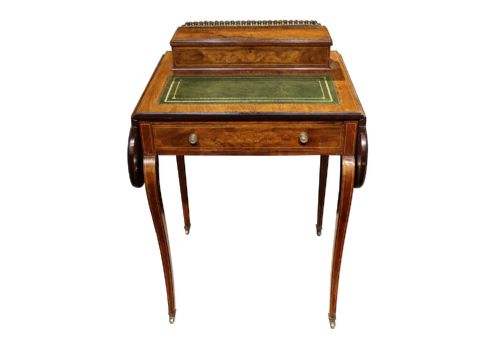
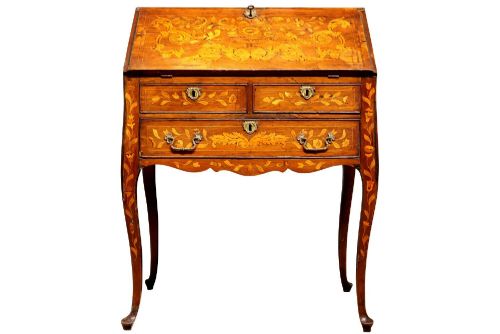
Forms range from fall-front desks and bureau de dame examples to bonheur-du-jour cabinets and kidney-shaped writing tables. Buyers encounter English mahogany and walnut designs alongside French influences including Louis XV revival pieces.
Makers and retailers from these eras produced specialised writing furniture tailored for boudoirs and drawing rooms. The selection prioritizes smaller proportions, detailed marquetry, and integrated storage compartments.
How They Were Made
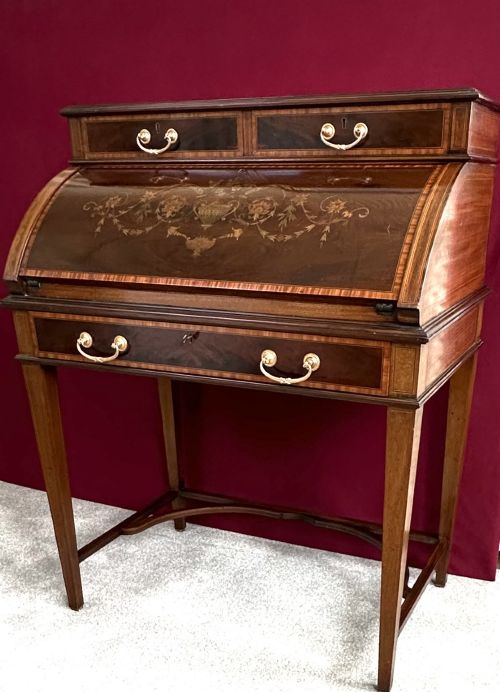
Construction relies upon timbers such as mahogany, walnut, satinwood, kingwood, rosewood, and amboyna, often enhanced with marquetry and parquetry inlays. Cabinetmakers shaped carcasses to support curved writing surfaces and cylinder tops.
Mounts in ormolu and brass alongside leather writing inserts complete the functional design of these desks. Hand-painted decoration and porcelain plaques appear on specific Edwardian and French pieces.
Listings feature periods spanning the eighteenth century through the Edwardian era, incorporating mahogany, satinwood, and ormolu mounts.
What Varies in Quality
The degree of refinement rests in the choice of timber figuring, the precision of inlaid veneers, and the execution of brass or ormolu mounts. Workshops known for high production standards integrated superior interior fittings and structurally sound cabinetwork.
Proportions and balance distinguish standard commercial pieces from finer cabinetmaker output. Details such as fitted pigeonholes, secret drawers, and hand-painted motifs separate simpler desks from elaborate examples.
Maple and Co·JAS Shoolbred·Paul Sormani·Edwards and Roberts
The Ladies Writing Bureau Glossary
- Bureau de dame
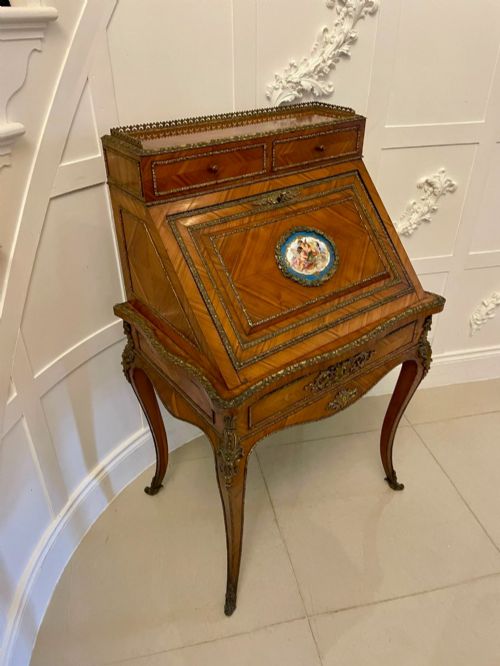
- A small French ladies writing desk, often featuring a sloping fall-front lid and decorative veneers. This form gained popularity during the nineteenth century for private correspondence.
- Bonheur-du-jour
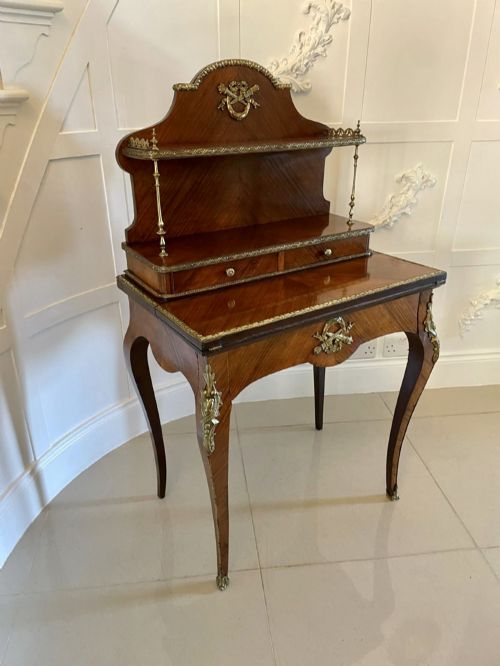
- A light ladies writing desk featuring a small cabinet or superstructure with shelves and drawers above the main work surface. Originating in France, these pieces often display elaborate marquetry.
- Marquetry
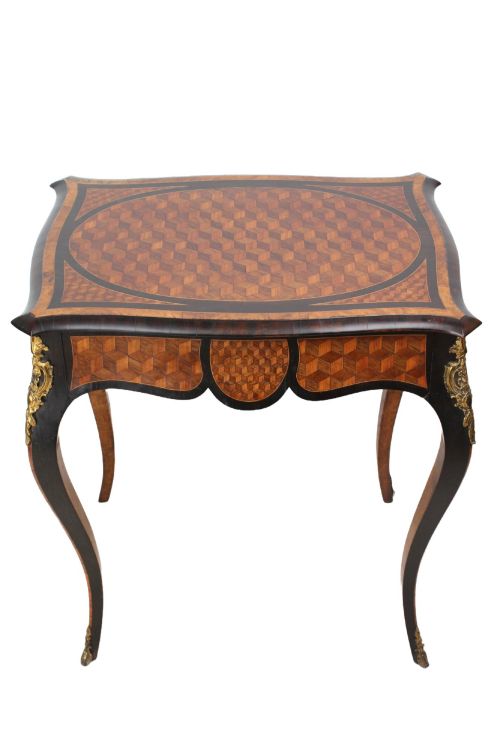
- Decorative veneer patterns formed by fitting together contrasting pieces of wood, shell, or ivory into a wooden ground. Craftsmen utilised this technique to create floral and geometric designs across tabletops.
- Ormolu
- Gilded bronze mounts applied to furniture edges and feet for decorative effect. This material is frequently found on French revival pieces from the nineteenth century.
- Carlton House desk
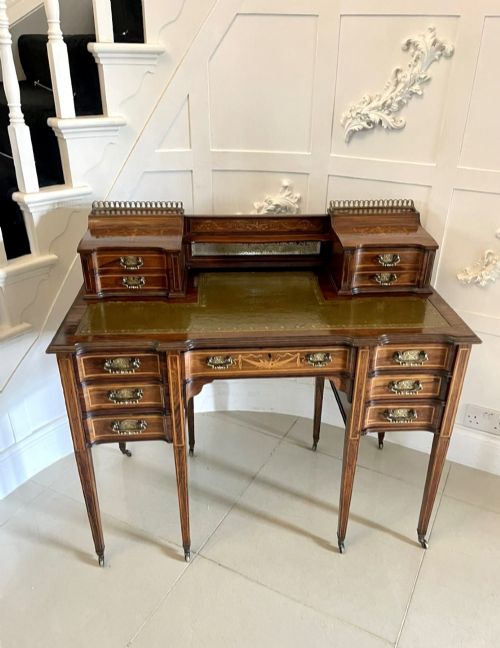
- A distinctive writing desk featuring a curved superstructure of small drawers and pigeonholes enclosing the writing surface. Edwardian versions commonly incorporate satinwood and mahogany veneers.
Ladies Writing Bureau: Frequently Asked Questions
What distinguishes a bureau de dame?
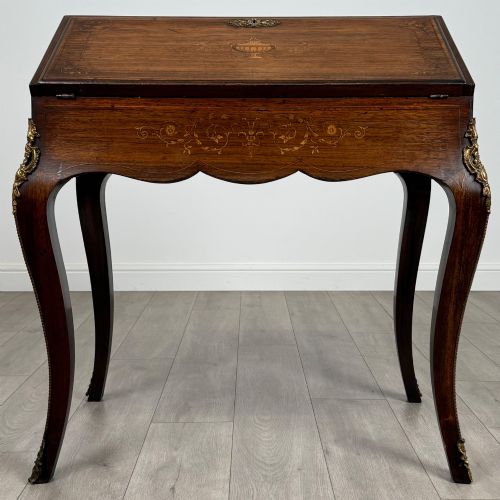
A bureau de dame is a feminine writing desk typically featuring a sloping fall-front flap that opens to reveal small drawers and pigeonholes. These pieces were designed for domestic correspondence and private chambers.
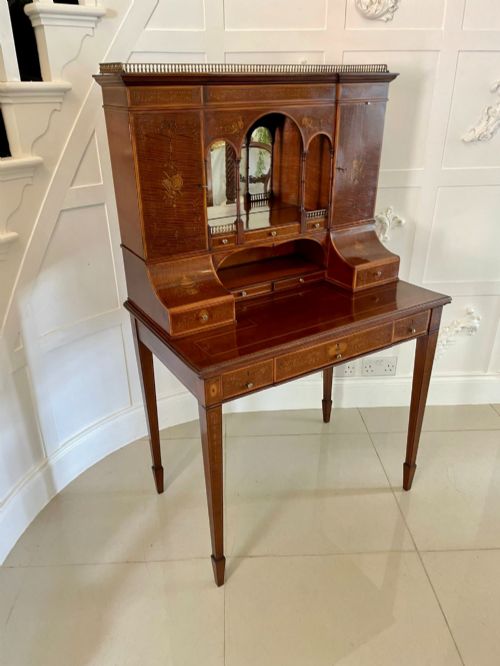
Originating in French cabinetmaking, they frequently incorporate decorative veneers such as rosewood, kingwood, and marquetry inlays. Their compact dimensions separate them from larger partner desks and library tables.
How were bonheur-du-jour desks used?
A bonheur-du-jour served as a light writing table combined with a small upper cabinet for stationery and letters. Owners utilised them for morning correspondence in private sitting rooms.
The elevated superstructure provided compartmentalised storage while keeping the main writing surface uncluttered. Many examples feature delicate cabriole legs and ornamental bronze mounts.
How do I identify an Edwardian piece?
Edwardian writing furniture often displays lighter satinwood or mahogany frames with painted floral motifs and Sheraton revival influences. Construction dates cluster around nineteen hundred.
These pieces reflect changing interior tastes towards brighter, more delicate furnishings compared to heavier Victorian styles. Integrated stationery racks and fitted interiors remain common characteristics.