


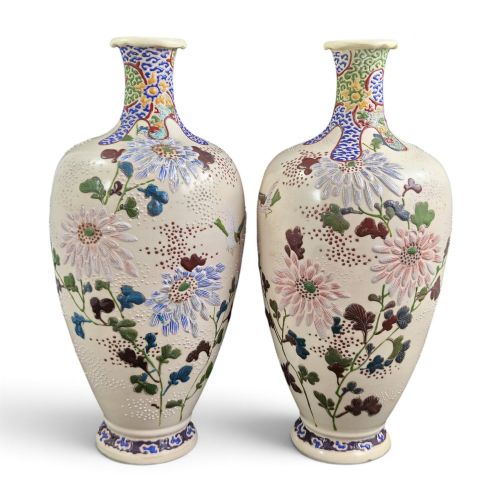


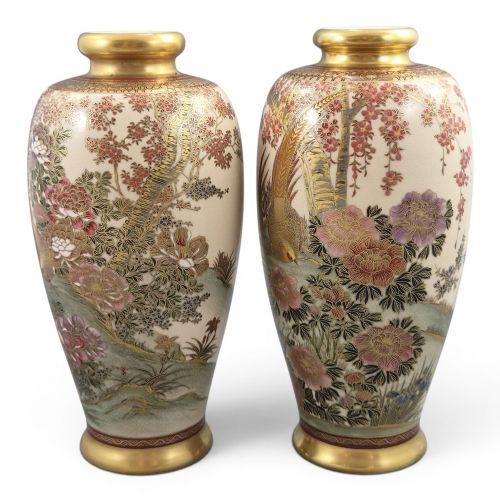


Japanese Polychrome Porcelain Pair
These japanese polychrome porcelain pair selections bring vibrant enamel decoration and symmetry to a room, offering matched statements from various Asian periods.
Japanese Polychrome Porcelain Pair
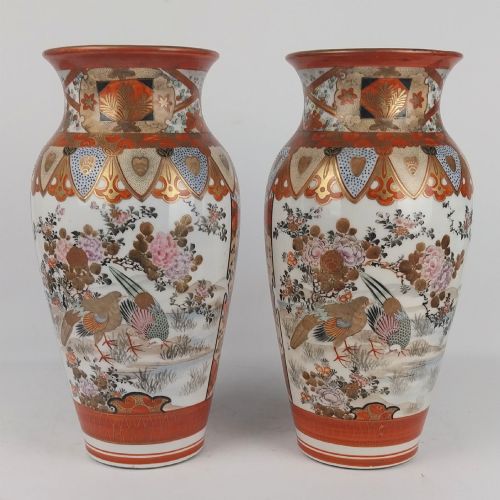
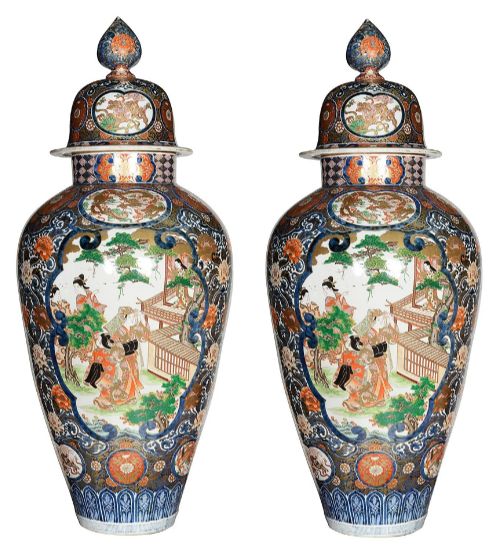
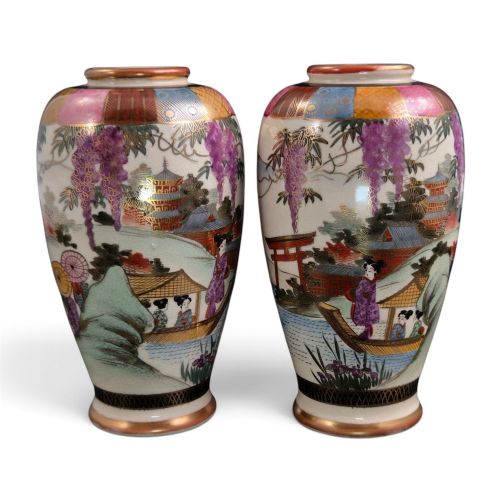
When you search for japanese polychrome porcelain pair examples, you encounter matched sets created primarily for export and domestic display across several centuries. The selection spans distinct eras including the Edo and Meiji periods, stretching through the Taisho and Showa years.
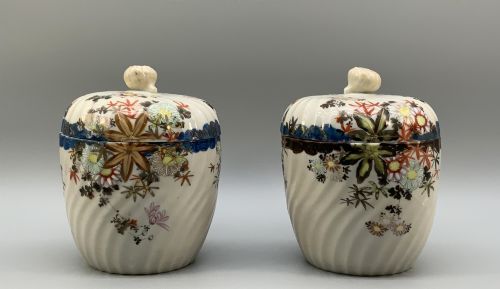
Most entries belong to the nineteenth or early twentieth century, taking the form of vases, lidded jars, and table lamps. These objects frequently utilise traditional decorative palettes involving polychrome enamel and gold leaf applied to a porcelain or earthenware body.
Materials and production methods
The makers formed these vessels using porcelain or earthenware, applying multiple enamel colours to create detailed pictorial and floral scenes. Gilding and gold leaf often highlight specific sections of the design, adding depth to the surface ornamentation.
Many items incorporate raised moriage details or intricate hand-painted motifs depicting landscapes, arhats, and chrysanthemums. Kiln firing fixed the coloured glazes onto the ceramic base, ensuring lasting brilliance across the paired pieces.
Japanese Polychrome Porcelain Pair Retail Price Guide 2026
Typical asking prices for japanese polychrome porcelain pair among the pieces listed under this phrase on Sellingantiques today, from the lower quarter to the upper quarter. They describe what is for sale here now, not the wider market.
Materials documented across the pieces include porcelain, earthenware, enamel, and gold leaf.
What determines quality
Quality rests upon the precision of the hand-painted brushwork and the complexity of the polychrome palette. Superior examples demonstrate careful control over enamel thickness and precise application of gilding.
The harmony between the two matched items dictates overall success, as genuine pairs require balanced proportions and consistent decoration across both objects. The refinement of the ceramic body and the clarity of any artist or studio marks further elevate an example.
Manpei Kobe·Makuzu Kozan II·Hododa·Fukagawa
The Japanese Polychrome Porcelain Pair Glossary
- Polychrome
- Decoration using multiple distinct enamel colours on a ceramic surface. This technique allows for complex pictorial storytelling and detailed floral patterns.
- Satsuma
- Earthenware pottery originating from the Satsuma province, typically featuring an ivory crackle glaze and rich gilt ornamentation. These pieces often depict figurative scenes and natural elements.
- Kutani
- Japanese porcelain or pottery known for bold enamel colours, particularly iron red and gold. Production centres in the Ishikawa prefecture.
- Imari
- Japanese export porcelain decorated in underglaze blue and overglaze red, gold, and green. This style gained immense popularity in Europe during the seventeenth and eighteenth centuries.
- Moriage
- A ceramic technique where slip is piped onto the surface to create raised decorative patterns. This adds a tactile, three-dimensional element to vases and jars.
Japanese Polychrome Porcelain Pair: Frequently Asked Questions
How were these pairs used historically?
Matched sets served as prominent decorative elements in both Japanese interiors and Western export markets. Their symmetry suited mantelpieces, pedestals, and large rooms.
Lidded jars stored dry goods or functioned purely as ornamental centrepieces, while floor vases anchored large architectural spaces.
How do I distinguish Satsuma from Kutani?
Satsuma pieces generally utilise an earthenware body covered in a fine crackle glaze, decorated with detailed figures and heavy gilding. They often have a softer, cream-coloured background.
Kutani items are typically porcelain with bolder, highly vibrant enamel palettes dominated by reds, greens, and golds, focusing heavily on nature and geometric borders.
Can these lamps safely illuminate modern rooms?
Many table lamps listed began life as vases or jars before receiving electrical fittings during later periods. They integrate well into contemporary interiors while retaining their antique ceramic bodies.
Wiring should be checked by a professional to ensure safety standards meet current electrical requirements for daily home use.