



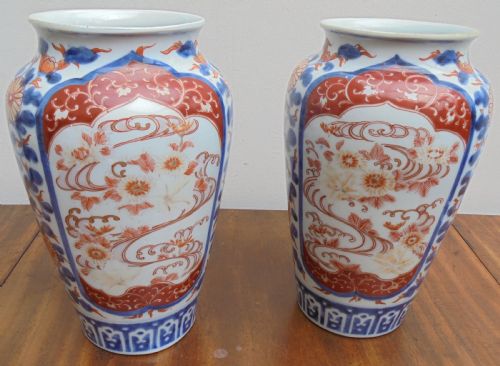
Orange Porcelain Display Vases
These orange porcelain display vases bring rich colour and intricate Japanese craftsmanship straight into the home.
Orange Porcelain Display Vases
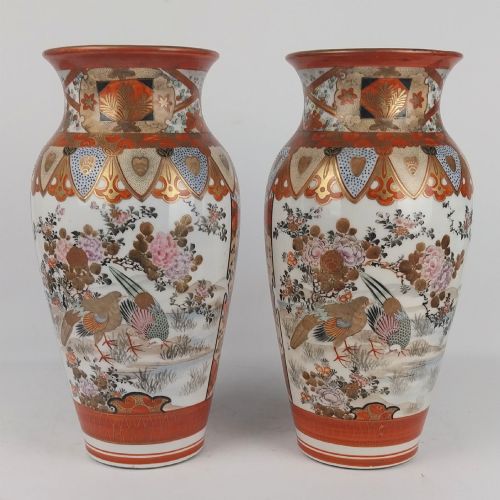
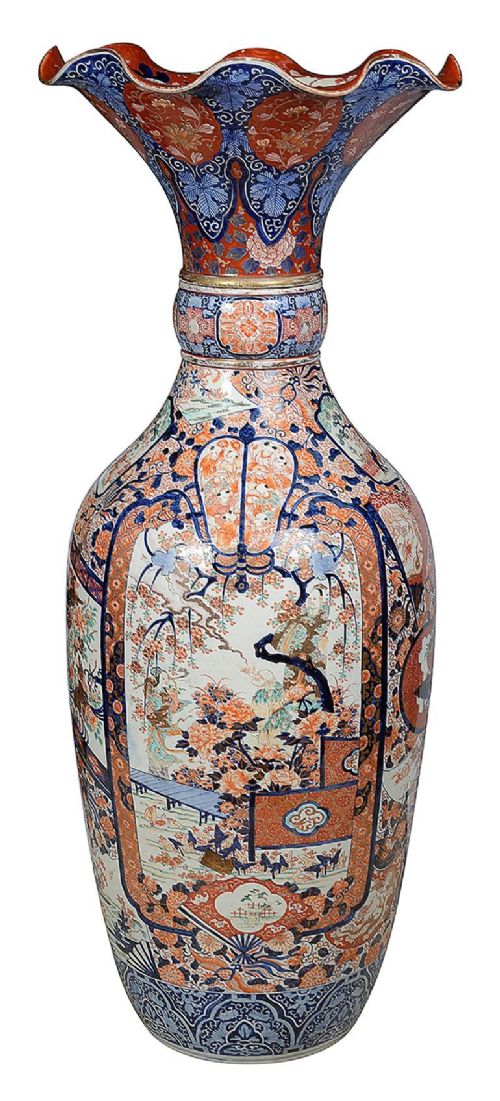
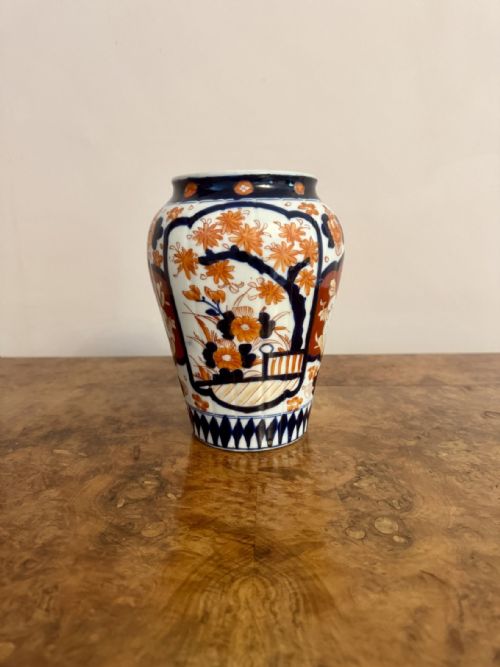
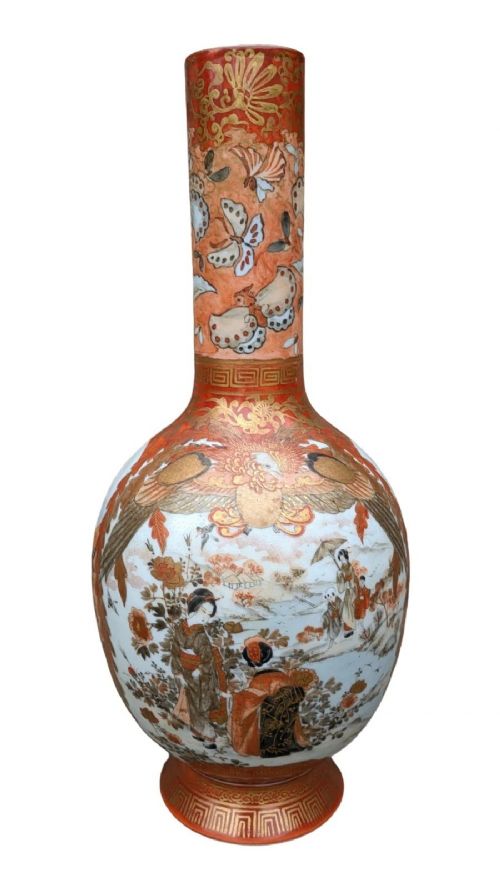
When you search for orange porcelain display vases, you find striking Japanese Imari and Kutani pieces designed for prominent placement in a room. The items on this page range from towering floor-standing vessels down to small decorative vases and balanced pairs.
Most examples date from the late nineteenth century, spanning periods such as Meiji and the broader decades of the eighteen-seventies through nineteen-hundred. Forms include standard two-handled vessels and massive floor vases that command attention in any interior space.
How they were made
Potters shaped durable porcelain before applying rich enamel glazes and distinct cobalt decoration, often combining deep blues with fiery orange iron-red tones. Many of these nineteenth-century pieces received meticulous hand-painted details.
Makers elevated the visual impact by adding gold leaf and fine gilding across the decorated surfaces, catching the light and framing the central motifs.
Orange Porcelain Display Vases Retail Price Guide 2026
Typical asking prices for orange porcelain display vases among the pieces listed under this phrase on Sellingantiques today, from the lower quarter to the upper quarter. They describe what is for sale here now, not the wider market.
The listings show nineteenth-century Japanese production exclusively, featuring porcelain decorated with enamel glaze, gold leaf, and cobalt.
What varies in quality
Quality rests upon the crispness of the hand-painted enamels and the precision of the gilding applied across the porcelain body. Stronger examples display deeply saturated orange and cobalt tones that maintain their vibrancy without blurring.
Scale and ambition also divide the range, separating modest small vases from monumental floor-standing vessels that demand exceptional skill from the kiln burner and the decorator alike.
The Orange Porcelain Display Vases Glossary
- Imari
- A traditional Japanese style of porcelain decoration originating from the town of Arita, typically characterised by a palette of cobalt blue, iron-red orange, and gold. This aesthetic gained immense popularity in the West during the nineteenth century.
- Kutani
- A distinct style of Japanese coloured porcelain noted for bold pictorial designs and rich enamel glazes. Pieces often incorporate intricate patterns alongside traditional figurative or floral motifs.
- Meiji Period
- The era of Japanese history running from eighteen-sixty-eight to nineteen-twelve, marked by extensive international trade and high artistic output in ceramics. Works from this time frequently demonstrate supreme technical mastery.
- Gilding
- The application of gold leaf or powdered gold paint to the surface of the porcelain to highlight specific design elements. It adds a warm metallic sheen that complements the underlying orange and blue glazes.
Orange Porcelain Display Vases: Frequently Asked Questions
How were orange porcelain display vases used?
These pieces served primarily as decorative ornaments in nineteenth-century interiors, placed on mantelpieces, tables, or directly on the floor.
Large floor-standing vessels filled empty corners, while smaller pairs brought symmetry and vibrant colour to formal reception rooms.
How do I live with these vases?
Position them where natural light can catch the surface gilding and bring out the depth of the orange enamel glazes.
Keep them away from busy backgrounds so the complex Japanese Imari or Kutani patterns can remain the focal point of the space.
How do I date an antique Imari vase?
Examine the weight of the porcelain body, the saturation of the iron-red orange pigments, and the style of the cobalt underglaze.
Nineteenth-century examples often exhibit the characteristic hand-painted nuances and heavier potting associated with the Meiji period.
What is the difference between Imari and Kutani?
Imari porcelain relies on a strict combination of cobalt blue, iron-red orange, and gold applied in dense, brocade-like geometric and floral patterns.
Kutani wares tend to feature broader pictorial scenes and a wider, earthier range of enamel colours dominated by vibrant greens, reds, and golds.