
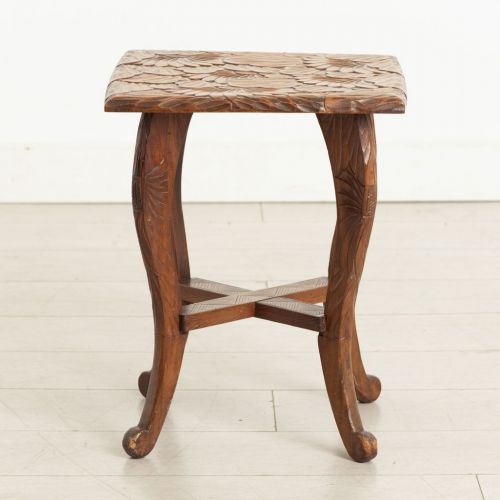
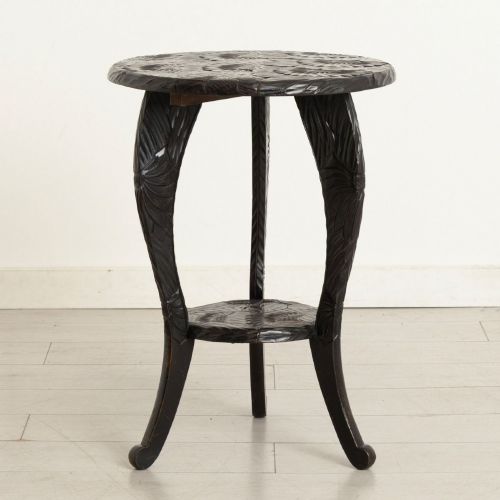


Japanese Plant Stand
A Japanese plant stand brings sculptural form and dark timber into a room, offering an elevated stage for ceramics or foliage.
Japanese Plant Stand
When you search for a japanese plant stand, you encounter low tables, tall pedestals, and multi-tiered display pieces designed to hold planters and ornamental objects. These items emerge from the nineteenth and early twentieth centuries, spanning the Victorian era through the Meiji, Taisho, and Arts and Crafts periods.
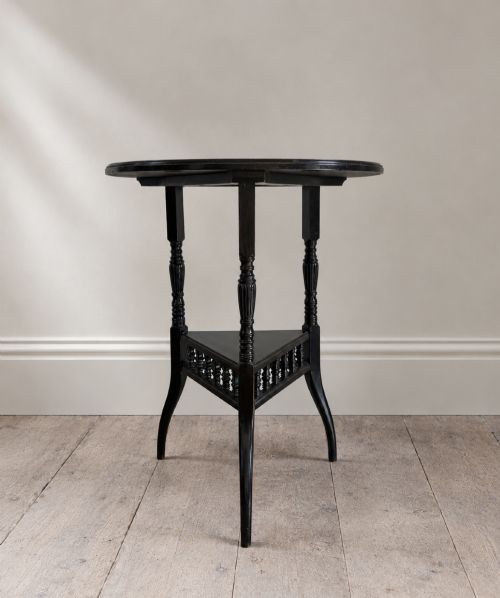
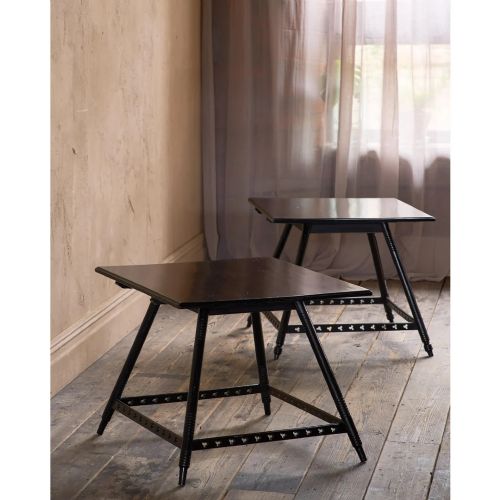
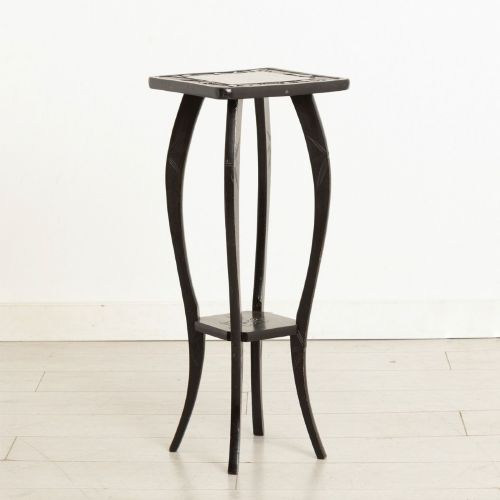
The version you are most likely to meet on this page is a dark wood or ebonised pedestal table, often drawing on Anglo-Japanese taste or the Aesthetic Movement. Forms range from compact occasional tables and corner shelves to drum-type tables and tall jardinieres designed specifically for botanical displays.
Makers and designers of the period, including Liberty of London and those working in the manner of E.W. Godwin, reinterpreted Eastern forms for Western interiors. The resulting furniture bridges functional utility and decorative display, serving equally as a side table, lamp table, or plant holder.
Distinctions in Quality and Make
Quality rests in the crispness of the hand carving, the choice of timber, and the integrity of inset surfaces such as marble or cloisonne enamel. Superior examples demonstrate balanced proportions and refined joinery that withstands the weight of heavy bronze or ceramic jardinieres.
Attribution to prominent retailers like Liberty of London or designers following E.W. Godwin elevates the standing of a piece. The depth and execution of ebonising or the structural stability of bamboo frames similarly separate standard production items from finer workshop output.
Listings feature items spanning the 1870s to the 1920s, utilising materials from bamboo and elm to heavy ebonised hardwood.
Liberty of London·Gabriel Viardot·E W Godwin
The Japanese Plant Stand Glossary
- Ebonised
- Wood treated to resemble ebony, typically through staining or painting. This finish was widely favored in the Aesthetic Movement to create stark, dark contrasts.
- Jardinere
- A decorative pot or stand designed to hold a plant or flower arrangement. These vessels often sit atop dedicated pedestals or tall occasional tables.
- Meiji Period
- The era in Japanese history spanning from 1868 to 1912, marked by increased trade with the West and a profound influence on European design.
- Aesthetic Movement
- A late nineteenth-century British design movement that emphasised beauty and art for art's sake, drawing heavily on Japanese artistic traditions.
- Cloisonne
- An ancient technique for decorating metalwork objects with colour using V-shaped wires, frequently seen inset into the tops of nineteenth-century tables.
Japanese Plant Stand: Frequently Asked Questions
What is a Japanese plant stand used for?
These pieces serve primarily as elevated platforms for holding potted plants, jardinieres, and decorative ceramics. They also function successfully as side tables, lamp tables, or display surfaces for smaller objects.
Placing them in corners or beside seating arrangements allows the dark timbers and carved details to add structural contrast to a room. Their varied heights accommodate everything from trailing foliage to heavy bronze vessels.
How do I date a Japanese plant stand?
Dating relies on identifying stylistic markers associated with the Victorian period, the Aesthetic Movement, or the Meiji era. Examination of the timber, joinery techniques, and any retailer stamps provides further chronological clues.
Pieces bearing attribution to firms like Liberty of London typically point towards the late nineteenth or early twentieth century. Construction methods, such as the use of ebonised hardwoods versus natural bamboo, also help narrow the decade of production.
What is the difference between an ebonised and a natural wood stand?
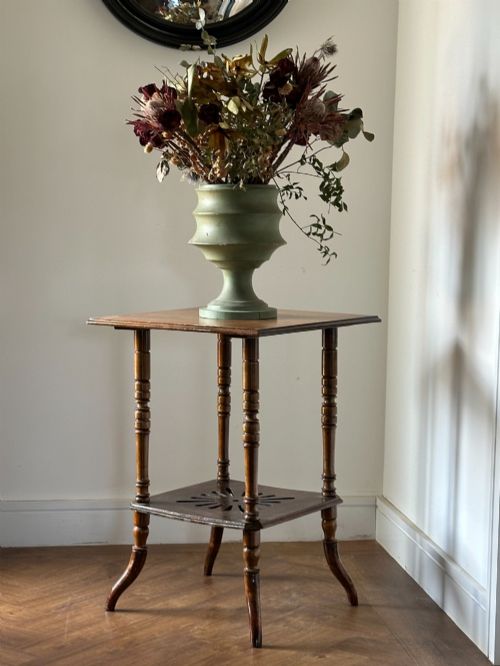
Ebonised stands feature timber treated to achieve a deep, black finish, which was highly popular during the nineteenth century under Japanese influence. Natural wood stands showcase the grain of materials such as mahogany, elm, or hardwood.
While both finishes serve the same display function, ebonised pieces lean toward the stark aesthetic of the Anglo-Japanese style. Natural wood versions tend to highlight traditional cabinet-making and the intrinsic texture of the timber.
Can these stands support heavy plants?
Many of these stands were engineered specifically to bear the weight of heavy ceramic planters, bronze jardinieres, and marble tops. Solid hardwoods and sturdy joinery ensure structural stability for substantial botanical displays.
Lighter bamboo or multi-tiered versions suit smaller pots and decorative objects rather than massive planters. Assessing the weight distribution and frame construction helps determine the appropriate load for each piece.