



Black Wood Jardiniere
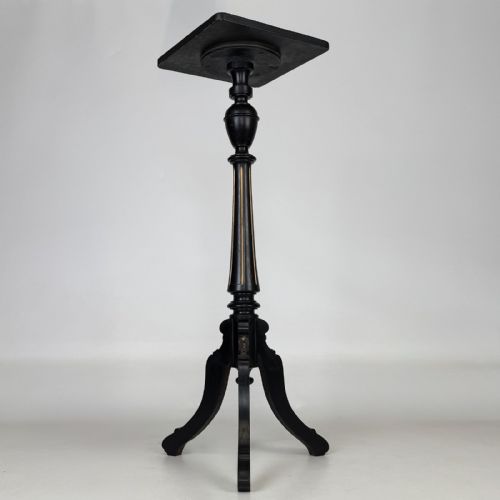
These black wood jardiniere pieces are dark-toned plant holders and stands, chosen for interiors needing solid nineteenth-century presence.
Black Wood Jardiniere
A black wood jardiniere brings together dark timber stands and plant holders spanning Victorian, nineteenth-century, and early twentieth-century periods. You will encounter ebonised wood planters, carved hardwood pedestals, and portico planter tables designed to elevate greenery within a room.
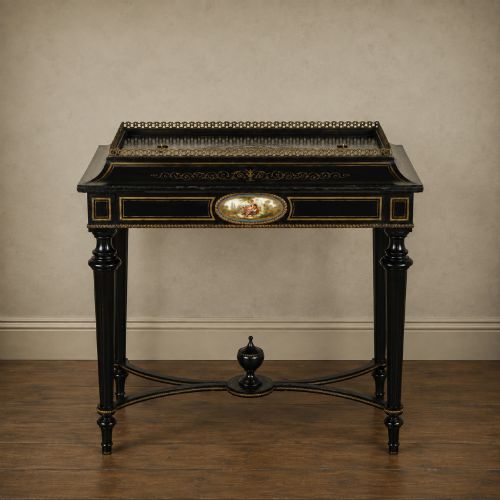
The selections on this page range from French Napoleon III designs and Japanese-influenced stands to Chinese hardwood pieces and Black Forest carvings. Forms vary from square planters with ceramic panels to tall torchere stands and pedestals.
Most examples lean towards Victorian aesthetic tastes, incorporating ebonised finishes, brass mounts, and porcelain plaques. Finding the right proportion between the stand and the plant pot determines how well the piece settles into your space.
Materials and construction
Construction relies heavily on ebonised wood, carved hardwoods, and rosewood, often shaped into sturdy pedestals and planter tables. Wood is carved by hand or turned, creating the structural framework for heavier display items.
Makers integrated contrasting elements such as brass mounts, ormolu, and painted porcelain plaques or Minton panels into the wooden frames. Ebonising gave cheaper or alternative timbers the deep black appearance fashionable in nineteenth-century design.
Black Wood Jardiniere Retail Price Guide 2026
Typical asking prices for black wood jardiniere among the pieces listed under this phrase on Sellingantiques today, from the lower quarter to the upper quarter. They describe what is for sale here now, not the wider market.
Look closely for the winged griffin standing guard beneath a Black Forest planter.
Judging quality and execution
Quality rests in the crispness of the hand carving and the integration of decorative elements like porcelain plaques or ormolu mounts. Finer pieces show careful joinery and well-preserved surface finishes rather than flat, uniform machine work.
The distinction between standard production and superior craftsmanship often lies in the depth of relief carving and the selection of secondary materials, such as original Minton panels or fine brass detailing.
Liberty of London·Minton
The Black Wood Jardiniere Glossary
- Ebonised Wood
- Timber treated to resemble ebony through staining or painting. This finish was widely utilised during the Victorian era for decorative furniture.
- Jardiniere
- A large ornamental pot or stand for holding plants or flowers. These items sit on the floor or rest upon dedicated pedestals.
- Ormolu
- Gilt bronze mounted onto furniture or decorative objects. It provides metallic contrast against dark ebonised wood surfaces.
- Torchere
- A tall stand or pedestal originally designed to hold a torch or candle. In later periods, these served as plant stands or display columns.
- Portico Planter Table
- A table-height stand structured like a classical portico. These architectural forms support planters within formal interior schemes.
Black Wood Jardiniere: Frequently Asked Questions
What is a black wood jardiniere?
A black wood jardiniere is a dark timber planter, stand, or pedestal designed to hold plants indoors. These objects date mainly from the nineteenth century.
They combine practical plant housing with decorative woodwork, frequently featuring ebonised surfaces, carvings, or inset porcelain panels.
How were these stands used?
These pieces served to elevate potted plants and flowers within Victorian and Edwardian reception rooms and halls. Tall pedestals brought greenery up to eye level.
Planter tables and square jardinieres accommodated larger ferns and floral displays, protecting interior surfaces while adding architectural interest.
How do I style a black wood jardiniere?
Position a standalone pedestal in an empty corner to draw the eye upward with a trailing plant. Square planter tables work well against walls or beside seating.
The dark wood tones complement both traditional interiors and contemporary rooms that benefit from nineteenth-century texture and contrast.
How do I identify the period?
Period identification relies on stylistic cues such as Victorian Gothic, Aesthetic Movement, or French Napoleon III design elements. Materials like ebonised wood and original porcelain panels point towards the nineteenth century.
Hand-carved motifs and retailer labels help narrow down the date of manufacture between the mid-nineteenth and early twentieth centuries.