
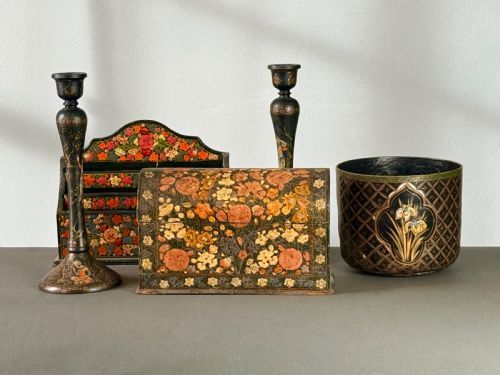


Victorian Oriental Planter
A victorian oriental planter brings distinct nineteenth-century exoticism into a room, combining British craftsmanship with Eastern forms.
Victorian Oriental Planter
When searching for a victorian oriental planter, collectors encounter a fascinating crossover of styles, primarily encompassing Chinese export, Japanese Meiji and Edo periods, and Victorian Chinoiserie. These pieces range from heavy bronze cachepots and cloisonne enamel vessels to carved hardwood plant stands and ebonised portico tables.
The objects serving these purposes on this page frequently appear as jardinieres, planter bowls, and dedicated stands designed to display foliage indoors. Most date from the nineteenth century, including specific decades such as eighteen-eighty and nineteen-hundred, bridging British domestic tastes with imported Asian aesthetics.
How they were made
The construction of these pieces relies heavily on cast bronze, brass, and carved hardwoods such as rosewood. Artisans utilised traditional metalworking techniques, including intricate cloisonne enamelling, alongside skilled carpentry to shape sturdy stands and decorative vessels.
Surface decoration is paramount, featuring lacquer work, papier-mache elements, and detailed hand-carving. Materials like marble and ebonised wood often complement the metal and wooden planters, creating structured contrast in both tables and display urns.
The listings here feature items made from bronze, brass, hardwood, marble, papier-mache, and lacquer, spanning the nineteenth century.
What varies in quality
Quality in these items rests upon the depth of the hand-carving in hardwoods and the precision of the metal casting in bronze and brass vessels. Superior examples display crisp detail in foliage and figures, whereas lesser pieces show softer, more generalised execution.
The choice of materials also dictates standing, with dense hardwoods and heavy cloisonne enamel commanding greater presence than simpler ebonised woods or plain brass. Integrity of construction in the joints of stands and the weight of the bowls separate standard production from finer decorative work.
The Victorian Oriental Planter Glossary
- Jardiniere
- A large ornamental pot or stand for holding flowers or plants. These vessels form the core of the planters found in this category.
- Cloisonne
- An ancient technique for decorating metalwork objects with coloured glass paste placed within compartments defined by wire. It appears frequently on nineteenth-century bronze planter bowls.
- Chinoiserie
- The European interpretation and imitation of Chinese and East Asian artistic traditions, popular during the Victorian era. It heavily influences the design of these decorative planters and stands.
- Cachepot
- A decorative container used to hide an ordinary flowerpot. Several pieces in this selection serve this exact function alongside traditional jardinieres.
- Meiji Period
- A Japanese era lasting from eighteen-sixty-eight to nineteen-twelve, known for exceptional metalwork and decorative arts exported to Britain. Many bronze pieces on this page originate from this time.
Victorian Oriental Planter: Frequently Asked Questions
How were these planters used?
Victorian households utilised these planters and stands to display exotic ferns, palms, and flowering plants within parlours and drawing rooms.
Heavier bronze bowls sat on tabletops, while tall carved stands elevated plants to catch light near windows.
How do I live with them?
These pieces integrate well into modern interiors as statement cachepots for large houseplants or as standalone decorative objects.
Wooden stands also function effectively as small lamp tables or display surfaces for other ornaments.
How do I tell periods apart?
Distinguishing periods involves examining the materials, manufacturing marks, and stylistic influences present in the brass, bronze, or hardwood.
Pieces bearing Japanese Meiji or Edo characteristics show different casting and carving traits compared to British Victorian Chinoiserie interpretations.