
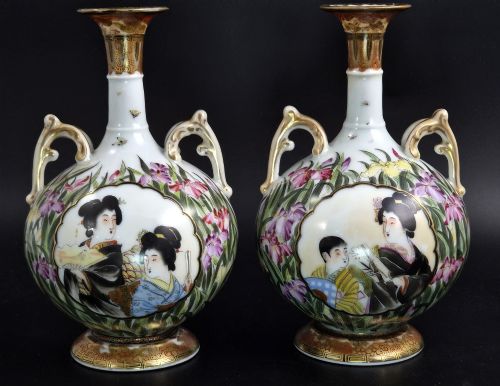
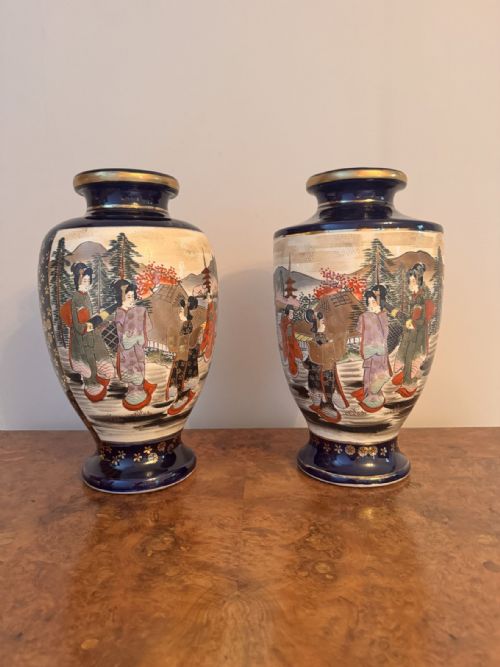
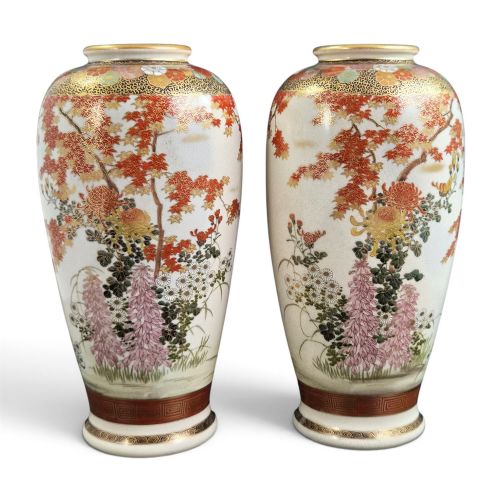
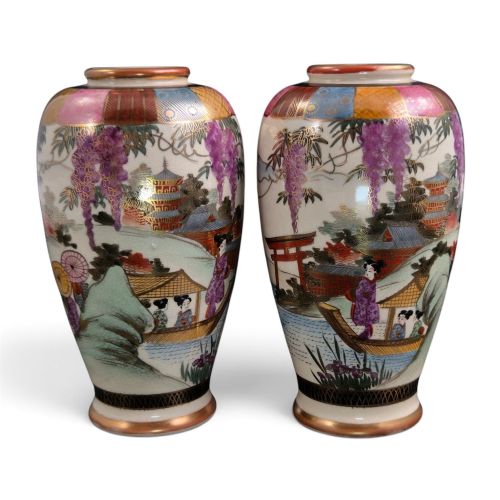



Japanese Painted Urns Pair
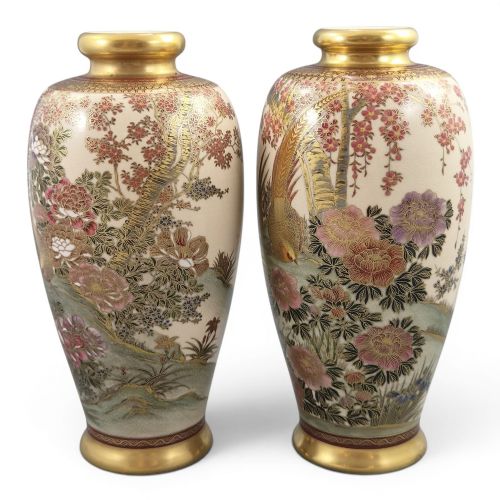
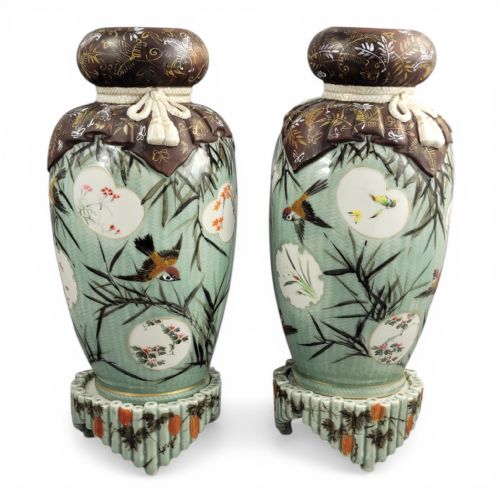
Japanese painted urns pair pieces are matching decorative vessels that bring traditional Asian artistry into any room.
Japanese Painted Urns Pair
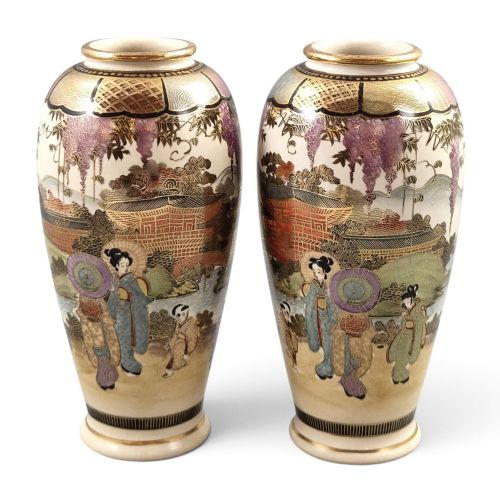
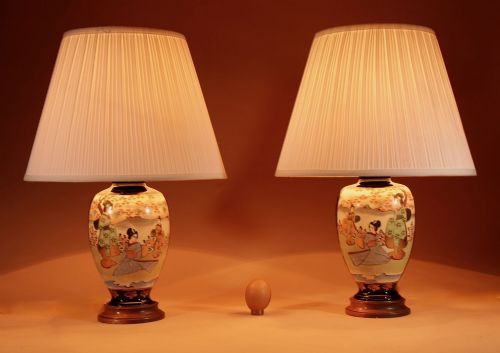
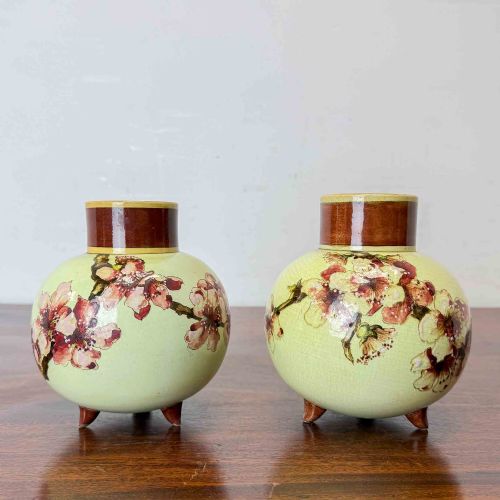
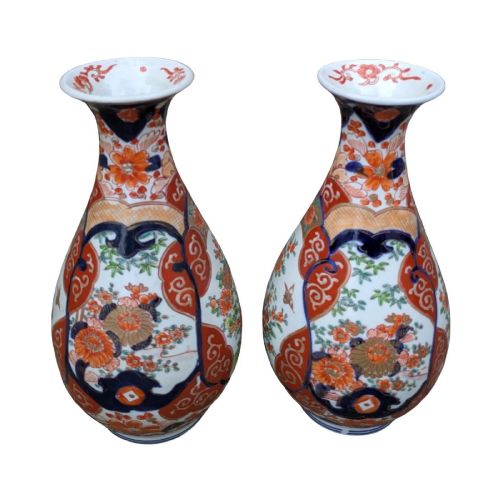
These japanese painted urns pair pieces encompass matched vessels intended for display, often taking the form of vases, ginger jars, and table lamps. The selection leans heavily toward Satsuma and Imari styles produced during the Meiji and Edwardian periods.
Makers and studios from Kyoto and Kobe feature prominently among the listings, alongside Kutani and Seto productions. Buyers will encounter both diminutive cabinet pieces and monumental floor-standing examples.
The decorative schemes on a japanese painted urns pair typically showcase hand-painted figures, landscapes, and floral motifs enriched with enamel and gold leaf.
Materials and construction
Potters utilised ceramic, earthenware, and porcelain as the foundational bodies for these vessels, shaping them on the wheel or in moulds before firing. Glaze provided a smooth impervious surface ready for subsequent hand-painting.
Artists applied detailed designs using coloured enamel and gold leaf, building up intricate patterns of flora, fauna, and narrative scenes. A secondary kiln firing often fixed these pigments and gilt highlights permanently onto the surface.
Several pieces preserve mysterious marks like Hododa, teasing collectors with the delightful puzzle of untangling obscure nineteenth-century export stamps.
Assessing quality in the range
The refinement of the hand-painting dictates the upper tier of the range, where individual brushstrokes remain crisp and controlled. Finer pieces demonstrate superior control over the enamel and gold leaf application, showing greater depth in floral and figurative scenes.
Signed works from notable Kyoto and Kobe workshops command attention through disciplined execution and balanced compositions. Lesser examples show simpler stencil-assisted motifs and heavier, less nuanced glazing.
Kinkōzan·Kinkozan·Maruni Kobe·Manpei Kobe·Kato Sanhei·Hakusan·Hododa
The Japanese Painted Urns Pair Glossary
- Satsuma
- Earthenware pottery with a ivory-coloured, crackled glaze that originates from the Satsuma domain in Japan. It served as the primary canvas for elaborate hand-painted polychrome and gilt decoration.
- Imari
- A traditional style of Japanese porcelain featuring a distinct palette of underglaze blue, iron red, and added gold leaf. These wares were widely exported to Europe from the port of Imari.
- Kutani
- Japanese porcelain and ceramic ware known for bold colour palettes, particularly iron reds, greens, and gold. The style developed in the Kaga province and frequently depicts nature and figures.
- Meiji Period
- The era in Japanese history spanning from 1868 to 1912, marked by the opening of trade with the West. Craft production during this time catered heavily to international export tastes.
- Cloisonné
- Enamelling technique where thin metal wires form compartments on a metal or ceramic body to hold coloured glass paste. Firing melts the paste into a smooth, glossy decorative surface.
Japanese Painted Urns Pair: Frequently Asked Questions
How do I display a pair safely?
Place them on stable wooden surfaces away from high-traffic areas where they might get knocked.
Ensure they sit out of direct sunlight to protect the enamel and gold leaf from fading over time.
Can these be wired as lamps?
Many examples are converted into table lamps using professional wiring that preserves the integrity of the ceramic body.
When buying converted vessels, check that the fitting avoids damaging the original rim or base.
How do I clean painted surfaces?
Dust the surface gently with a soft, dry brush to remove particles without disturbing the fragile gold leaf.
Avoid using water, chemical cleaners, or abrasive cloths on antique enamel and ceramic finishes.
What defines the Meiji period style?
Meiji pieces reflect a surge in intricate craftsmanship driven by international exhibitions and export demand.
They combine traditional Japanese motifs like wisteria and landscapes with high technical precision in enamel.