


Japanese Pottery Decorative Urns
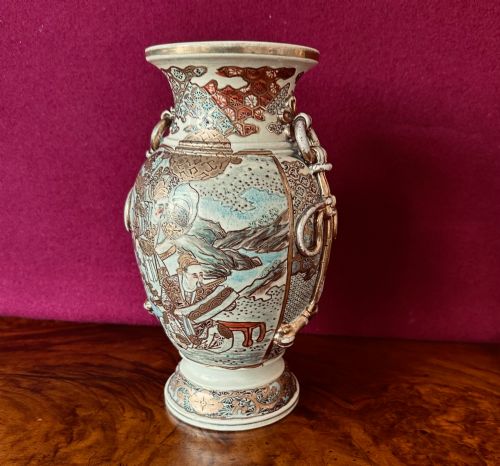
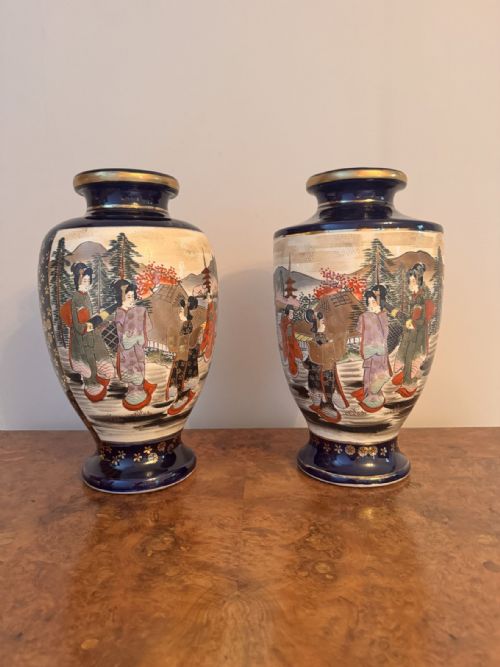
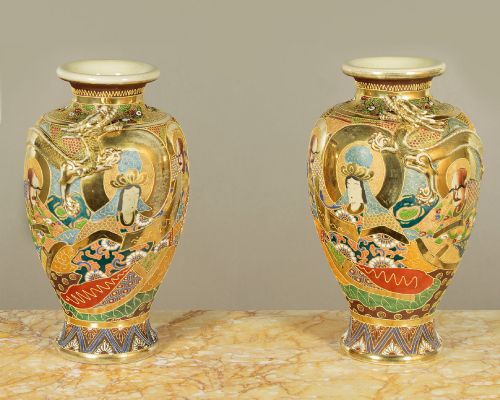
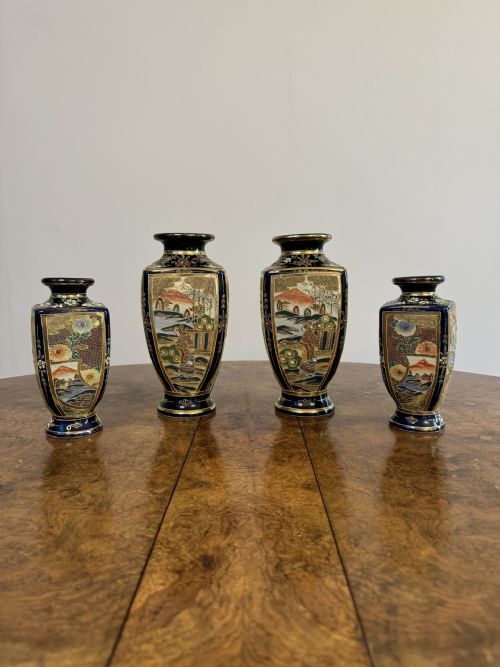
Japanese pottery decorative urns bring intricate hand-painted narratives and rich metallic detailing into interior spaces, drawing collectors to their distinct forms.
Japanese Pottery Decorative Urns
Japanese pottery decorative urns encompass a variety of vessel forms, most commonly appearing as pairs of baluster vases, lidded jars, and incense burners. These pieces frequently date from the late nineteenth century through the early twentieth century, spanning the Meiji, Victorian, and Edwardian eras.
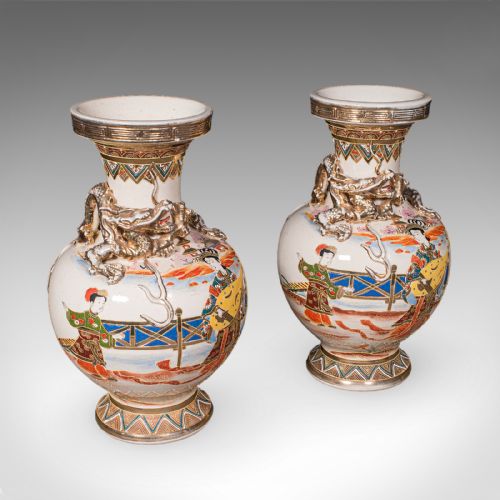
The selection on this page leans heavily toward Satsuma ware and Imari ware traditions, produced in regional centres such as Kyoto and Kobe. Buyers encounter both miniature vessels and large garnitures, often decorated with figural scenes, landscapes, and religious motifs.
Materials and Techniques
Potters shaped these vessels from earthenware, ceramic, and porcelain, frequently mounting them on wooden bases or fitting them with wooden elements. Artisans applied rich glazes as a foundation for subsequent decoration.
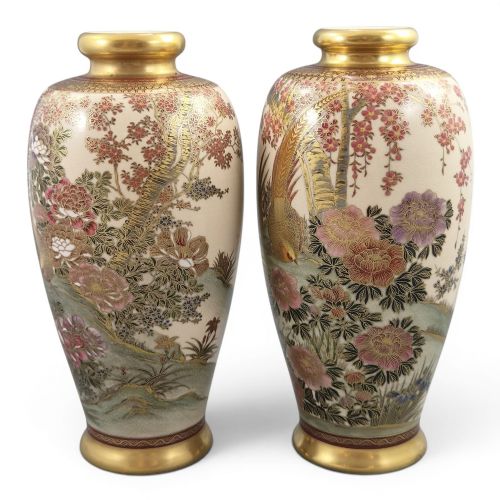
Makers utilised gold leaf, gilt, and enamel work, including raised moriage techniques, to build texture and colour across the surface of each piece.
The listings on this page span several decades, featuring pieces from the nineteenth-century Victorian period through to the early Showa era.
Quality Variations
Quality rests upon the precision of the brushwork and the complexity of the narrative scenes rendered across the pottery. Pieces associated with notable workshops and named makers display a finer control of detail in the facial expressions and botanical motifs.
The application of heavy gilt and raised enamel work separates standard productions from exhibition-quality works. Greater depth in the palette and disciplined composition distinguish the top tier of these vessels.
Manpei·Kinkozan·Chosei·Nanzan·Kizan·Hakusan·Hododa
The Japanese Pottery Decorative Urns Glossary
- Satsuma ware
- Earthenware pottery originating from the Satsuma Province, traditionally characterised by an ivory crackle glaze and detailed polychrome and gilt enamel decoration. This style became widely exported during the Meiji period.
- Imari ware
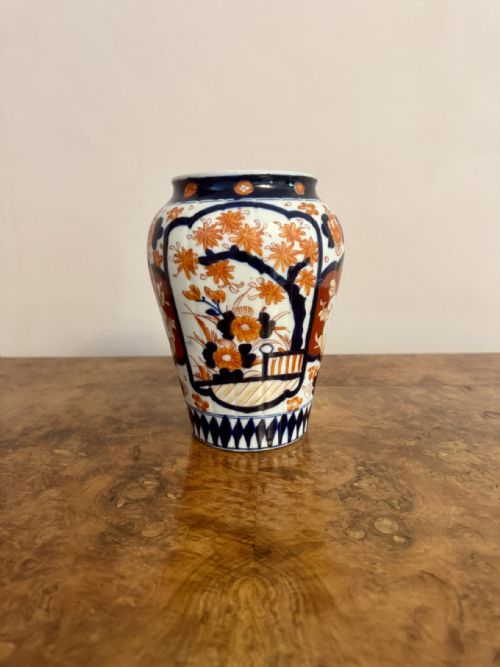
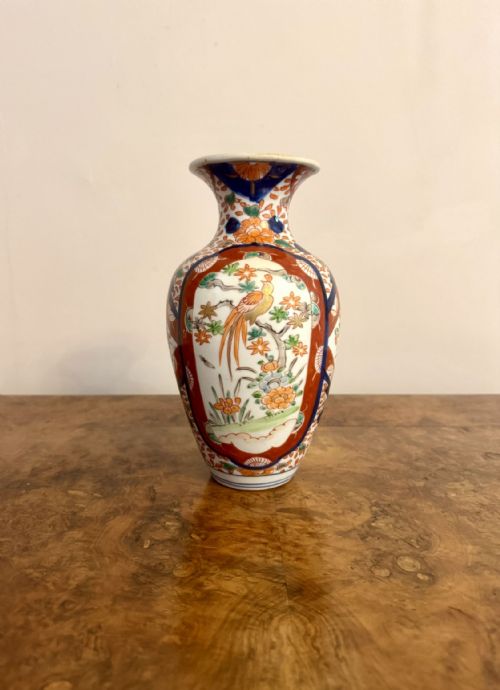
- Japanese porcelain decorated in underglaze blue and overglaze red, gold, and green. This palette creates a striking contrast across plates, jars, and vases.
- Moriage
- A ceramic technique where slip is piped onto the surface to create raised decorative patterns before glazing and firing. It adds a distinct tactile quality to the vessel.
- Koro
- A traditional Japanese incense burner typically supported on legs and fitted with a pierced cover. These objects served both practical and ritual functions.
- Meiji Period
- The era of Japanese history lasting from 1868 to 1912, marked by significant artistic output for international export. Work from this time often combines traditional motifs with high technical skill.
Japanese Pottery Decorative Urns: Frequently Asked Questions
How do I identify Satsuma ware?
Satsuma ware is typically recognised by its warm ivory-coloured earthenware body covered in a fine network of crackled glaze. The decoration relies heavily on densely painted polychrome enamels and raised gold leaf.
Many pieces also feature artist signatures, studio marks, or clan crests such as the Shimazu mon on the base, helping to confirm their origin and period.
What is the difference between Satsuma and Imari?
Satsuma pieces are constructed from earthenware with a creamy, crackled surface finish designed to carry elaborate narrative paintings and gilt figural scenes. They tend to have a matte or satin texture.
Imari pieces are made from hard porcelain and use a distinct palette dominated by cobalt blue, iron red, and gold, featuring geometric and floral patterns rather than detailed human portraits.
How were these decorative urns used?
These vessels functioned primarily as interior ornaments, displayed on mantels, tables, and cabinets within Victorian and Edwardian homes. Larger examples and garnitures were arranged symmetrically to anchor formal reception rooms.
Some forms, such as the koro, were designed specifically to burn incense, combining scented utility with elaborate decorative artistry.