



Red Gold Japanese Ceramics
Red gold japanese ceramics bring deep iron red pigments and rich metallic leaf together on porcelain bodies made for display.
Red Gold Japanese Ceramics
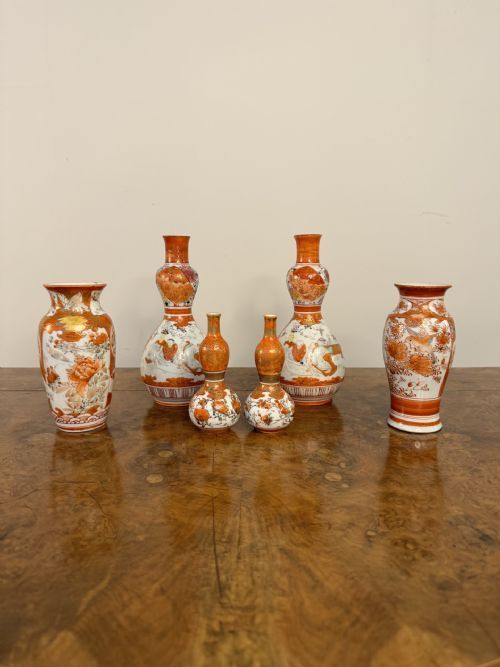
Red gold japanese ceramics encompass vessels and plates created across the Edo and Meiji periods, stretching from the seventeenth century through to the end of the nineteenth century. The selection on this page centres on Kutani wares and Imari pieces, reflecting the traditional regional centres of production.
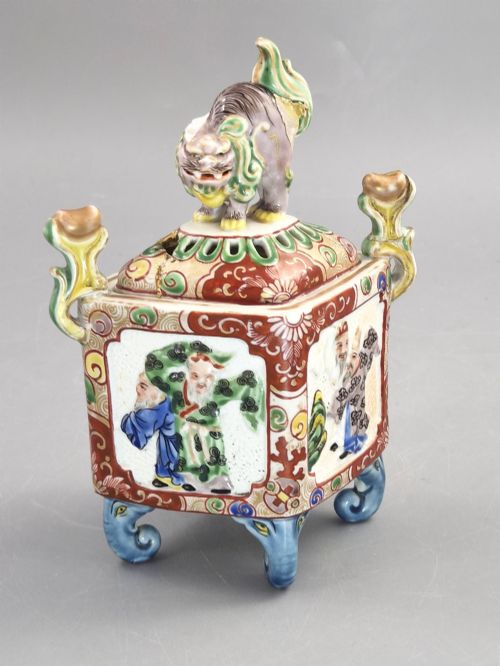
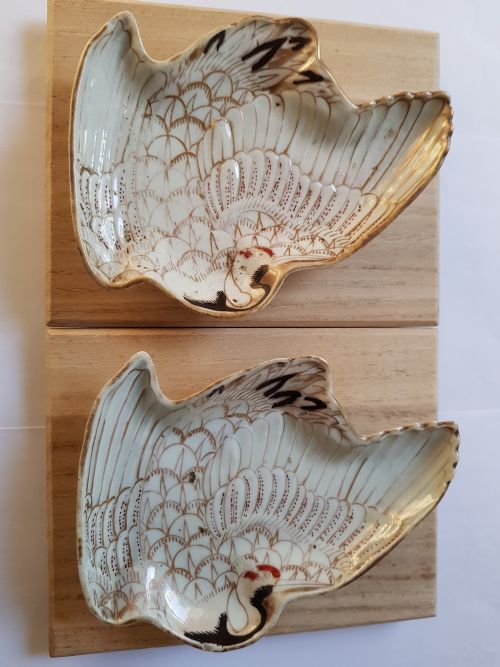
Buyers encounter forms ranging from small hand-painted vases and cylindrical jars to large decorative chargers, dishes, and koro incense burners fitted with covers and finials. These objects often display moulded details, crane shapes, or elephant head feet that demonstrate the sculptural ambition of the makers.
The aesthetic relies on the contrast between heavy iron red enamel and gleaming gold leaf or gilding applied over white porcelain. Such pieces served as decorative showpieces in European and domestic interiors during the Victorian era and remain sought after for their vibrant palette.
How they were made
Potters shaped porcelain bodies on the wheel or pressed them into moulds to achieve shallow relief forms like crane shaped dishes. Artisans then fired the clay before applying intricate overglaze enamels.
Decoration relied heavily on iron red enamel combined with black details and delicate applications of gold leaf or gilding. Kiln workers fired the pieces multiple times to fix the metallic and enamel pigments permanently to the glazed surface.
The listings on this page span the 1700s through to the end of the nineteenth century, covering both Edo and Meiji periods.
What varies in quality
Quality rests in the precision of the hand-painted brushwork and the crispness of moulded details such as animal finials and handles. Finer examples display disciplined control over the iron red pigment and generous, well-preserved applications of gold leaf.
The overall balance of the form and the clarity of the porcelain body distinguish standard production wares from pieces produced by notable workshops. Stronger visual harmony across complex multi-figure or floral compositions elevates a piece within its period.
Kinrin Workshop
The Red Gold Japanese Ceramics Glossary
- Kutani
- A style of Japanese porcelain originating from Kaga province, known for bold palettes featuring iron red and extensive gilding. Pieces often include figurative scenes or intricate botanical motifs.
- Imari
- A type of Japanese export porcelain produced in Arita, traditionally decorated in underglaze blue, iron red, and gold. Edo period examples frequently showcase dense floral and panel designs.
- Koro
- A traditional Japanese incense burner typically featuring a pierced cover to let fragrance escape. These vessels often stand on three feet and display sculptural elements like lion finials.
- Iron red
- An overglaze enamel colour derived from iron oxide that fires to a rust or brick red shade. It forms the primary warm tone in traditional Japanese polychrome ceramics.
- Meiji period
- The era in Japanese history spanning from 1868 to 1912, marked by increased export of decorative arts to Western markets. Ceramics from this time often exhibit high technical refinement.
Red Gold Japanese Ceramics: Frequently Asked Questions
What is Kutani ware?
Kutani ware is a distinct style of Japanese porcelain and pottery recognised by its vivid colour palette, particularly the heavy use of iron red enamel and gold. These ceramics were produced primarily in the Kaga province.
Items range from everyday vessels to large decorative chargers and covered vases made for export during the nineteenth century.
How do I date Imari plates?
Dating Imari plates involves examining the clay body, the weight of the porcelain, and the specific shades of the iron red and blue pigments used in the decoration. Earlier pieces from the Edo period often show differences in potting technique compared to later Victorian era imports.
Comparative study of border patterns and glaze pooling helps narrow down the decade of production.
Where were incense burners placed?
Koro incense burners were used in traditional Japanese interiors to burn aromatic woods or resins during quiet reflection or social gatherings. Their pierced covers allowed the scented smoke to diffuse evenly through the room.
In Western homes, collectors frequently displayed them as decorative cabinet pieces rather than functional burners.
How should I clean antique porcelain?
Antique porcelain decorated with gold leaf and overglaze enamels requires gentle care to protect the surface pigments from fading or scratching. Dusting with a soft, dry brush is generally sufficient for regular maintenance.
Harsh chemical cleaners and immersion in water should be avoided, especially on pieces with exposed or delicate gilding.