

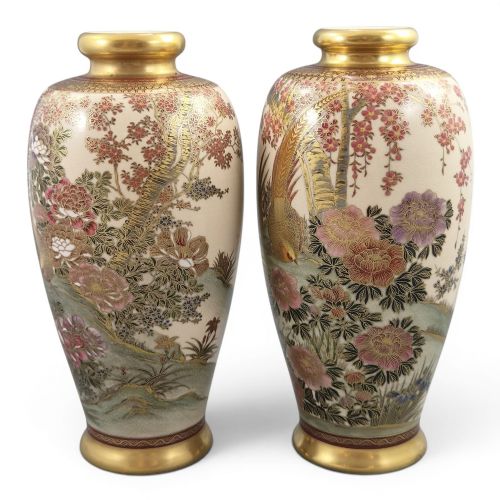


Pair Asian Ceramic Vases
These pair asian ceramic vases bring together centuries of intricate detail and enduring form from Chinese and Japanese traditions.
Pair Asian Ceramic Vases
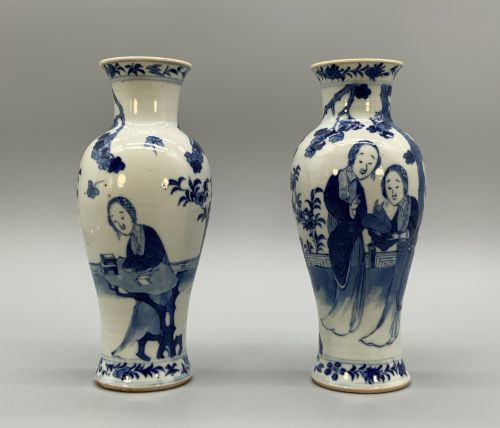
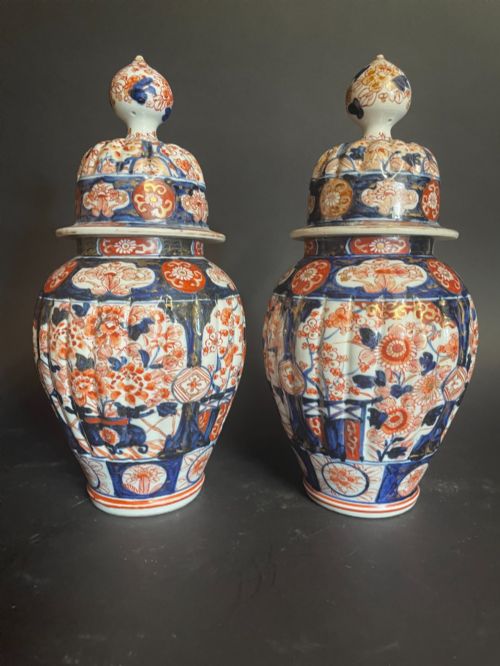
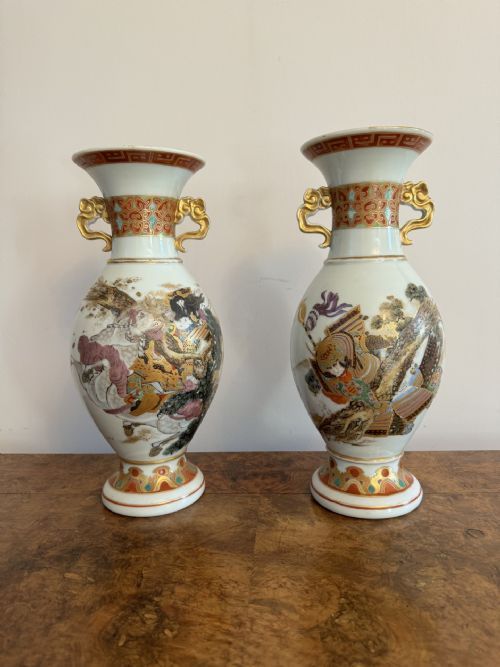
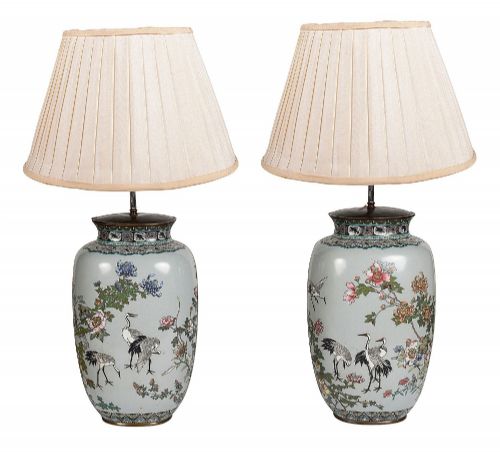
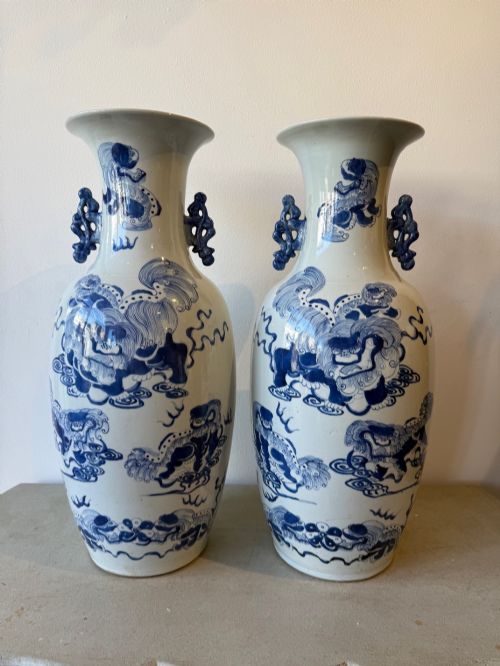
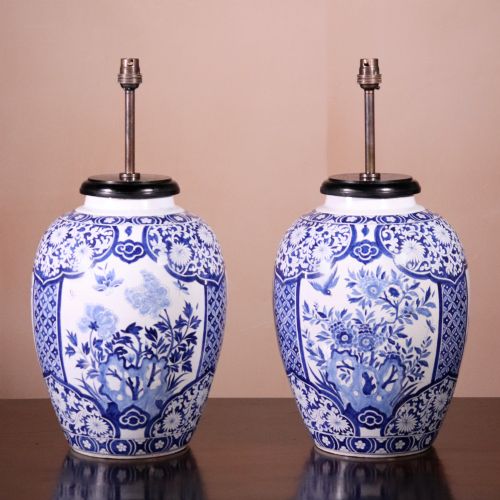
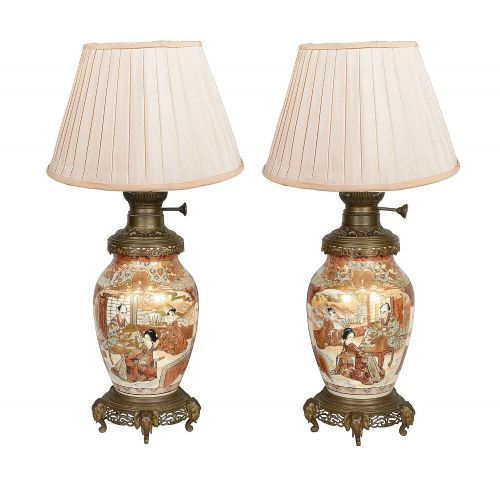
When searching for pair asian ceramic vases, collectors encounter dual vessels spanning the nineteenth century through the early twentieth century. These objects represent diverse regional traditions including Satsuma, Imari, Kutani, and Chinese blue and white ware.
How they were made
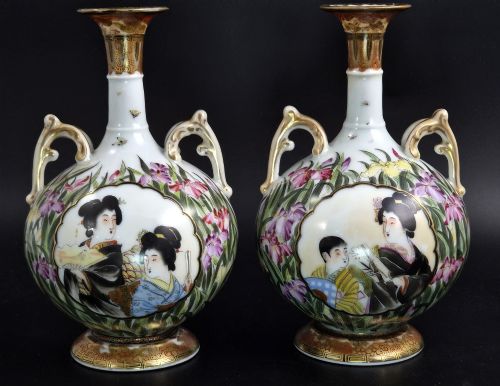
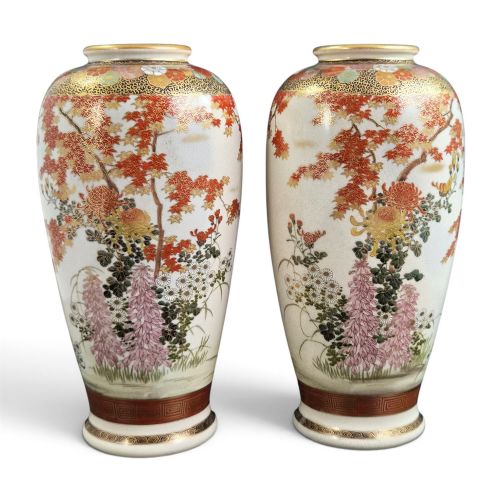
Potters shaped these vessels from porcelain and earthenware before applying detailed hand-painted designs in enamel and cobalt. Many pieces incorporate raised gold leaf accents to highlight complex pictorial scenes of figures, landscapes, and flora.
Techniques varied from the fine crackle glaze of Satsuma pottery to the crisp underglaze blue painting characteristic of traditional Chinese export and Kangxi style wares.
Some scholarly vases depict quiet retreats where scholars ponder nature while oblivious to wandering dragons.
What varies in quality
The standard of a pair depends largely on the precision of the hand-painted brushwork and the complexity of the decorative scheme. Finer examples display meticulous control over enamel layering and precise application of gilding.
Consistency between the two matching vessels also defines the better pieces, where size, glaze tone, and pictorial balance align closely across the pair.
Maruni Kobe·Shozan Satsuma·Manpei Kobe·Kinkōzan Kyoto·Kato Sanhei
The Pair Asian Ceramic Vases Glossary
- Satsuma
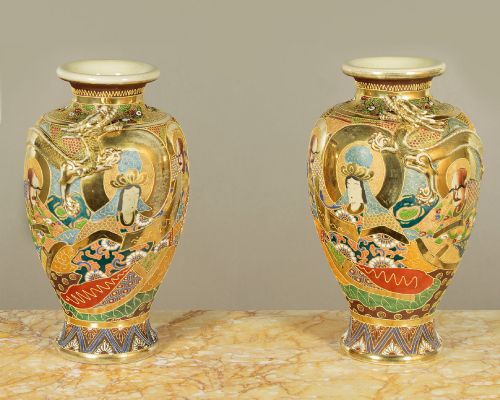
- Earthenware pottery originating from Satsuma province in Japan, known for a distinctive ivory-coloured crackle glaze and detailed polychrome enamel decoration. This style often incorporates heavy gilding.
- Imari
- A style of Japanese porcelain featuring a palette dominated by underglaze blue, iron red, and gold. These wares were widely exported to Europe from the seventeenth century onward.
- Kutani
- Japanese coloured porcelain and stoneware identified by bold pictorial designs, frequently utilising vibrant greens, yellows, and purples alongside red and gold.
- Baluster
- A vase shape characterised by a rounded body that tapers toward the base and swells near the lower middle, resembling a classical architectural baluster.
- Enamel
- Opaque or translucent glass paste applied to ceramic surfaces and fired to produce rich, durable colours. It provides the primary palette for detailed narrative scenes.
Pair Asian Ceramic Vases: Frequently Asked Questions
How do I identify Satsuma ware?
Satsuma pottery is recognised by its warm, ivory-coloured earthenware body covered in a fine network of microscopic crackles in the glaze. Artisans painted these surfaces with detailed figures and floral motifs finished with gilt.
Many pieces bear artist signatures or workshop seals on the underside, pointing to specific kilns in Kyoto or Satsuma province.
Were these vases made for export?
A significant portion of these ceramics was produced specifically for export to Western markets during the Meiji period and the nineteenth century. Makers adapted traditional Eastern forms to suit European interior tastes.
This exchange influenced the decorative subjects and led to the creation of matching pairs suitable for mantelpieces and display cabinets.
Can I convert these vases safely?
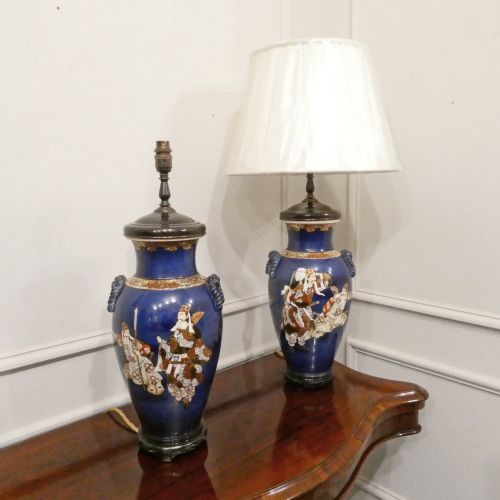
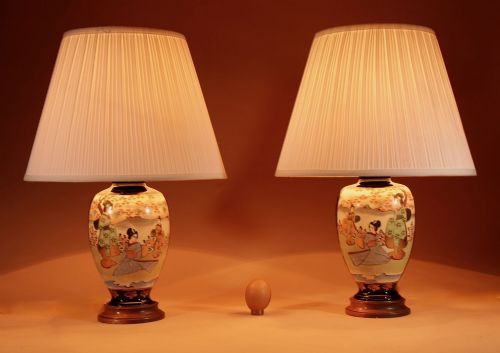
Many antique vases arrive mounted as table lamps using fittings that respect the underlying ceramic body. Conversion often involves wiring threaded through drilled bases or fitted brass mounts.
Preserving the original ceramic material remains important when assessing the long-term integrity of transformed decorative objects.
What defines Imari porcelain?
Imari wares are identified by a distinct palette combining deep underglaze blue with rusty iron red and extensive gold leaf detailing. The designs typically feature dense floral patterns, landscapes, and panels of brocade.
This robust style was produced extensively in Japan for both domestic use and international trade.