





Japanese Imari Dishes
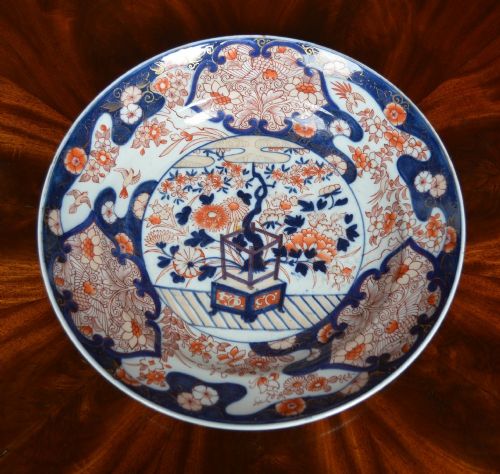
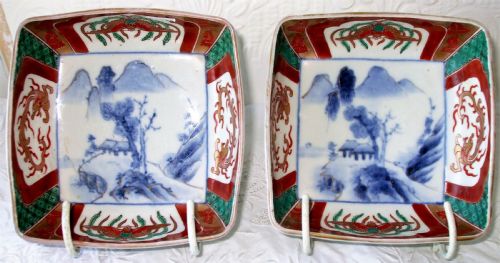
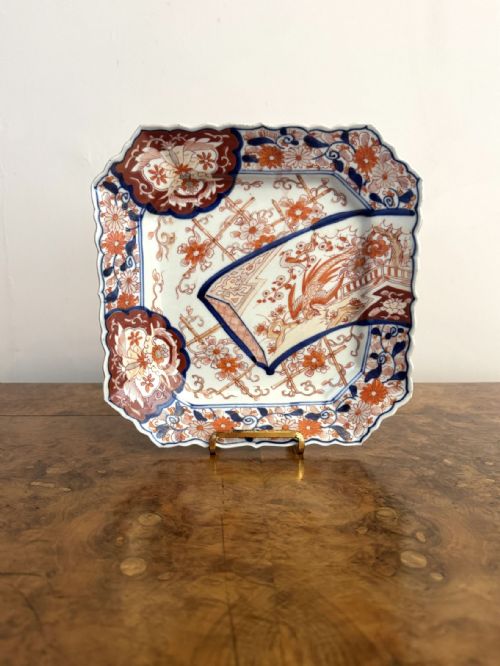
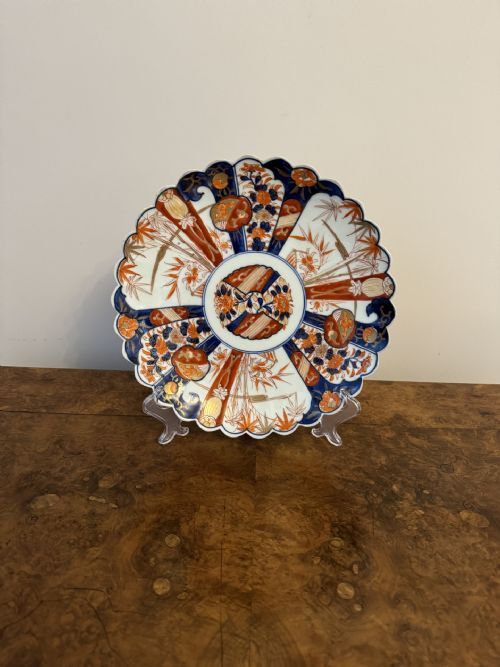
These Japanese imari dishes bring together cobalt underglaze blue and iron red enamel on porcelain, offering a distinct display presence for any room.

Japanese Imari Dishes
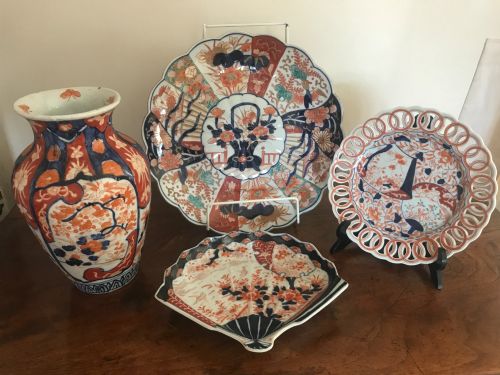
Japanese imari dishes encompass plates, chargers, bowls, and shaped vessels created for decorative display and everyday use. When searching for japanese imari dishes, buyers primarily encounter pieces originating from the Meiji period and the nineteenth century, alongside occasional eighteenth-century examples.
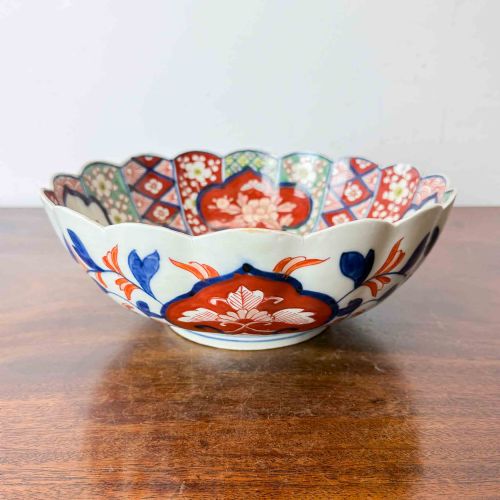
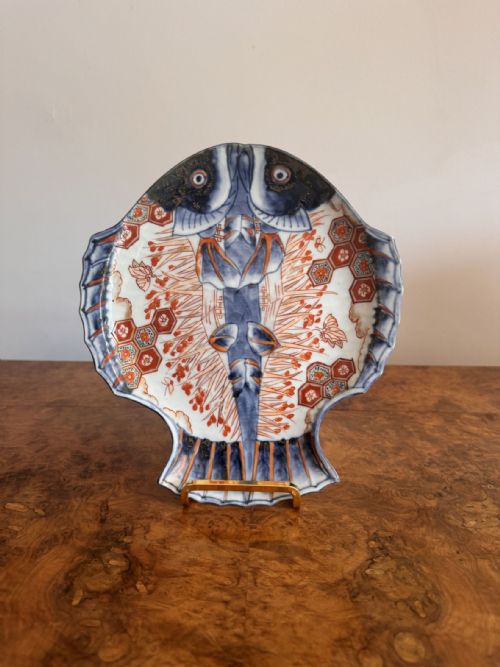
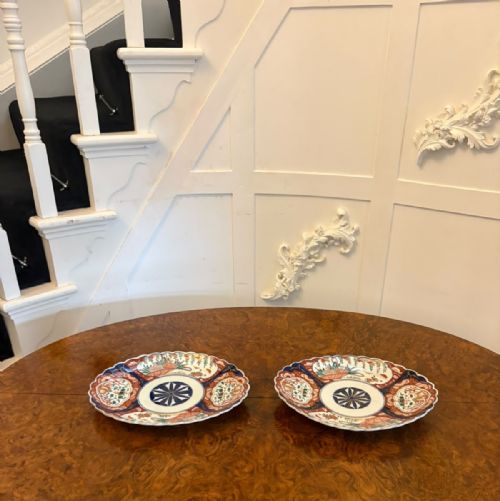
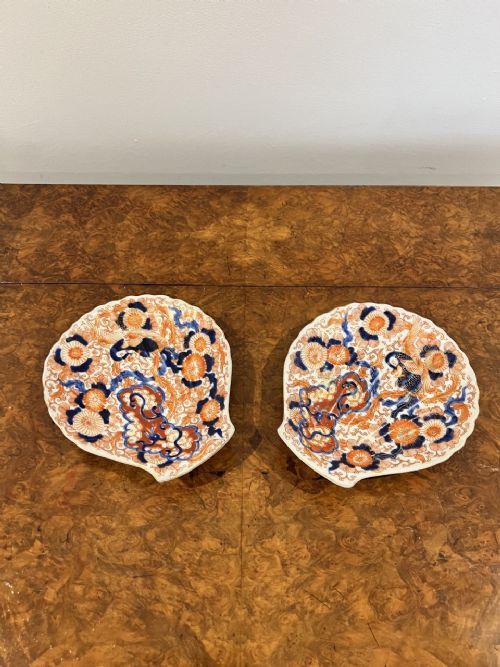
The forms extend beyond standard rounds to include scalloped edges, oval dishes, fish and shell shapes, hexagonal formats, and square plates. These ceramics range from single items to paired sets and larger collections.
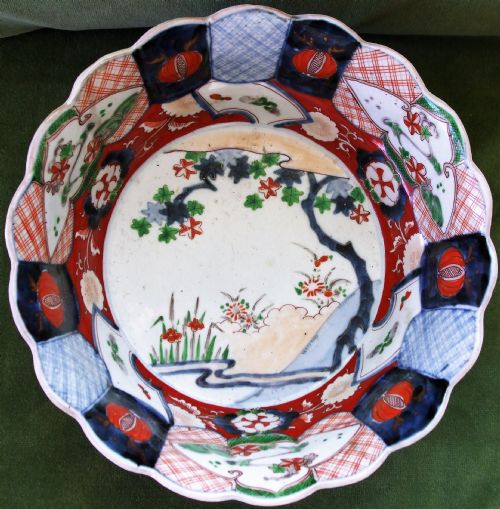
Originating through traditions linked to Japanese Arita production, the items reflect both domestic tastes and export markets. Buyers find both blue and white variations and richly coloured polychrome designs.

How They Were Made
Makers shaped porcelain clay into plates, bowls, and chargers before applying cobalt underglaze pigment directly to the body. Artisans then fired the pieces to fix the blue details beneath a clear glaze.
Following the initial firing, decorators added iron red enamel, additional pigments, and sometimes gold leaf, gilt, or gilding to complete the palette. A secondary lower-temperature firing bonded these surface enamels and metallic highlights to the glazed porcelain.
Japanese Imari Dishes Retail Price Guide 2026
Typical asking prices for japanese imari dishes among the pieces listed under this phrase on Sellingantiques today, from the lower quarter to the upper quarter. They describe what is for sale here now, not the wider market.
A few clever makers turned flat porcelain into swimming fish, proving that even a dinner plate can have aspirations of aquatic freedom.
What Varies in Quality
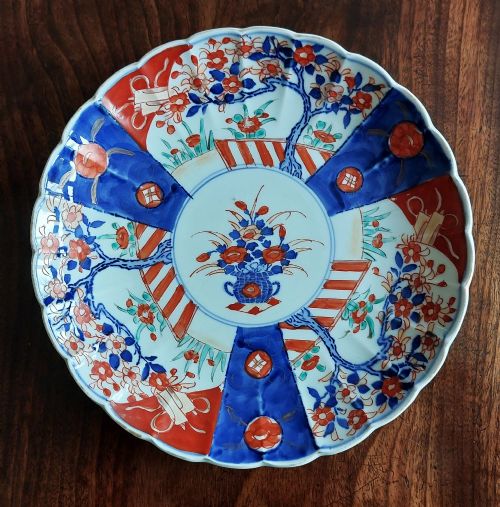
Quality rests in the precision of the hand-painted floral, bird, and geometric designs applied across the porcelain surface. Finer examples display meticulous brushwork and balanced compositions that integrate the cobalt blue and iron red pigments harmoniously.
The crispness of moulded or shaped edges, such as scalloped rims, fish forms, and hexagonal contours, distinguishes superior pieces. Heavier chargers and well-preserved gilt or gold leaf applications further separate standard production from exceptional works.
The Japanese Imari Dishes Glossary
- Charger
- A large decorative plate intended for display on a wall, cabinet, or sideboard rather than for serving food at a table.
- Cobalt Underglaze
- A blue pigment applied to the raw porcelain body before glazing and firing. It withstands high kiln temperatures without fading.
- Meiji Period
- The era in Japanese history spanning from 1868 to 1912, corresponding to the production period of many antique items found on the market.
- Arita
- The Japanese town and surrounding region in Hizen province where local kilns first produced these porcelains. It remains the historical heartland of Japanese ceramic manufacturing.
Japanese Imari Dishes: Frequently Asked Questions
How do I display japanese imari dishes?
Larger chargers and plates suit wall mounting using appropriate plate hangers or placement on sturdy display stands. Smaller bowls and shaped dishes fit well inside cabinets or on tabletops where their interior patterns remain visible.
Mixing different shapes, such as oval dishes alongside standard round plates, creates visual variety in a display. Keeping pieces away from direct heat sources protects the enamel and gilt surfaces over time.
What is the difference between imari and blue and white ceramics?
Traditional imari combines cobalt underglaze blue with iron red enamel and often gold leaf, creating a multi-coloured palette. Blue and white pieces rely solely on cobalt pigment beneath a clear glaze.
Both styles share roots in Japanese porcelain production, but the addition of enamel distinguishes standard imari from monochrome blue and white wares.
How can I tell the age of these dishes?
Dating relies on stylistic markers, materials, and documented production periods associated with nineteenth-century manufacturing and the Meiji era. Earlier pieces from the eighteenth century show distinct potting characteristics and glaze qualities.
Examining the foot ring, the wear on the porcelain base, and the hand-painted brush details helps separate nineteenth-century items from later reproductions.
Were these dishes used for dining?
While some plates served practical functions, many chargers and decorative pieces were created primarily for visual display. The presence of delicate enamel and gold leaf on certain bowls and plates suggests they were valued as ornamental items.
Sets of dishes often survive together because they were kept as cabinet displays rather than subjected to heavy daily dining use.