






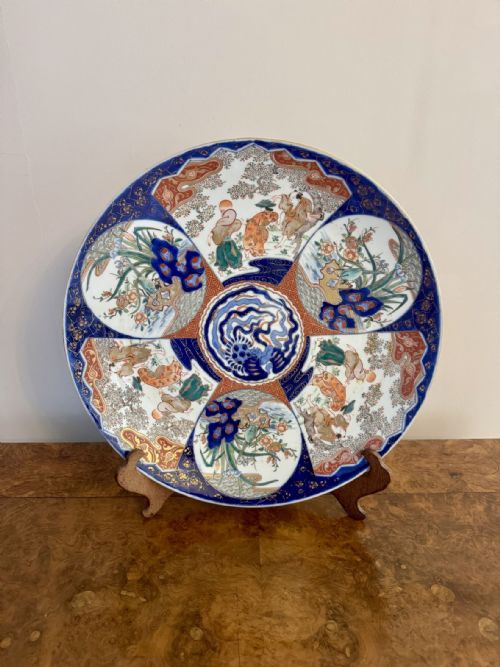

Japanese Imari Ceramic Plate
A Japanese imari ceramic plate brings striking iron-red and cobalt colour to a room through traditional hand-painted decoration.
Japanese Imari Ceramic Plate
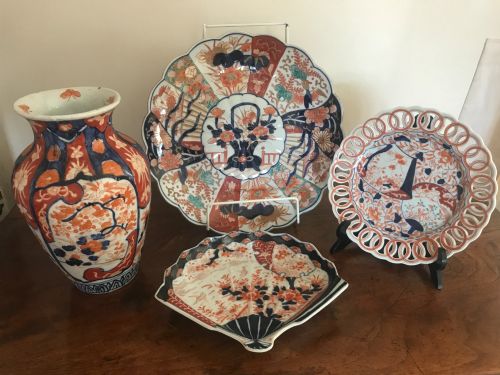
A japanese imari ceramic plate encompasses chargers, dishes, and display plates produced across the nineteenth and twentieth centuries. These ceramics display distinct influences from japanese meiji and arita traditions.
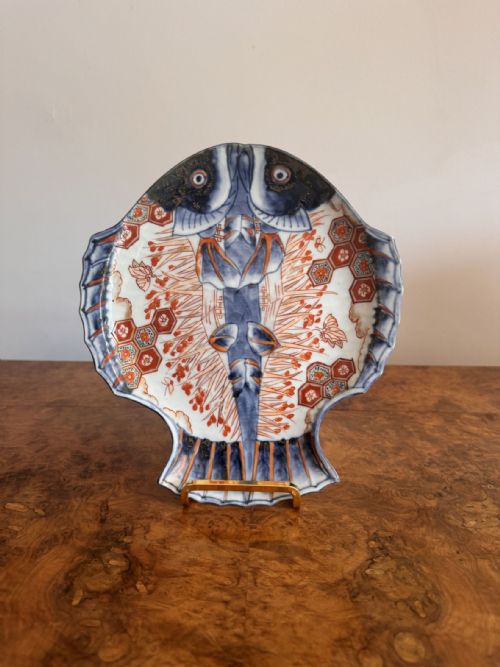
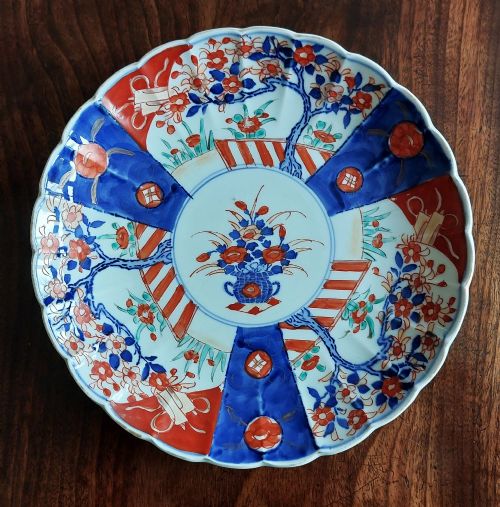
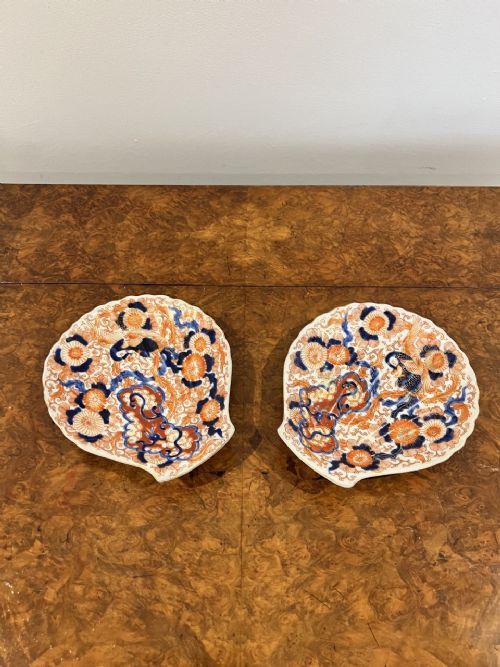
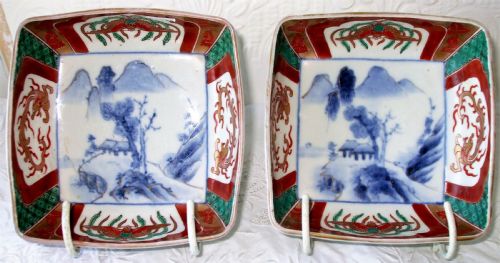
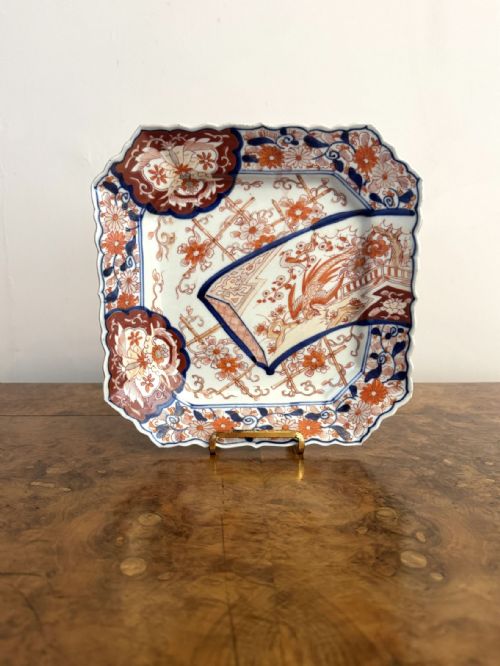
Buyers encounter circular chargers alongside scalloped edges, oval dishes, and unusual forms shaped like fish, shells, or squares. Most examples originate from the nineteenth century or the late victorian era.
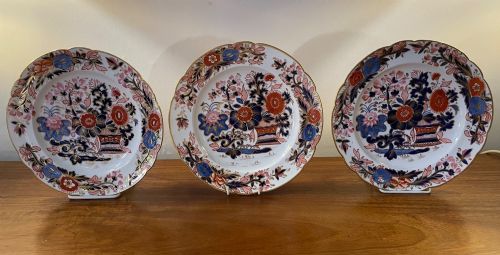
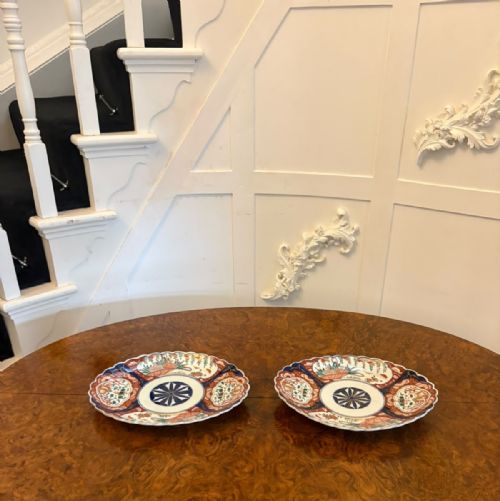
The selection includes matched pairs and small sets alongside individual decorative plates. Each piece serves primarily as a decorative display dish for walls or surfaces.
How they were made
Potters formed these items in porcelain, applying cobalt underglaze details beneath transparent glazes before secondary firing. Artisans then added enamel colours and occasional gold leaf or gilding over the glaze.
Many items incorporate hand-painted floral and bird designs executed within traditional palettes. Production centres relied on skilled brushwork to cover surfaces with dense patterns.
Among the standard circular plates hide delightful marine forms, including ceramic fish and shell-shaped dishes ready to swim onto a wall.
What varies in quality
Quality rests in the crispness of the cobalt underglaze painting and the precise application of enamel pigments. Superior examples display balanced compositions with clean brushwork across complex floral or bird motifs.
The physical form influences desirability, with unusual shapes like fish, shells, or hexagons commanding attention alongside standard circular chargers. The integrity of any applied gold leaf or gilding also separates standard items from finer works.
The Japanese Imari Ceramic Plate Glossary
- Imari
- A style of Japanese porcelain decorated in underglaze blue, iron red, and gold. This aesthetic originated in Arita and gained popularity across European export markets.
- Charger
- A large decorative plate utilised for display rather than dining. These substantial pieces often showcase the most elaborate painted compositions.
- Meiji Period
- The era in Japanese history spanning from eighteen sixty-eight to nineteen twelve. Ceramics from this time often exhibit high technical skill and vibrant enamelling.
- Cobalt Underglaze
- A blue pigment applied to the raw clay body before firing and glazing. This technique ensures the colour remains permanent and protected beneath the glassy surface.
- Scalloped Edge
- A decorative border shaped into a series of curves resembling a fan or shell. This shaping requires careful forming before the initial firing.
Japanese Imari Ceramic Plate: Frequently Asked Questions
How do I hang a heavy charger?
Large chargers require specialised spring-loaded wall hangers designed to distribute weight safely across the rim.
Ensure the fixing enters solid masonry or uses a proper wall anchor to support the porcelain securely.
Are these plates safe for food?
Antique decorative plates are generally intended for display rather than culinary use.
Older overglaze enamels and gold leaf can wear down or contain compounds unsuitable for modern dining.
How do I clean antique porcelain?
Dust these items gently with a dry, soft brush to remove surface particles.
Avoid soaking or harsh chemical detergents that might damage delicate overglaze enamels and gilding.
What defines the Meiji period?
The Meiji period represents an era of rapid modernisation and increased export of Japanese arts to the West.
Ceramics from this time demonstrate refined painting techniques and confident use of the traditional Imari palette.