





Japanese Earthenware Jar
These Japanese earthenware jar examples combine intricate enamel and gold leaf, offering collectors striking Meiji period artistry.
Japanese Earthenware Jar
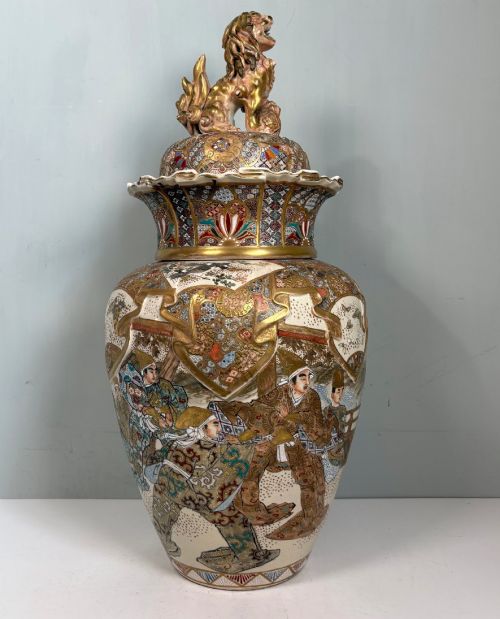
When you search for japanese earthenware jar, you encounter distinct ceramic forms originating from the Meiji period and Victorian eras. These items include lidded ginger jars, tea caddies, sugar bowls, and larger decorative vessels created for both domestic display and export.
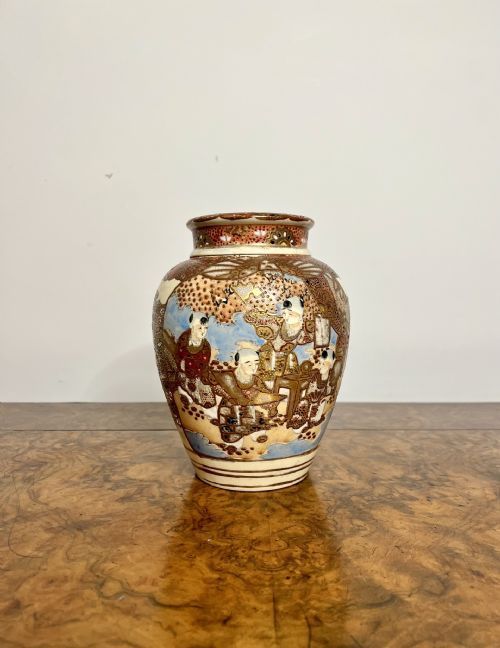
The version you are most likely to meet on this page is the Satsuma ware jar, often featuring elaborate polychrome enamel and gilt decoration. These pieces frequently bear signatures from noted regional studios and makers active around Kyoto and Tokyo.
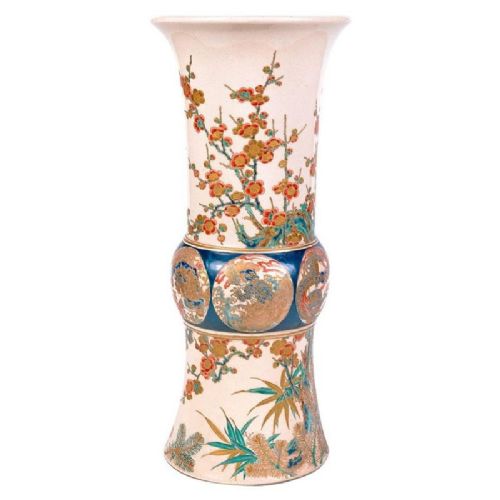
Vessels span various scales, from miniature vases to massive lidded jars exceeding eighty centimetres in height. Alongside Satsuma wares, the selection incorporates specialised forms such as studio pottery and wire-based cloisonne variants.
How they were made
Potters shaped porous clay bodies into intricate vessels, applying fine earthenware glazes as a base for subsequent decoration. Artisans then built up complex surface designs utilising rich polychrome enamels and applied gold leaf.
Many items incorporate delicate metal wire work to delineate intricate patterns across the ceramic surface, particularly in specialised cloisonne on earthenware techniques. Master painters executed detailed figural and landscape scenes by hand before final firing stages.
Tiny hidden rakan figures peer out from intricate gold landscapes on nineteenth century tea jars.
What varies in quality
The standard of painting on japanese earthenware jar pieces dictates much of their standing within the category. Superior examples display dense, meticulously rendered figures, landscapes, and gold leaf detailing executed by named artists and recognised studios.
Overall form and structural preservation also determine distinction, with larger lidded jars and koro requiring exceptional balance and precise fitting covers. Pieces bearing legible signatures from established makers generally represent the upper tier of the range.
Kizan·Shuzan·Yamashu·Tokyo Taizan·Makuzu Kozan II·Shozan
The Japanese Earthenware Jar Glossary
- Satsuma
- A type of Japanese earthenware originating from Satsuma Province, characterised by an ivory crackle glaze and elaborate enamel and gold decoration. This style became immensely popular during the Meiji period for export markets.
- Koro
- A traditional Japanese incense burner fitted with a pierced cover. These ceramic vessels often stand on three legs and feature intricate handles.
- Natsume
- A small Japanese tea caddy traditionally used in matcha preparation, named after its resemblance to a jujube fruit. These lidded jars typically exhibit fine painted ornamentation.
- Meiji Period
- The era in Japanese history spanning from 1868 to 1912, marked by significant opening to Western trade and the production of highly detailed decorative arts.
Japanese Earthenware Jar: Frequently Asked Questions
What distinguishes Satsuma jars from other pottery?
Satsuma jars are defined by their distinct ivory-coloured earthenware body covered in a fine network of crackled glaze. This pale surface serves as a canvas for dense polychrome enamels and extensive gilding.
Unlike everyday utility wares, these pieces were produced primarily for decorative display and international export during the late nineteenth and early twentieth centuries.
How are signed pieces identified?
Signatures on these earthenware vessels typically appear on the base as handwritten or stamped calligraphic characters in gold or red enamel. They often denote the individual artist, the painting studio, or the specific kiln responsible for the decoration.
Translating these signatures reveals regional centres such as Kyoto or Tokyo and links the object to documented Meiji period makers.
How should lidded jars be displayed?
These vessels require stable, flat surfaces away from direct sunlight to protect delicate enamel pigments and applied gold leaf. Because many feature matching fitted covers, placing them where handling is minimised ensures the security of the lid.
Larger floor-standing jars need secure placement out of high-traffic areas due to their height and substantial weight.
What is the difference between a koro and a ginger jar?
A koro is specifically designed as an incense burner, featuring a pierced or openwork lid intended to release fragrance and supported by small feet. A ginger jar traditionally serves as a storage container with a solid, tightly fitted lid.
While both share earthenware construction and decorative enamel surfaces, their original domestic functions dictate their structural form.