


Earthenware Ginger Jar
An earthenware ginger jar is a sturdy vessel originally made to hold spices, now sought after for its hand-painted glaze and decorative form.
Earthenware Ginger Jar
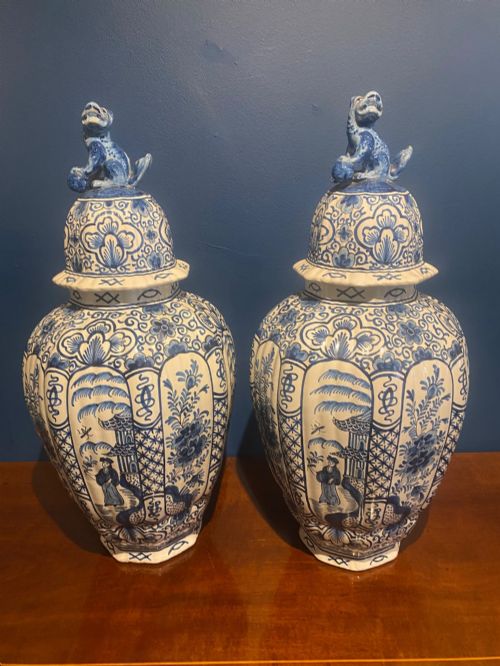
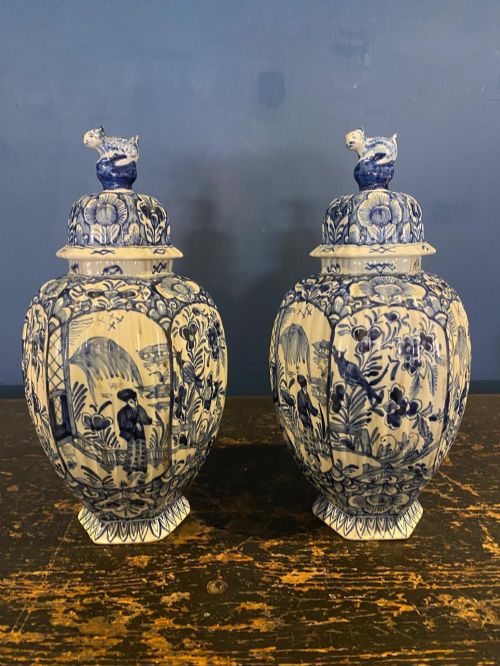
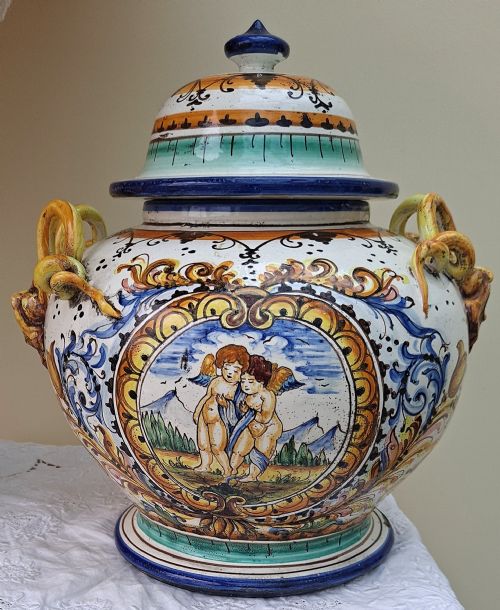
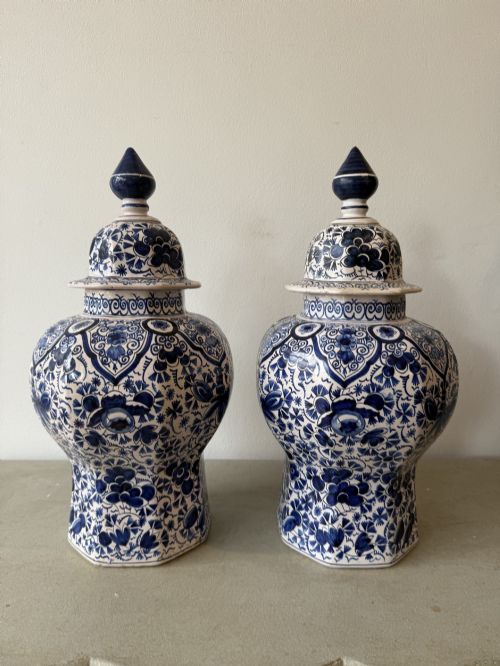
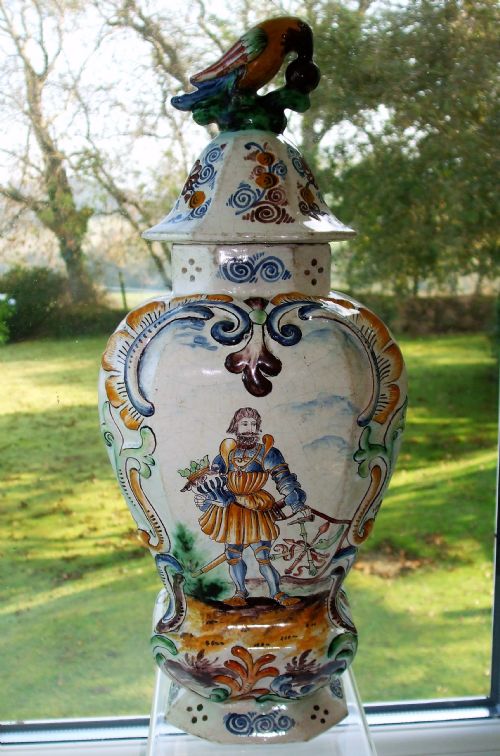
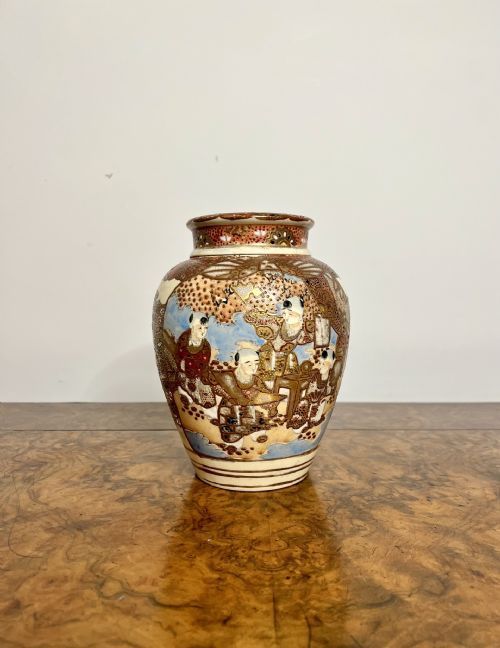
An earthenware ginger jar is a traditional storage vessel that has evolved into a decorative display piece across European and Asian traditions. The pieces gathered here span centuries, from the 17th century up to the Art Deco period, encompassing Dutch Delftware, Japanese Satsuma wares, and English productions.
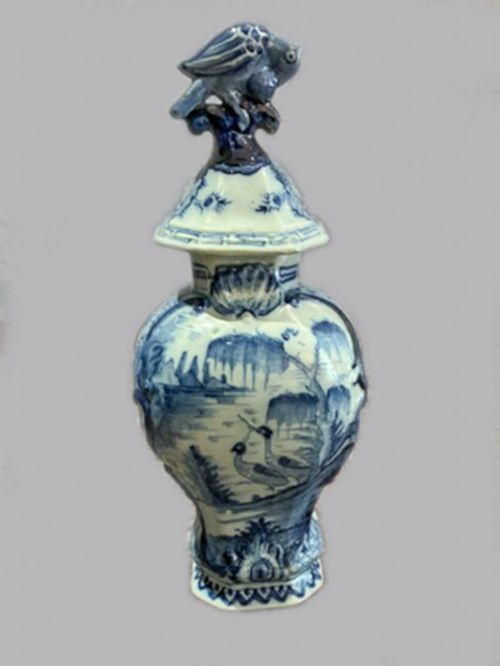
Most examples encountered on this page take the form of lidded vases, baluster jars, and occasional tea caddies or converted lamps. They reflect distinct regional styles, from blue and white Dutch Delft to polychrome Maiolica and intricately detailed Meiji period Satsuma earthenware.
How they were made
Makers shaped these vessels from clay bodies such as earthenware and terracotta, often applying tin-glazed earthenware finishes to provide a smooth white ground for painting. Pigments and enamels were then applied by hand before firing.
Many finer examples incorporate delicate additions like gold leaf or brass mounts, whilst other productions rely purely on the depth of the glaze and cobalt blue pigments to create pattern and tone.
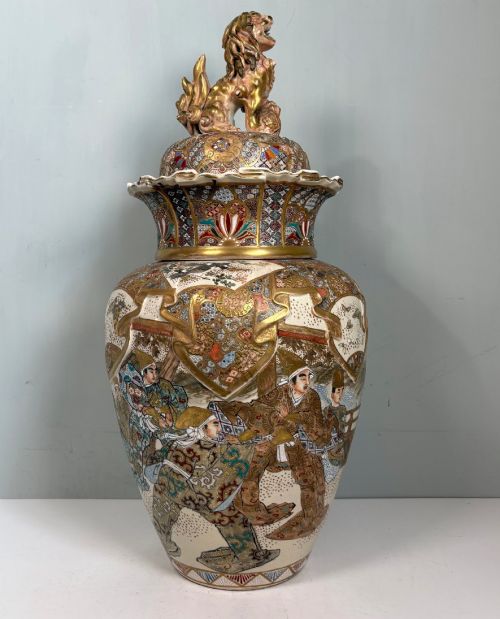
Several Satsuma jars quietly conceal gatherings of attentive Rakan monks painted in minute detail beneath layers of gold leaf.
What varies in quality
Quality rests in the crispness of the hand-painted decoration and the harmony of the glaze, whether in the precision of a Dutch landscape or the density of Japanese Rakan figures. The presence of a matching original cover significantly elevates a piece.
The refinement of the ceramic body and the control shown during the firing process distinguish standard production items from exceptional signed studio works.
Yamashu·Tokyo Taizan·Carlton Ware·Royal Winton·Losol
The Earthenware Ginger Jar Glossary
- Tin-Glazed Earthenware
- Earthenware coated with a tin oxide glaze that turns white and opaque upon firing. This surface serves as an ideal canvas for painted decoration in blue or polychrome.
- Baluster
- A vertical architectural form featuring a rounded lower body tapering toward a narrow neck. This silhouette is common among traditional lidded jars and vases.
- Maiolica
- European tin-glazed pottery originating in Italy. It is celebrated for its bright painted colours and narrative or decorative motifs.
- Polychrome
- Decoration employing several colours rather than a single hue or blue and white. It allows for rich, multi-toned floral and figurative scenes.
- Satsuma
- Japanese pottery originating from the Satsuma province, typically characterised by a crackle-glaze earthenware body decorated with elaborate enamels and gold leaf.
Earthenware Ginger Jar: Frequently Asked Questions
What were ginger jars originally used for?
These vessels were initially produced in China to store and transport spices, ginger, and preserves. Their broad shoulders and sealed lids kept the contents fresh during long journeys.
Over time, Western markets adopted the shapes purely for interior decoration, leading to the creation of ornamental lidded vases in European and Japanese kilns.
How do I spot an 18th century delft jar?
Eighteenth-century Dutch Delft pieces typically feature a tin-glazed earthenware body with hand-painted blue and white or polychrome motifs. The glaze often shows subtle imperfections and crazing accumulated over centuries.
Examining the footrim usually reveals the raw clay body underneath, as potters left these unglazed during firing to prevent the piece from sticking to the kiln floor.
Are these jars waterproof?
Because many of these vessels are constructed from porous earthenware and tin-glazed finishes, they are primarily intended as decorative objects. Using them to hold water for fresh flowers can sometimes risk moisture seeping through the unglazed base or historic hairline cracks.
If you wish to display stems inside an antique jar, place a small glass container safely on the interior.
How do I style a ginger jar at home?
Ginger jars work well as standalone focal points on mantelpieces, sideboards, or open shelving. Pairing a matched pair of baluster vases creates symmetry, whilst mixing different heights and patterns adds depth to a room.
Take care to place them where they will not be easily knocked, as lids can occasionally dislodge if the surface is bumped.