







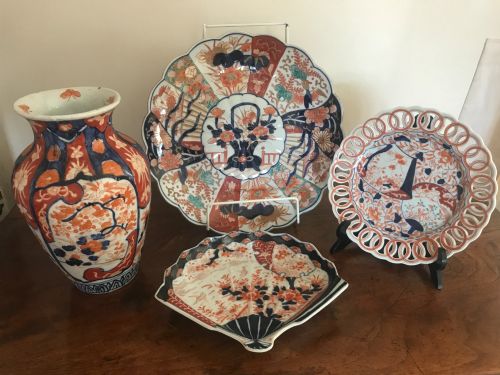
Japanese Dished Ceramic Plate
These japanese dished ceramic plate pieces bring centuries of hand-painted tradition into your interior, prized for their rich palettes and varied forms.

Japanese Dished Ceramic Plate
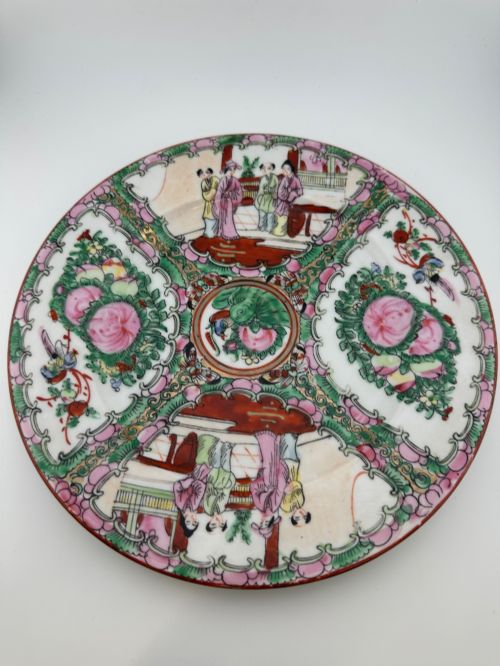
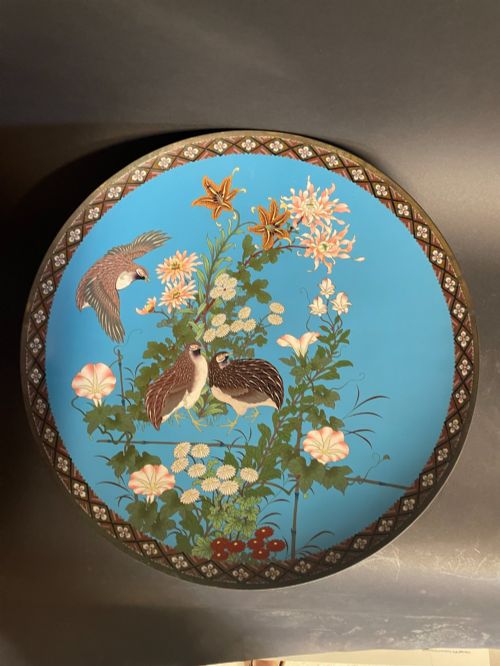
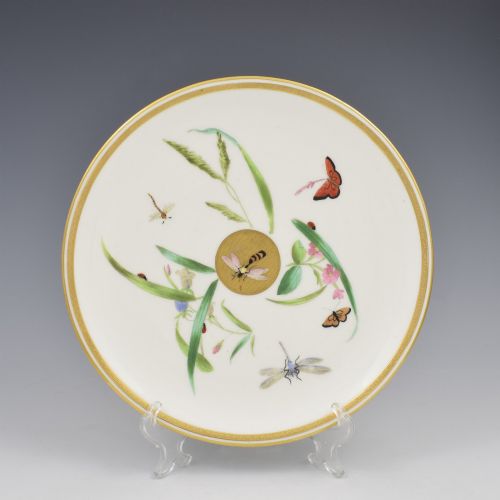
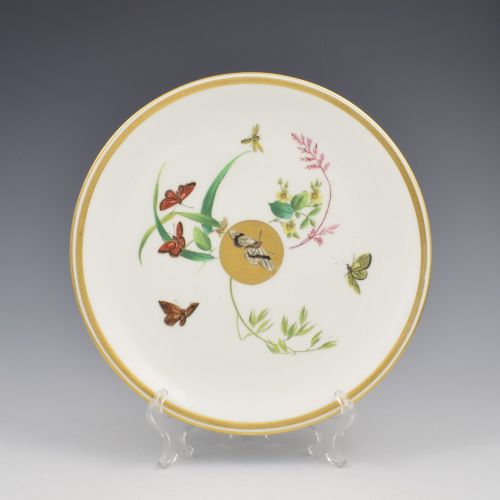
A japanese dished ceramic plate brings together traditional forms and painted decoration originating predominantly from the Meiji period and late nineteenth century.
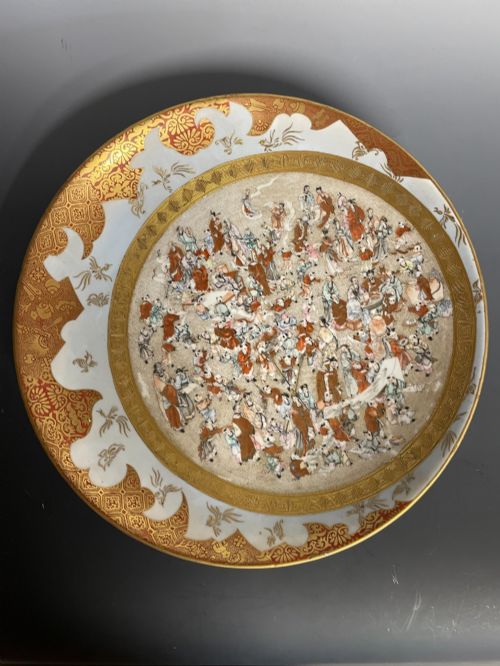
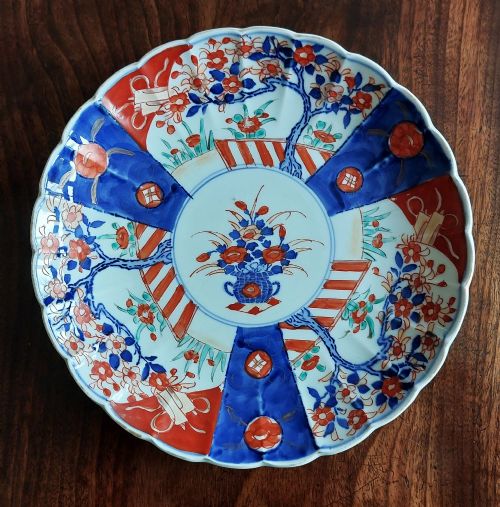
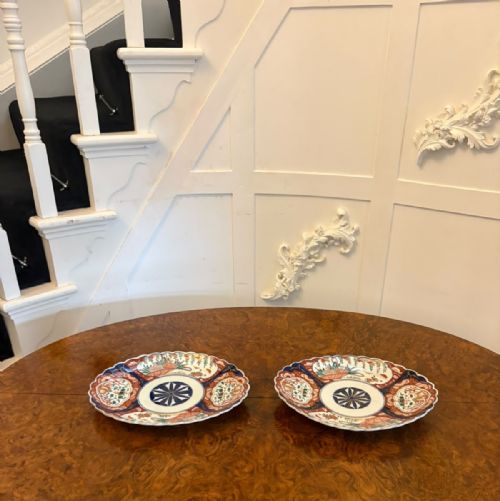
You will most frequently encounter Imari patterns in blue, iron red and gold, alongside Satsuma ware and blue and white porcelain chargers.
The selection ranges from small cabinet dishes and scalloped edges to large chargers designed for wall display or cabinet presentation.
How they were made
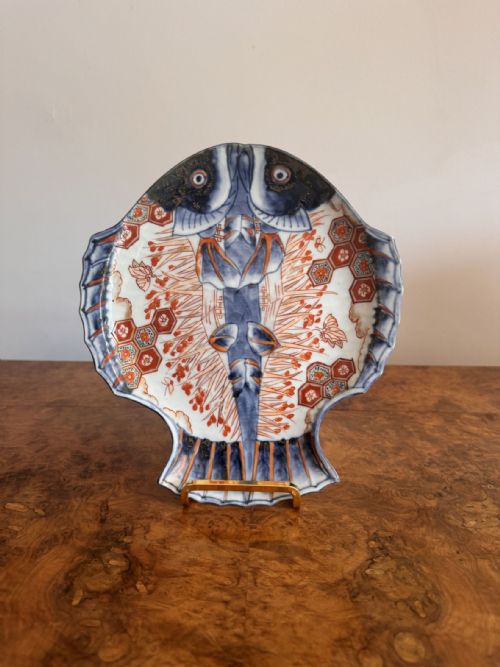
Potters shaped porcelain and earthenware bodies on the wheel or into moulds, often creating fish, shell, square or hexagonal forms alongside standard rounds.
Decoration relied on cobalt underglaze, enamel pigments, gold leaf and gilding, applied by hand to achieve intricate floral, bird and landscape motifs.
Materials recorded across the inventory include porcelain, earthenware, cobalt underglaze, enamel, gold leaf and gilding.
What varies in quality
Quality rests upon the precision of the hand-painted brushwork and the depth of the cobalt underglaze and enamel colours used across the surface.
Purity of the porcelain body and the crispness of moulded edges, such as scalloped or lobed rims, separate standard wares from finer examples.
Koshida·Minton
The Japanese Dished Ceramic Plate Glossary
- Imari
- A style of Japanese porcelain decorated in underglaze blue, iron red and gilt. It originated in Arita and became popular for export during the Edo and Meiji periods.
- Meiji Period
- The era in Japanese history lasting from 1868 to 1912. Pieces from this time often combine traditional techniques with Western export influences.
- Charger
- A large decorative plate or dish intended for display on a wall or sideboard rather than for dining use.
- Cobalt Underglaze
- A blue pigment applied to the ceramic body before glazing and firing. It yields a permanent colour beneath the glossy surface.
- Satsuma
- A type of earthenware with a ivory-coloured, crackle-glaze finish. It is typically decorated with elaborate polychrome enamels and raised gold work.
Japanese Dished Ceramic Plate: Frequently Asked Questions
How do I hang a large charger?
Large chargers require specialised spring-loaded wall hangers that grip the rim securely without damaging the ceramic body.
Ensure the wall fixing engages directly with a stud or utilise a heavy-duty plaster anchor to support the weight safely.
What is the difference between Imari and Kutani?
Imari wares rely on a distinct palette of cobalt blue, iron red and gold applied to porcelain. They often feature dense floral and geometric panels.
Kutani ceramics utilise different enamel combinations, frequently focusing on pictorial scenes rendered in greens, yellows and purples.
Can I use these plates for food?
Antique decorative plates are generally intended for display rather than culinary use. Historic glazes and enamels may contain materials unsuited for modern dining.
Hand-washing is essential for any piece that encounters moisture, to protect the fragile gold leaf and enamel overglazes.
How do I date a Meiji period plate?
Dating relies on stylistic markers, export history and pottery methods recorded in the piece. The Meiji period spans from 1868 to 1912.
Later pieces often reflect shifts in international taste, while earlier nineteenth-century examples retain stricter adherence to traditional Edo designs.