






Imari Wall Platter
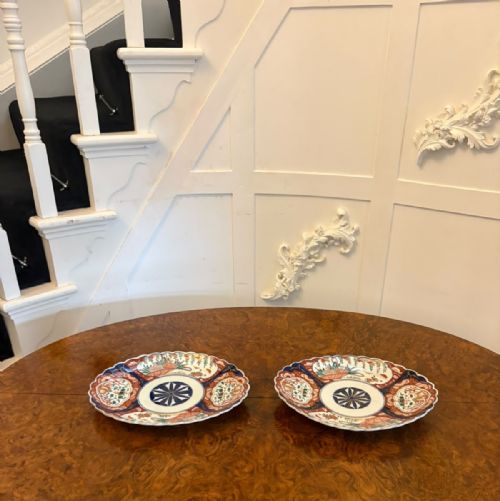
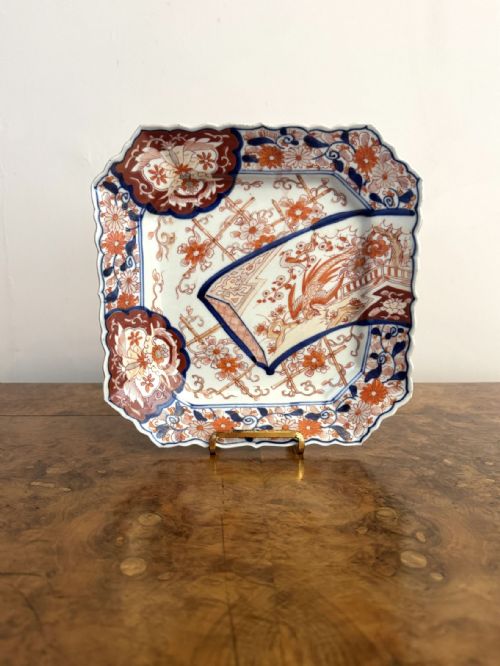
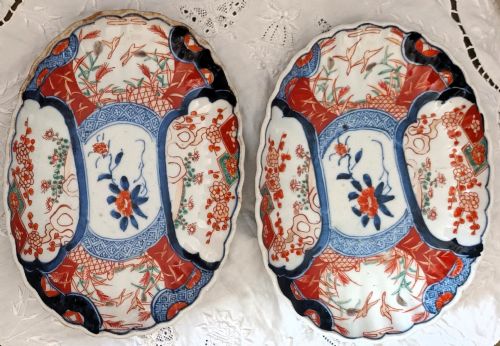
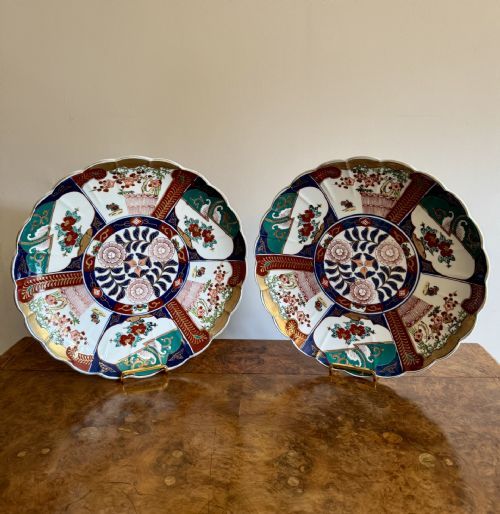
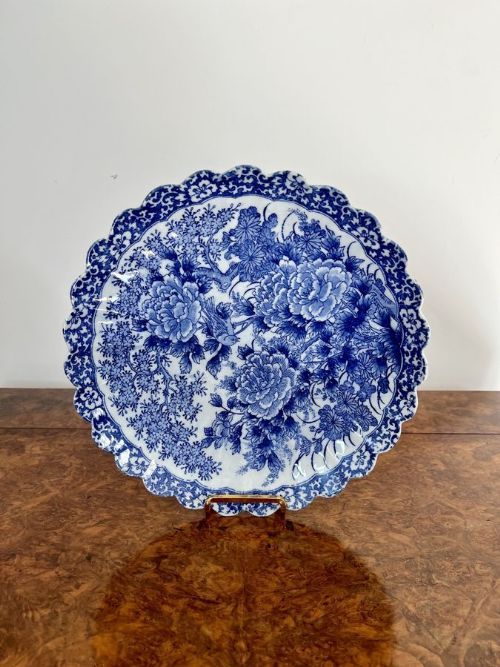
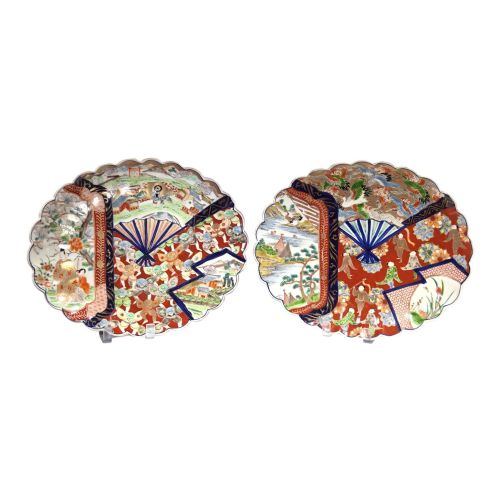
An imari wall platter brings heavy ironstone and porcelain colour to a room, formed in circular, square, fan, and oval shapes.

Imari Wall Platter
An imari wall platter is a substantial ceramic dish meant for display, appearing on this page mostly as large Japanese chargers and plates from the Meiji and Edo periods, alongside occasional English nineteenth century ironstone and stoneware versions.
Buyers look at heavy porcelain and stoneware bodies formed in rounds, octagons, squares, fans, and ovals, measuring large enough to command a wall or cabinet.
The aesthetic centres on traditional cobalt underglaze blue combined with rich enamel and gilt highlights, showing subjects like koi carp, floral panels, and the Seven Lucky Gods.
Materials and Technique
Potters shaped high-fired porcelain and ironstone bodies on the wheel or in moulds before applying cobalt underglaze decoration by hand.
Enamel colours and gold leaf or gilt details were added over the glaze in a secondary firing to build up the dense decorative palette.
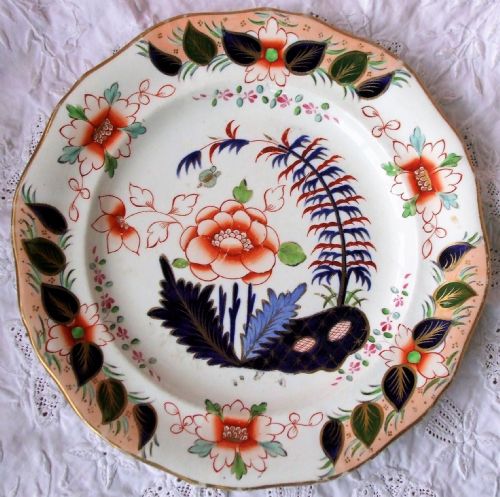
English makers imitated these Japanese designs using local stoneware and earthenware bodies painted with transfer-printed or hand-applied ironstone patterns.
Several plates depict the Seven Lucky Gods, ensuring your wall display comes with a built-in mythological committee of good fortune.
Judging Quality
Quality rests in the crispness of the hand painting and the depth of the cobalt underglaze, where finer plates show precise brushwork and balanced composition across complex geometric or pictorial scenes.
The weight and finish of the porcelain or ironstone body set apart standard production ware from exceptional pieces, especially in shaped items like square, fan, or scalloped plates.
The vibrancy and intact survival of the overglaze enamels and gold gilt determine the visual strength of the piece on the wall.
John Davenport of Longport·John Ridgway
The Imari Wall Platter Glossary
- Imari palette
- A decorative scheme employing cobalt blue underglaze, iron red overglaze, and gold gilt, originating in Japan and later copied in Europe.
- Charger
- A large decorative plate traditionally used for display on a sideboard or wall rather than for dining.
- Cobalt Underglaze
- A blue pigment applied to the raw ceramic body before glazing and firing, creating a durable finish beneath a clear glass layer.
- Ironstone
- A heavy, durable type of earthenware developed in England during the nineteenth century to imitate Chinese and Japanese porcelain.
- Aka-e
- A Japanese term for red-painted ware, often used to describe the dominant iron-red enamel found on traditional export porcelain.
Imari Wall Platter: Frequently Asked Questions
How do I hang an imari wall platter safely?
Heavy porcelain and ironstone chargers require a coated spring wire hanger that distributes weight evenly across the rim without pinching the ceramic body.
Ensure the wall fixing is secured directly into a stud or uses a proper masonry plug to support the considerable weight of a large nineteenth century charger.
Are these platters meant for food use?
Most antique chargers and decorative plates are intended strictly for display and carry historic glaze characteristics or nineteenth century wear that makes dining impractical.
Enamels and gold gilt applied over the glaze can also be sensitive to cutlery marks and frequent washing.
How do I tell Japanese imari from English imari?
Japanese pieces utilise fine translucent porcelain or denser Meiji bodies with hand-painted cobalt and enamel details depicting traditional subjects like koi carp or figures.
English pieces typically employ heavier ironstone or stoneware bodies stamped by Staffordshire potteries using patterns inspired by imported wares.
What periods do these platters come from?
The listings span from late seventeenth century Edo period examples up to early twentieth century Victorian and Edwardian items.
Nineteenth century production dominates the selection, particularly pieces originating from the Meiji period in Japan and the Victorian era in England.