





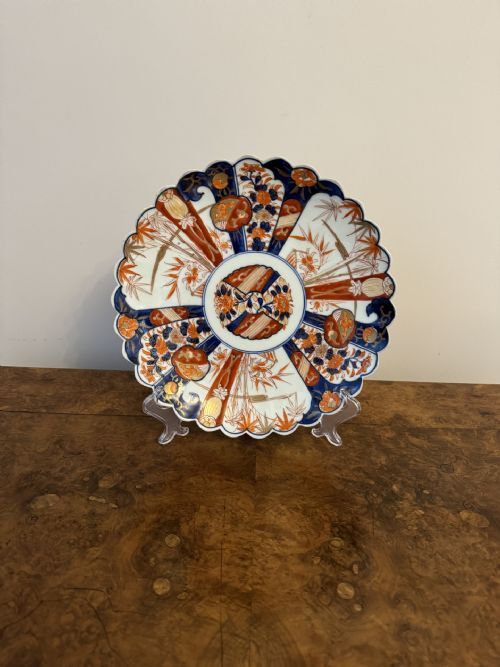

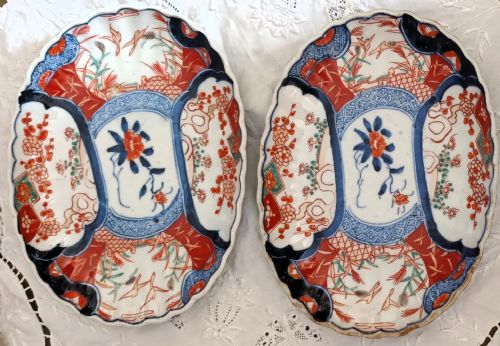
Japanese Ceramic Display Plate
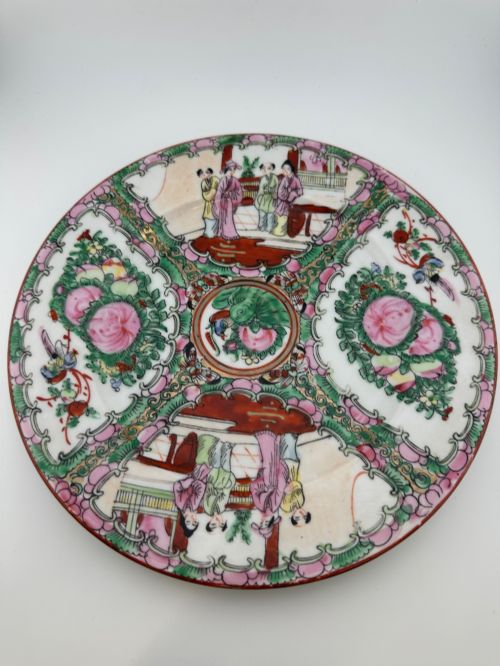
A japanese ceramic display plate brings heavy hand-painted colour and rich pattern into a room, made for standing on a cabinet or hanging on a wall.
Japanese Ceramic Display Plate
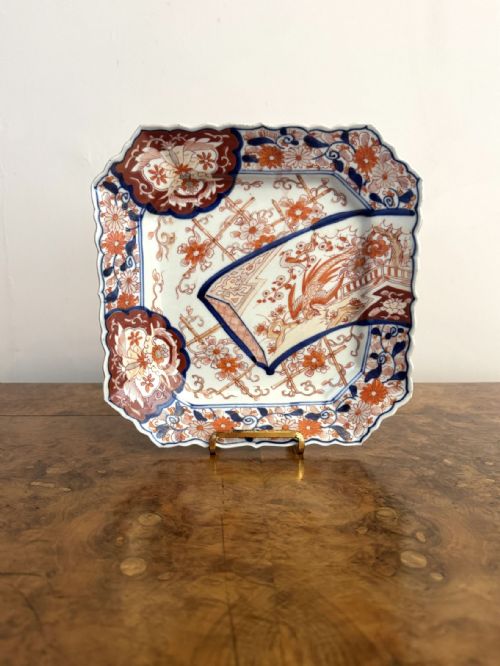
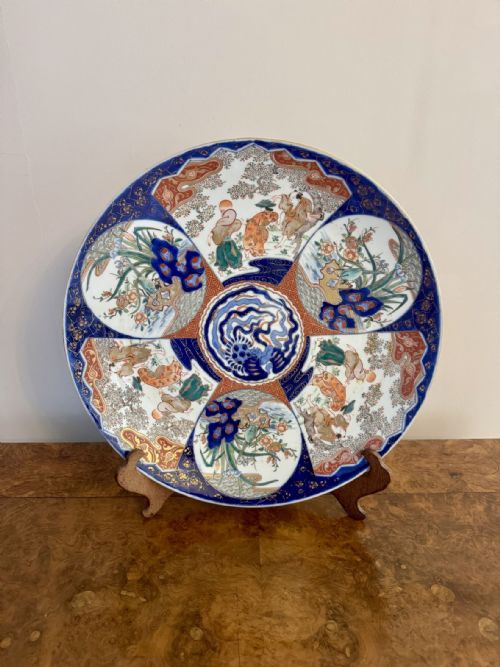
When someone searches for a japanese ceramic display plate, they encounter round chargers, square dishes, and scalloped plates designed strictly for visual impact rather than dining. The examples gathered here span from the nineteenth century into the early twentieth century, taking in the Edo, Meiji, and Taisho periods.
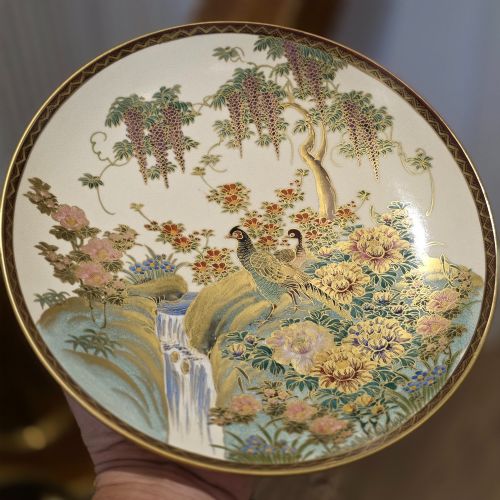
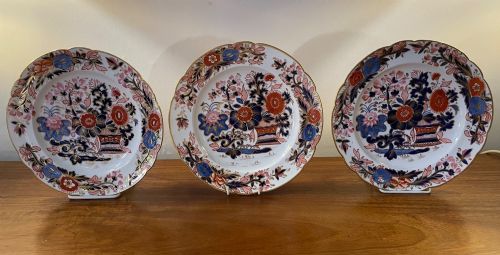
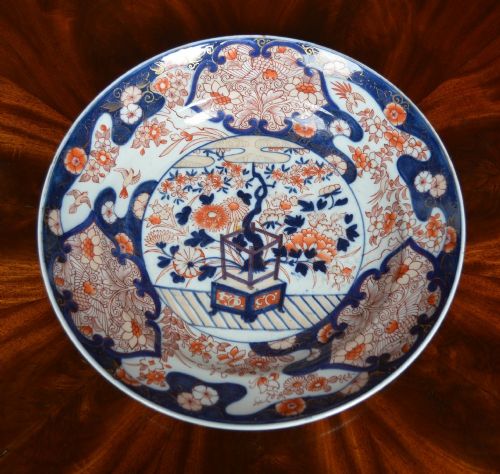
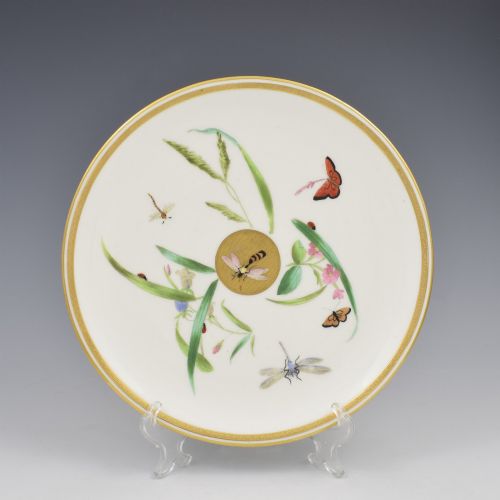
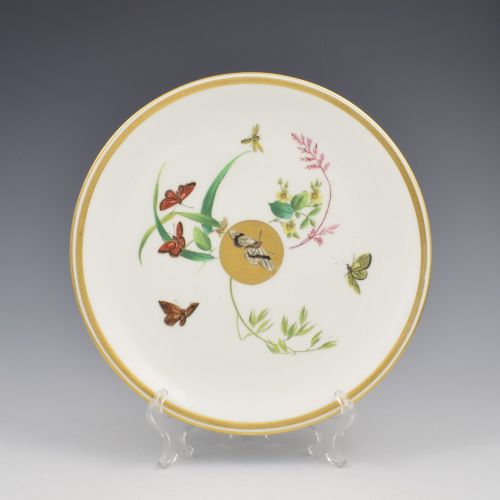
Imari porcelain dominates the selection, alongside Satsuma ware and Kutani porcelain. Alongside imported pieces, British factories of the Victorian era produced earthenware and porcelain dessert plates adopting the same palette.
Most items on this page date from the Meiji period around 1900, showing blue and white underglaze, iron red, and gilding depicting birds, floral motifs, and figures such as the Seven Lucky Gods.
Materials and Techniques
Potters relied primarily on porcelain and earthenware bodies, shaped by hand or moulded into hexagonal, square, and circular forms. Artisans then applied underglaze blue pigments and hand-painted enamel colours over the fired surfaces.
Gold leaf, gilding, and gold gilt provide the metallic highlights characteristic of Imari palette wares and Satsuma dishes. Glaze seals the surface, while some pieces incorporate raised enamel work to give texture to birds and flowers.
Listings span porcelain and earthenware, featuring periods from the early nineteenth century through to the Taisho era.
Distinctions in Execution
The precision of the hand-painted brushwork dictates the standing of a piece, separating mechanical repetition from fluid artistic control. Denser compositions involving multiple figures, such as the Seven Lucky Gods, demand greater skill from the painter.
The clarity of the glaze and the purity of the porcelain body also mark the difference between standard production items and exceptional chargers. Furthermore, unusual geometrical formats like square or hexagonal plates require superior forming techniques to prevent warping during kiln firing.
Koshida
The Japanese Ceramic Display Plate Glossary
- Charger
- A large decorative plate intended for display on a wall or sideboard rather than for holding food at a table.
- Imari
- A style of Japanese porcelain featuring a distinct palette of underglaze blue, iron red, and supplementary gold leaf.
- Meiji
- The historical period spanning from 1868 to 1912, associated with intense decorative output exported to the West.
- Satsuma
- A type of earthenware with a cracked ivory glaze, typically decorated with fine polychrome enamel and heavy gilding.
- Scalloped
- A shaped edge finished with a series of rounded curves rather than a simple straight or circular rim.
Japanese Ceramic Display Plate: Frequently Asked Questions
What is a japanese ceramic display plate?
It is an ornamental ceramic dish made primarily for visual exhibition rather than practical dining use. These pieces often feature intricate hand-painted motifs and rich colour palettes.
Most examples found here originate from Japanese kilns during the nineteenth and early twentieth centuries, alongside occasional British interpretations from the Victorian period.
How were these plates used?
Historic households placed these large dishes and chargers on sideboards, mantelpieces, or mounted them directly onto walls to showcase exotic imported art. Their heavy decoration served to catch the light in formal reception rooms.
They functioned purely as ornamental focal points rather than tableware, protected from the wear of daily meals.
How do I hang a heavy charger?
Displaying large and heavy ceramic pieces safely requires a robust wall hook combined with a secure, coated spring wire hanger that grips the rim firmly. The weight of nineteenth-century porcelain demands proper wall anchors.
Alternatively, a sturdy vertical plate stand placed on a cabinet provides a secure resting place without drilling into walls.
How can I tell the period?
Dating relies on stylistic clues, ceramic bodies, and recorded reign periods such as the Meiji era or the Victorian years. Aesthetic Movement British interpretations from the 1870s often combine European porcelain blanks with Japanese-inspired motifs.
Japanese pieces from around 1900 typically display dense hand-painted bird, floral, or figural compositions using traditional Imari or Satsuma techniques.