
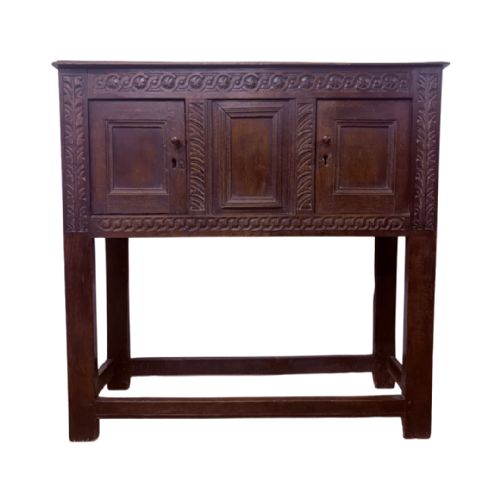
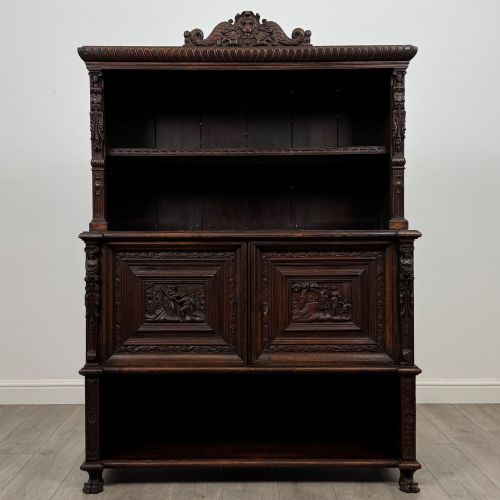
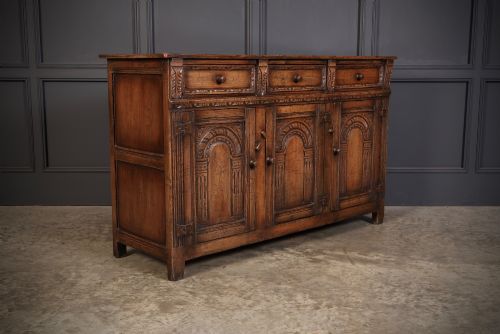
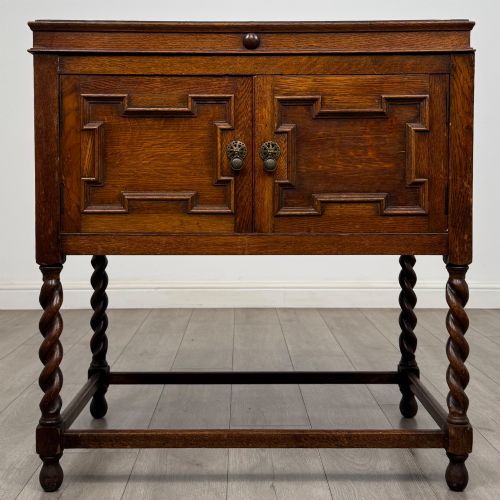
Jacobean Oak Sideboard
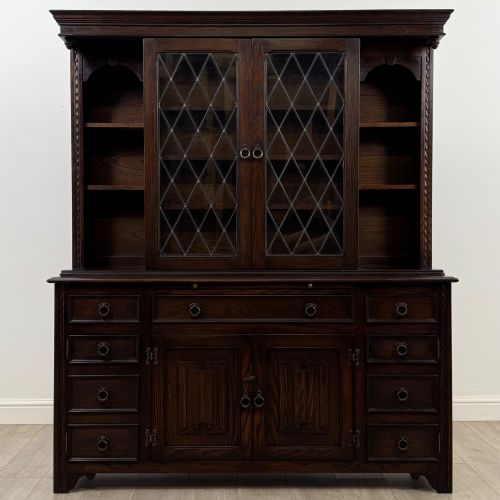
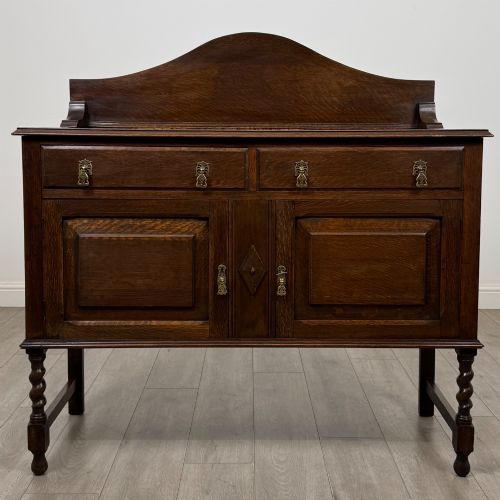
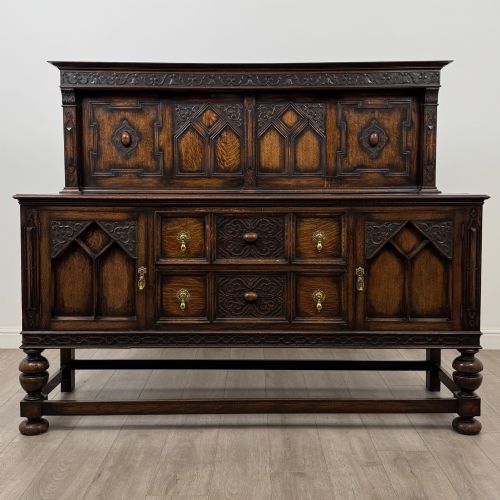
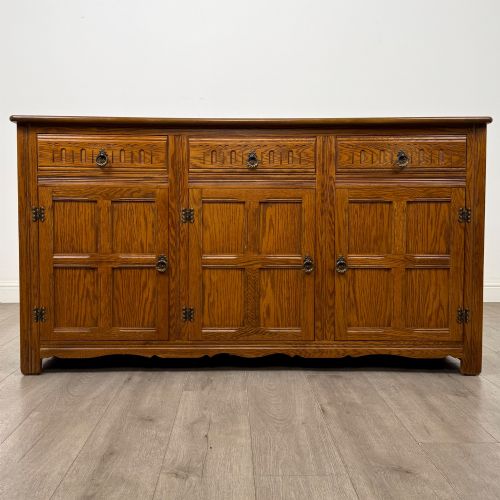
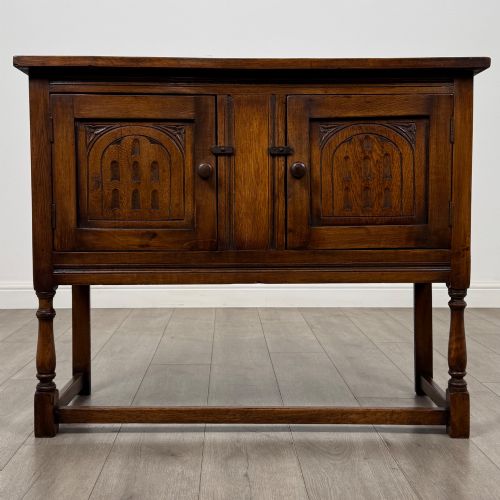
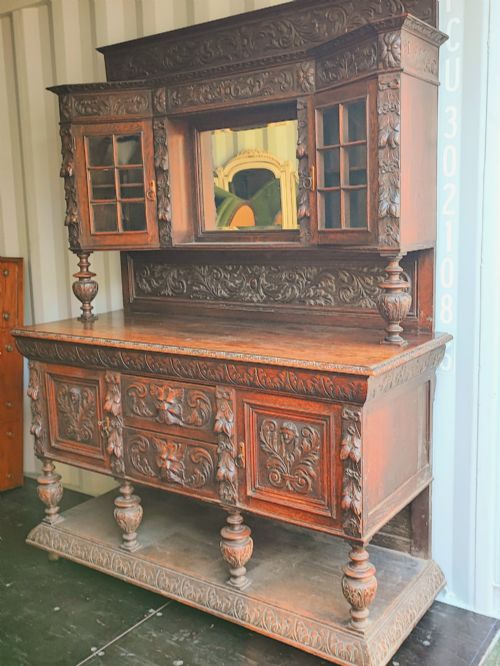
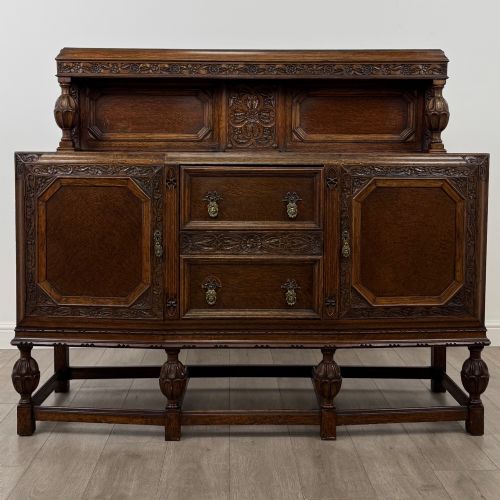
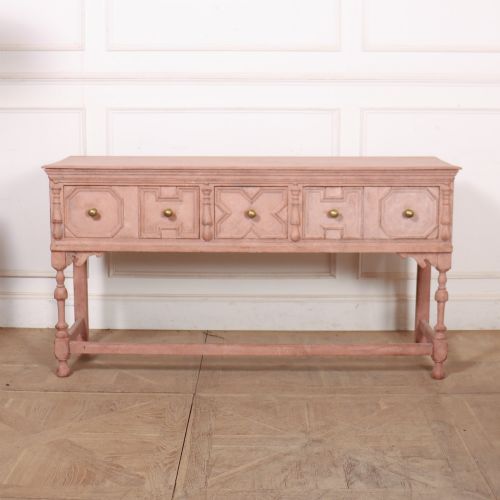
A jacobean oak sideboard brings solid timber presence and formal geometriccarving into a room.
What these pieces are
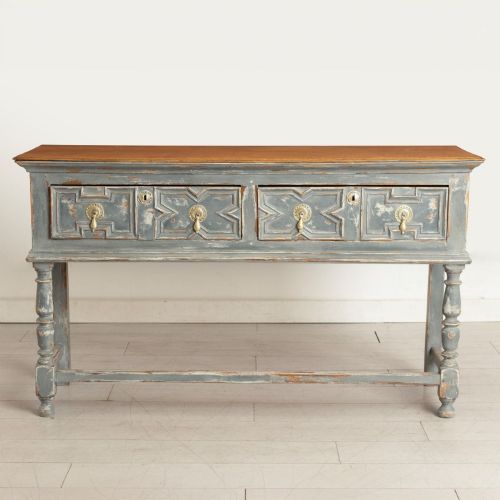
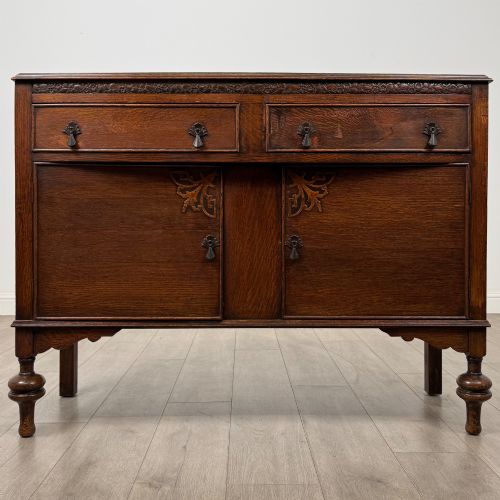
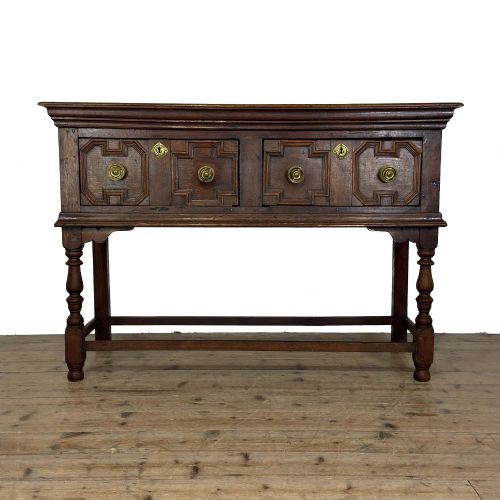
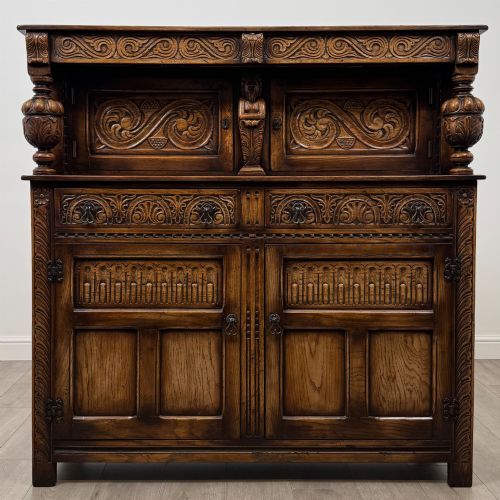
A jacobean oak sideboard takes several forms across the inventory, appearing most frequently as a dresser base, side cabinet, or court cupboard. These sturdy storage pieces serve dining rooms and hallways with generous surface space and deep enclosed compartments.
The selection spans genuine seventeenth-century examples alongside nineteenth-century Victorian interpretations and later twentieth-century pieces built around nineteen-twenty. Buyers encounter both strict period originals and revival interpretations following classic seventeenth-century design principles.
What varies in quality
Quality separates pieces through the crispness of the timber carving and the depth of the applied geometric mouldings on doors and drawers. Finer examples display meticulous hand-tooling and careful timber selection across the primary facades.
Period authenticity also drives distinction, with seventeenth-century originals offering scarce historical fabric compared to nineteenth-century revival or nineteen-twenty pieces. The structural integrity of the heavy oak framework dictates the overall stature of each piece.
Retail Price Guide 2026
Typical UK retail prices for jacobean oak sideboard, calculated from the Sellingantiques database of over a million retail prices indexed since 2003. This retail price guide relies exclusively on Sellingantiques data; no external sources or auction records are used, so the figures do not describe the wider market.
Warings
The Jacobean Oak Sideboard Glossary
- Dresser base
- A low utilitarian storage unit featuring top drawers above cupboards or open shelves. This form provides a wide serving surface.
- Court cupboard
- A heavy enclosed storage cabinet featuring stepped upper and lower sections with panelled doors. These sturdy items originated for displaying plate.
- Geometric moulding
- Raised wooden strips applied to cabinet doors and drawer fronts in geometric patterns. This technique creates strong shadow and depth.
- Jacobean revival
- A nineteenth and twentieth-century design movement recreating seventeenth-century styles. Cabinetmakers utilised traditional forms and heavy oak construction.
Frequently Asked Questions
How do I care for solid oak furniture?
Feed the dry timber occasionally with a quality beeswax and buff it gently with a soft cloth to maintain a natural lustre. Avoid placing heavy oak items near direct heat sources to prevent timber splitting.
Keep surfaces dry and wipe away spills immediately to protect the traditional finish from water marks and staining over time.
Are these sideboards heavy?
Solid oak construction and substantial proportions make these pieces exceptionally heavy and robust. Moving them generally requires two people to lift safely without damaging floor surfaces.
The considerable weight contributes to their long-term stability and keeps the heavy doors and drawers swinging and sliding true.
How do I distinguish revival pieces?
Nineteenth-century and nineteen-twenty revival pieces often reveal machine-sawn timber marks on internal panels and standardised modern fixings. Seventeenth-century originals display hand-adzed surfaces, pegged joints, and characteristic timber shrinkage.
Examine the drawer linings and backboards carefully to understand the construction methods employed by the original makers.
Where should I place a sideboard?
A substantial oak cabinet anchors a dining room wall, providing a practical surface for serving food and storing heavy tableware. Hallways also accommodate narrow dresser bases where floor space permits.
Ensure adequate clearance around the piece so that large panelled doors open fully without hitting adjacent walls or furniture.