


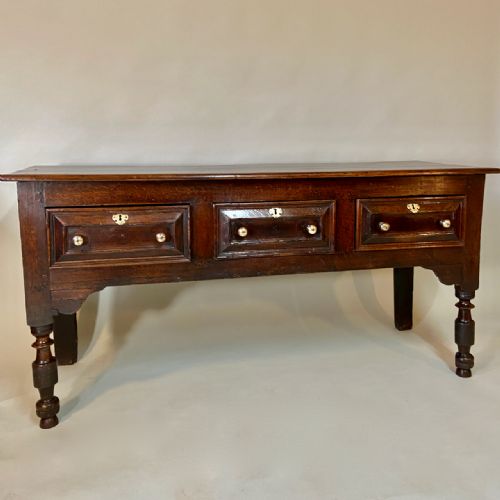


Turned Leg Oak Sideboard
A turned leg oak sideboard delivers robust utility and rich timber grain, offering a grounded centrepiece for any dining room or hallway.
Turned Leg Oak Sideboard
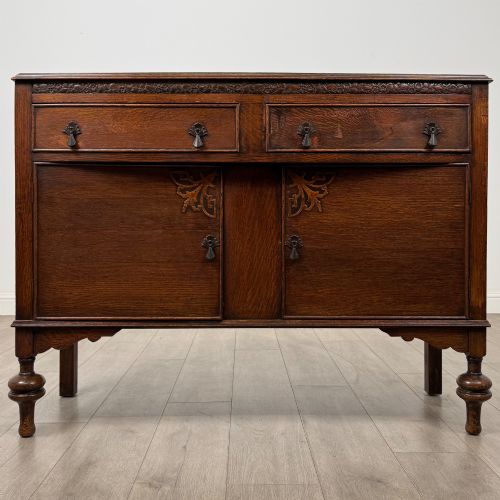
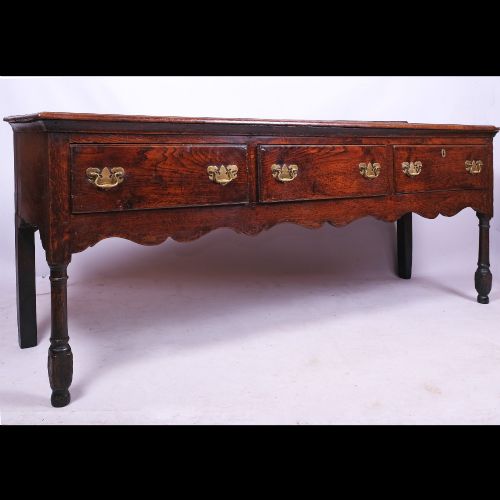
A turned leg oak sideboard brings together centuries of cabinet-making traditions, spanning pieces from the seventeenth century through to the twentieth century. When searching for a turned leg oak sideboard, buyers encounter forms that range from early dresser bases and low dressers to revival side cabinets.
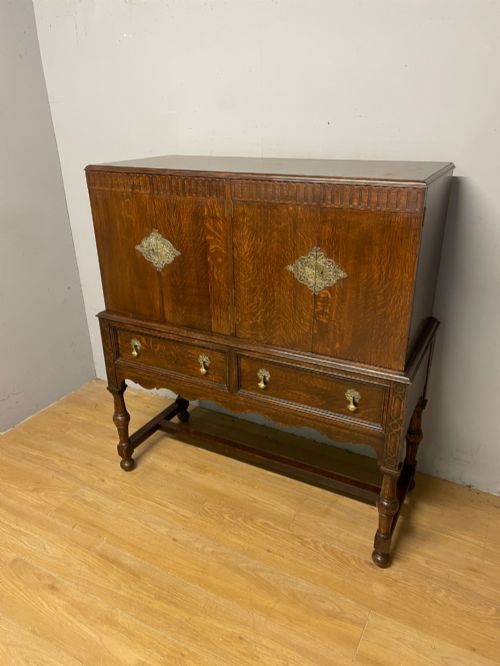
The material foundation rests primarily on solid oak, frequently paired with brass or iron hardware and occasionally topped with marble or constructed with mahogany elements. Styles visible on this page include Jacobean, Jacobean Revival, George I, Queen Anne, and French Country.
These sturdy items function as practical storage units, featuring configurations with drawers, pot boards, and cupboards. The historical span covers original period examples alongside later revivals from nineteen-twenty and nineteen-ten.
Judging quality and period integrity
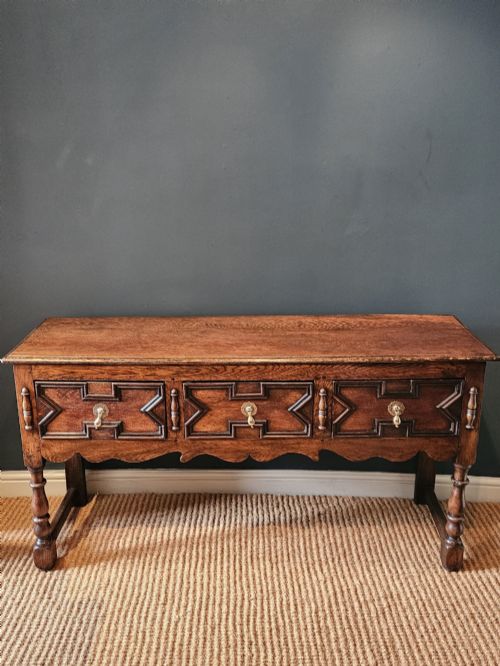
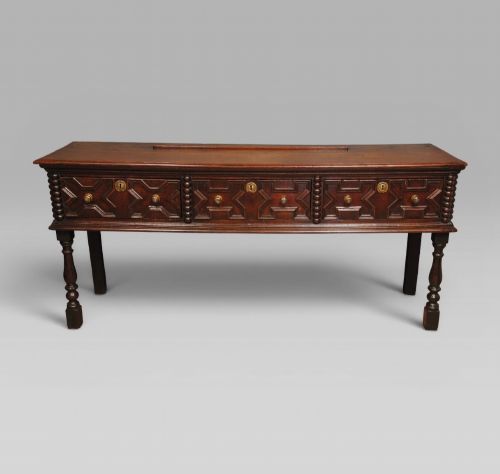
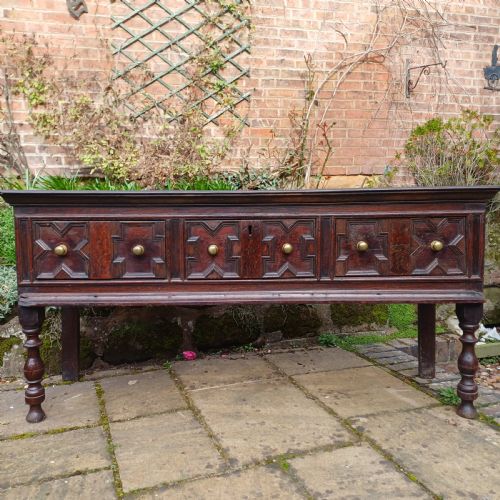
Quality varies according to the purity of the period construction and the handling of the oak timber over time. Early seventeenth-century examples display distinct block fronts and geometric mouldings that contrast with twentieth-century revival interpretations.
The integrity of the turned legs and the retention of original pot boards or drawer configurations dictate the standing of each piece. Surface patination on the oak and the condition of integrated brass or iron handles further differentiate standard items from superior specimens.
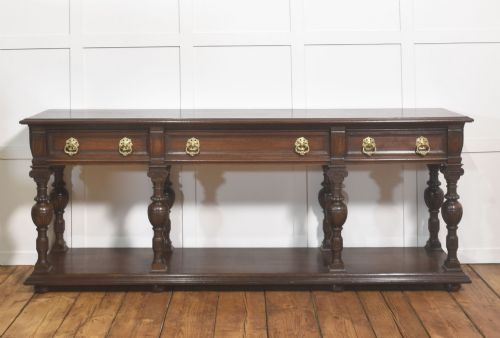
Some oak dresser bases retain their original pot boards, designed centuries ago for displaying heavy kitchenware down near the floorboards.
The Turned Leg Oak Sideboard Glossary
- Pot board
- An open lower shelf built into a dresser base, traditionally used for storing pots and domestic utensils. This architectural feature sits close to the floor between the turned legs.
- Geometric moulding
- Raised decorative wooden profiles applied in symmetrical patterns to drawer fronts or panels. This technique is frequently seen on seventeenth-century and Georgian pieces.
- Dresser base
- A low cabinet featuring drawers or cupboards without the upper plate rack attached. It serves as a standalone sideboard or serving surface.
- Block front
- A cabinet facade divided vertically into three distinct sections, with the outer sections projecting forward and the centre section recessed. This form appears on seventeenth-century examples.
- Jacobean style
- A revival aesthetic reflecting the architecture and furniture design of the early seventeenth-century reign of James I. Pieces adopting this style often feature darkened oak and turned supports.
Turned Leg Oak Sideboard: Frequently Asked Questions
What is a turned leg oak sideboard?
A turned leg oak sideboard is a solid timber storage unit supported by legs shaped on a lathe. These items encompass seventeenth-century dresser bases, Georgian low dressers, and later revival cabinets.
They provide functional surface area and drawer storage while displaying the distinct grain and warm tones characteristic of oak furniture.
How do I date an oak sideboard?
Dating relies on examining the construction methods, timber patination, and stylistic details such as geometric mouldings or block fronts. Seventeenth-century pieces show authentic age-related wear and traditional joinery.
Twentieth-century items built in the Jacobean style emulate these earlier forms but reveal different tool marks and assembly techniques upon close inspection.
Where should I place a sideboard?
A sideboard fits naturally in a dining room to store tableware, linens, and serving dishes. They also serve well in hallways as serving tables or console surfaces.
Ensure adequate clearance for doors and drawers to open fully, and protect the oak surface from direct heat sources and excessive moisture.
Are these sideboards made of solid oak?
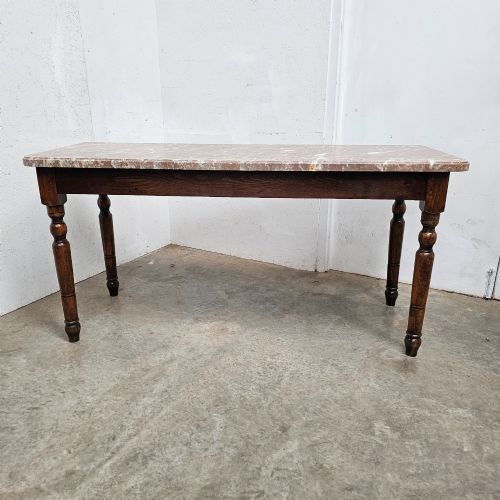
The listings on this page feature solid oak construction as the primary material. Some pieces incorporate secondary woods like mahogany for internal linings, or feature marble tops.
Hardware elements such as handles and hinges utilise brass or iron to complement the heavy oak framework.