

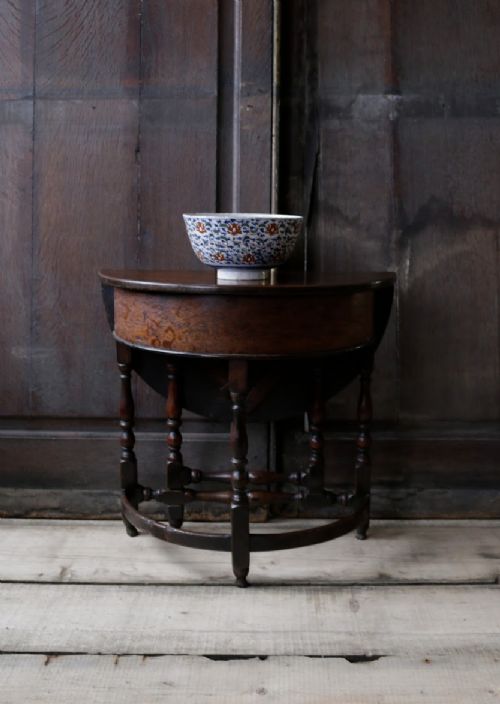
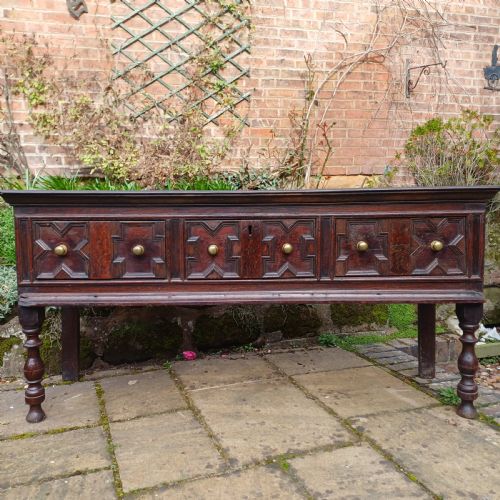


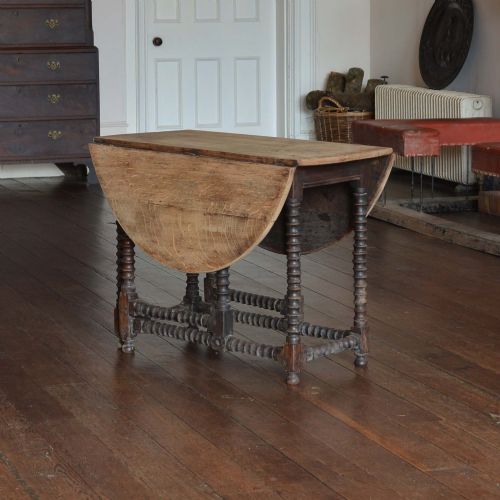


Carolean Oak Side Table
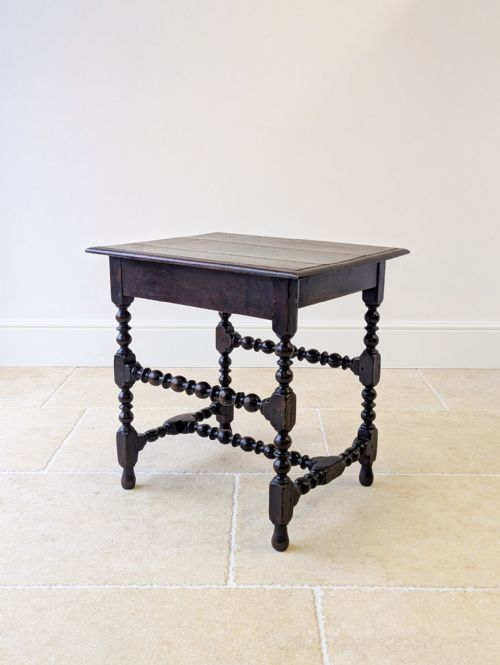
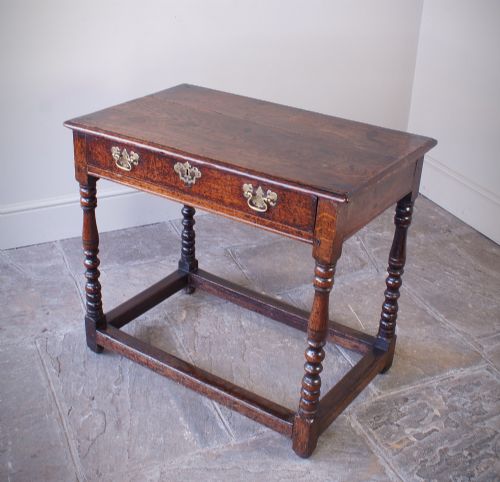
These carolean oak side tables are heavy seventeenth century timber pieces with turned supports, offering a genuine piece of early domestic history.
What They Are
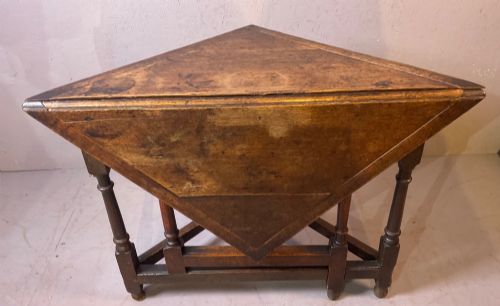
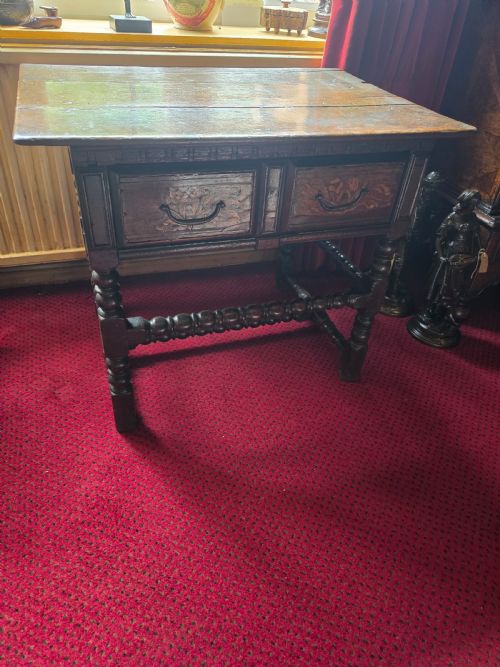
When you search for a carolean oak side table, you encounter seventeenth century timber forms including side tables, dresser bases, console tables, centre tables, tavern tables, and credence tables. These utilitarian surfaces served everyday domestic functions in seventeenth century households before entering the antique market.
The versions most frequently met on this page date from the seventeenth century and reflect Jacobean and Charles II styles. They display robust plank tops, sturdy framework, and early regional craftsmanship characteristic of English country workshops.
How They Were Made
Carpenters constructed these tables using solid oak, sometimes treated with painted finishes, alongside brass hardware. Timber was hewn and seasoned locally before being shaped with hand tools into thick planks and structural supports.
Joinery relied on traditional pegged mortise and tenon joints to secure the heavy frames. Legs and stretchers frequently featured bobbin-turning or plain turned details, reflecting the prevailing woodworking techniques of the seventeenth century.
Retail Price Guide 2026
Typical UK retail prices for carolean oak side table, calculated from the Sellingantiques database of over a million retail prices indexed since 2003. This retail price guide relies exclusively on Sellingantiques data; no external sources or auction records are used, so the figures do not describe the wider market.
Carpenters turned bobbins on simple lathes, leaving tiny centre points in the wood as silent signatures of their craft.
What Varies in Quality
The distinction between ordinary utility pieces and finer examples rests on the sophistication of the turning and the integrity of the timber. Tables featuring intricate bobbin-turning or sophisticated base configurations command greater attention than plain, utilitarian boards.
Surface patination and the survival of original painted oak finishes dictate the visual appeal of each piece. Surviving brass elements and untouched seventeenth century joinery elevate the standing of a table within its period.
The Carolean Oak Side Table Glossary
- Carolean
- Pertaining to the reign of King Charles II, spanning the mid to late seventeenth century. This style is often associated with elaborate turning and enriched surface detail.
- Jacobean
- The early seventeenth century design period spanning the reign of King James I. It is characterised by solid construction and geometric moulding.
- Bobbin-turned
- A method of turning wood on a lathe to create a series of rounded, spool-like shapes. This technique appears frequently on seventeenth century table legs and stretchers.
- Credence table
- A folding or triangular table with a hinged top supported by a swinging leg, used in seventeenth century interiors. These pieces often feature fine joinery and fold flat against a wall.
- Dresser base
- A long, low seventeenth century table fitted with drawers or open underspaces used for domestic storage. They represent the larger scale of country furniture from this era.
Frequently Asked Questions
What is a carolean oak side table?
A carolean oak side table is a seventeenth century wooden furnishing built for domestic use during the reign of Charles II. These pieces feature solid oak construction, early turned supports, and straightforward rectangular tops.
They survived centuries of daily household service, transitioning from functional utility items into collectible antiques. Their robust proportions and aged timber give them a distinct early English character.
How were these tables used?
Households utilised these tables for food preparation, serving meals, or holding household items against walls in seventeenth century rooms. Their sturdy plank tops provided reliable horizontal surfaces for daily domestic tasks.
Over time, many migrated from working kitchens and halls into reception rooms. Their utilitarian origins meant they endured heavy wear from generations of daily use.
How do I care for seventeenth century oak?
Protect antique oak furniture by maintaining stable room humidity and keeping tables away from direct heat sources. Sudden environmental shifts cause old timber to warp or split.
Apply a traditional beeswax polish sparingly to nourish the wood surface. Avoid modern silicone sprays or harsh chemical cleaners that degrade the historical patination.
How do I identify a seventeenth century table?
Examine the construction methods, tool marks, and wood species to determine the age of a piece. Seventeenth century tables typically feature pegged joinery, hand-sawn oak planks, and period-appropriate turned elements.
Inspect the undersides and interior joints for signs of hand-working rather than modern machining. The natural wear and accumulated patination across the oak surface also indicate great age.