






Iron Red Imari
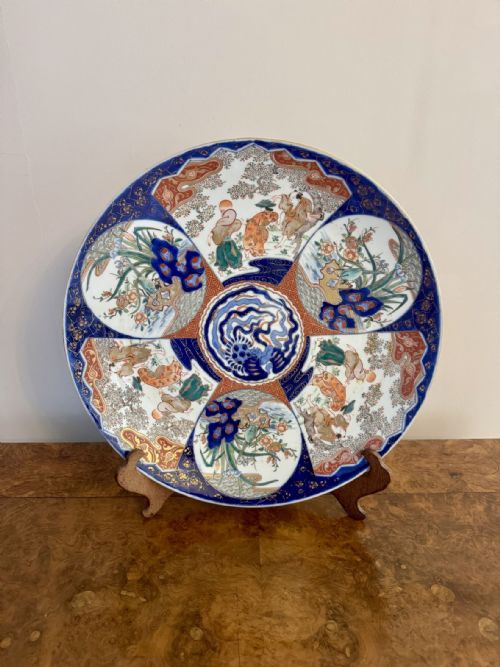
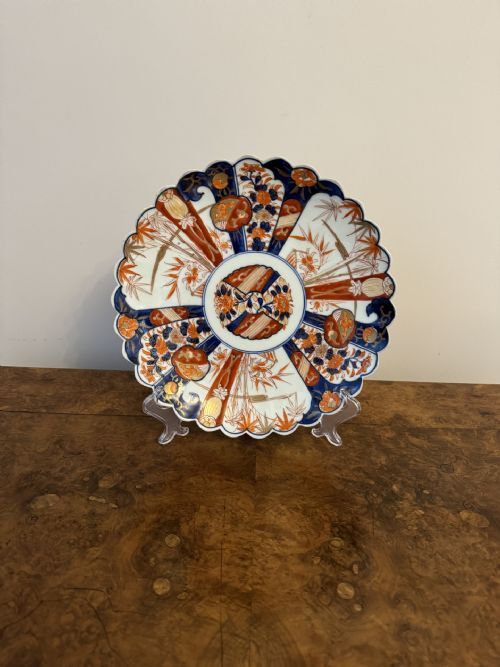
Iron red imari unites vibrant ceramic palettes with striking patterns, offering collectors a rich tradition of porcelain history.
Materials and Techniques
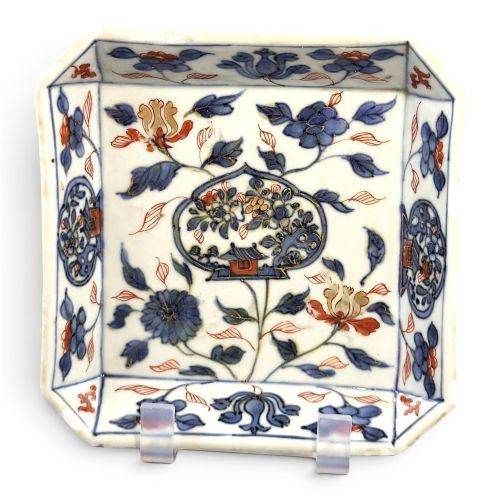
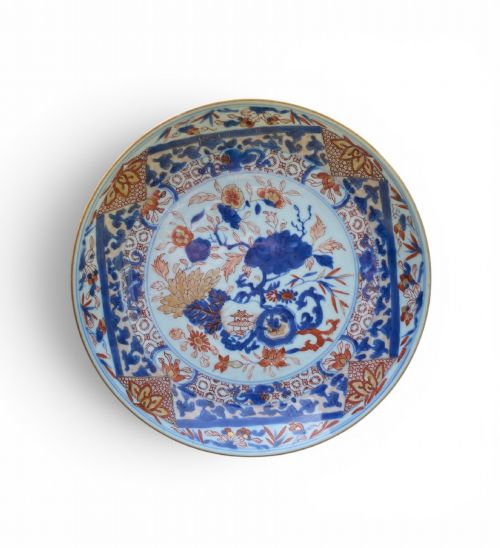
The foundation of these pieces relies on ceramic paste and fine porcelain fired at high temperatures to achieve a durable body. Artisans then applied underglaze blue cobalt decoration before firing, followed by overglaze enamels in iron red and occasional gold leaf or gilding to complete the intricate surface design.
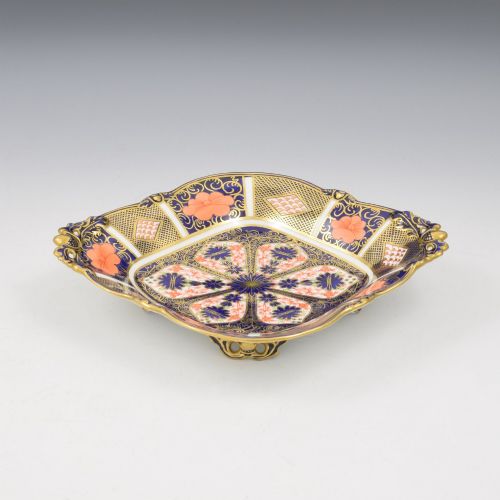
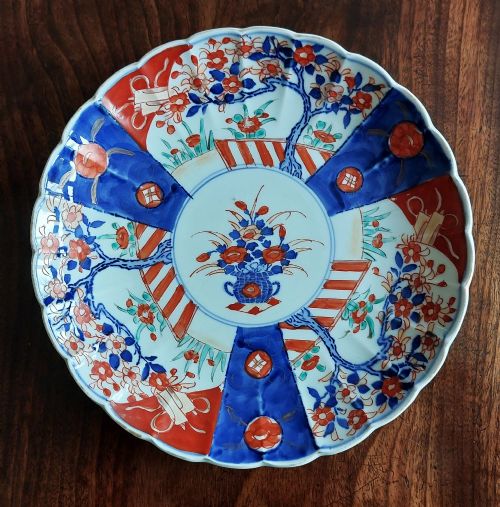
Makers utilised manual brushwork to execute detailed floral, bird, and geometric motifs across chargers, vases, and tableware. Scalloped edges and hexagonal profiles on dishes required precise shaping before glazing and final enamel fixation.
Assessing Quality
Quality in iron red imari rests upon the crispness of the hand-painted enamel work and the precision of the underglaze blue lines. Finer examples display meticulous control over the iron red and gold leaf application, ensuring the decorative bird and floral subjects possess depth and clarity.
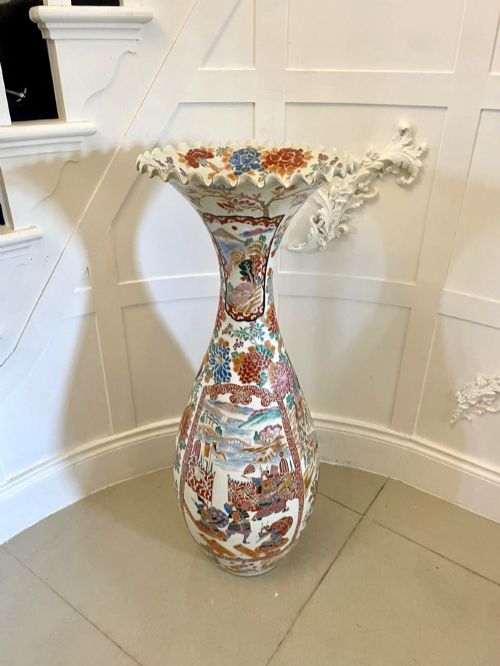
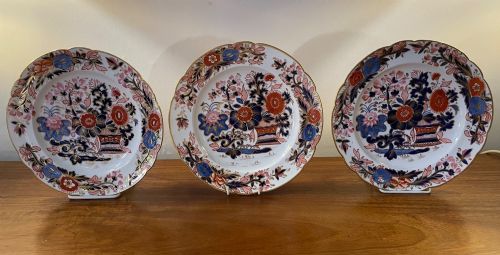
The refinement of the porcelain body and the symmetry of shaped items, such as scalloped edges or hexagonal plates, distinguish superior pieces. Greater artistic engagement in the brushwork elevates certain nineteenth-century Japanese chargers and English porcelain services above standard production ware.
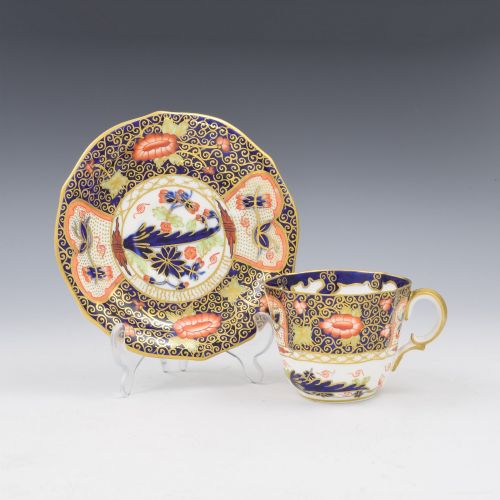
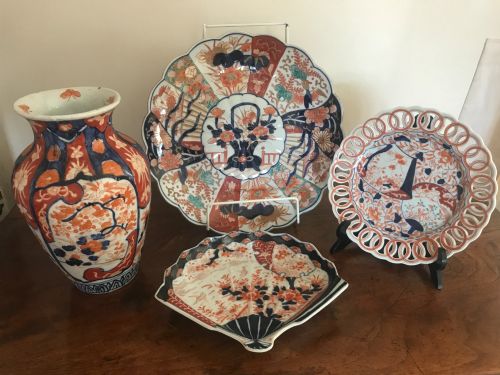
Listings feature porcelain forms spanning decorative chargers, hexagonal plates, scalloped dishes, floor vases, and teacups across the Victorian, Edwardian, and Meiji periods.
Royal Crown Derby·Stevenson and Hancock
The Iron Red Imari Glossary
- Imari palette
- A decorative ceramic scheme combining underglaze blue, prominent iron red enamel, and gold leaf. This distinct combination originated in Japan before being adopted by Chinese export and English potteries.
- Meiji Period
- The era in Japanese history spanning from 1868 to 1912, associated with prolific porcelain output exported to Western markets. Many decorative plates and vases on this page date from this specific period.
- Gilding
- The application of gold leaf or gilt onto the ceramic surface to accent patterns and edges. It provides a reflective contrast to the dense iron red and blue pigments.
- Charger
- A large decorative plate intended for display rather than service. These wide vessels often showcase the most elaborate iron red imari pictorial designs.
- Bone china
- A type of soft-paste porcelain incorporating animal bone ash, utilised by English makers like Royal Crown Derby. It offers a bright white ground well-suited to traditional imari patterns.
Iron Red Imari: Frequently Asked Questions
What is iron red imari porcelain?
Iron red imari refers to ceramics decorated with a signature palette comprising dominant iron red enamel, deep underglaze blue, and gold leaf accents. The style encompasses wares made in Japan, alongside later interpretations by Chinese export kilns and English factories.
Collectors prize these items for their contrasting colours and detailed botanical or avian motifs found across plates, bowls, and vases.
How do I date Japanese imari pieces?
Dating often relies on stylistic indicators, potting characteristics, and historical periods such as the Meiji era or the nineteenth century. Japanese pieces from the late nineteenth century frequently feature hand-painted bird and floral compositions on porcelain with scalloped rims.
Examining the foot ring, glaze texture, and enamel saturation helps distinguish earlier Meiji production from subsequent twentieth-century decorative wares.
Were these items used for dining or display?
While teacups, saucers, and smaller bowls served practical dining functions, large chargers and decorative plates were primarily intended for display. Their elaborate iron red and gilt surfaces made them focal points in domestic interiors.
Vases and garniture sets similarly fulfilled decorative roles, ornamenting mantelpieces and reception rooms across both Asian and European homes.
How can I tell Japanese imari from English imari?
Japanese imari typically utilises a slightly greyer or more granular porcelain body with vigorous hand-painted motifs executed in deep cobalt and iron red. English examples, such as those from nineteenth-century Derby, often employ refined bone china with precise enamel placement.
Factory marks on the underside of English porcelain further differentiate domestic Staffordshire and Derby production from imported Japanese originals.