


Inlaid Wooden Knife Box
An inlaid wooden knife box combines functional dining storage with sharp cabinet-making, bringing Georgian refinement straight to the sideboard.
Inlaid Wooden Knife Box
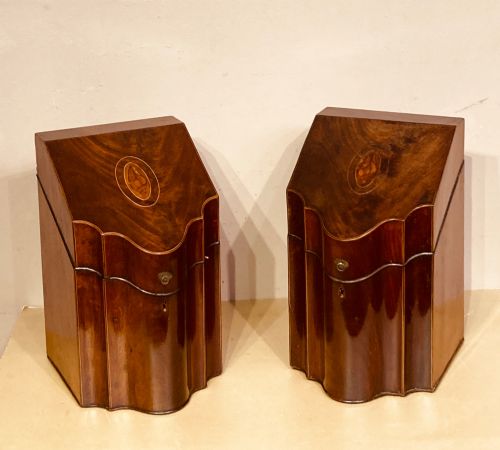
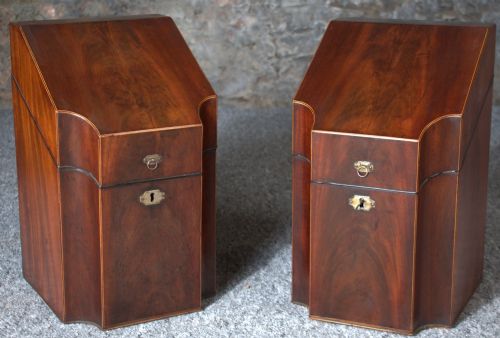
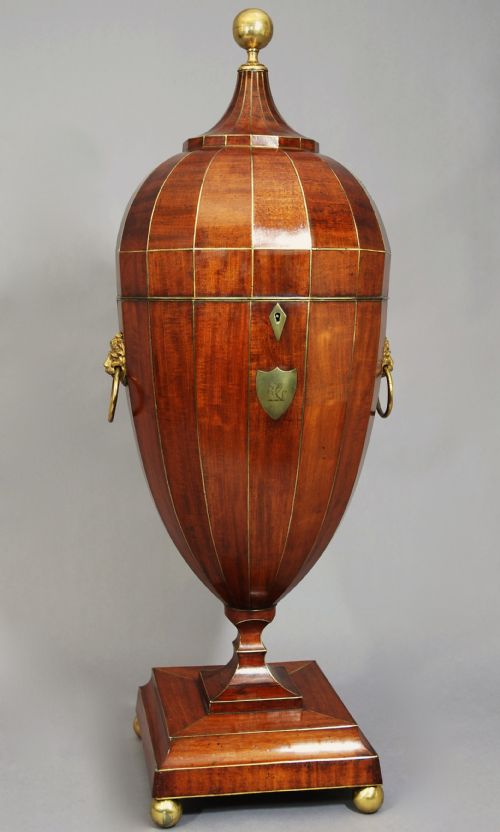
An inlaid wooden knife box is a specialised container designed to house dining cutlery securely, often taking the form of a sloping lidded box or an urn. When searching for an inlaid wooden knife box, buyers encounter examples primarily from the Georgian and Victorian periods, including George III iterations.
The evidence shows forms ranging from standard knife boxes and cutlery boxes to cutlery urns and hanging kitchen boxes. Many survive as pairs, reflecting their original purpose of flanking a dining room setup.
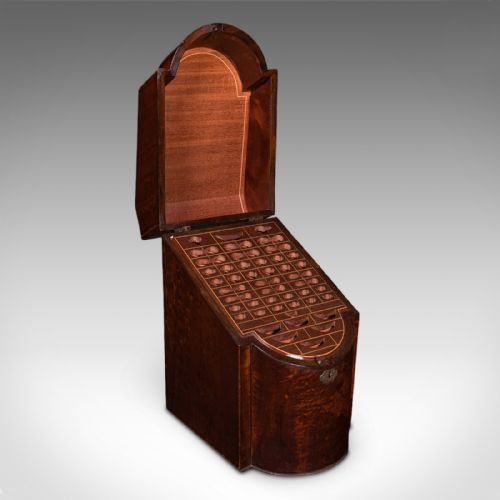
Makers utilised various woods such as mahogany, oak, walnut, and coromandel, augmented by contrasting stringing and shell or floral motifs. Some pieces double as stationery cabinets or fitted canteens housing dozens of items.
How they were made
Cabinet-makers constructed these boxes predominantly from solid hardwoods like mahogany and oak, applying fine veneers for external surfaces. Satinwood and boxwood inlay provided crisp geometric or figurative contrast against the darker base timbers.
Brass hardware, including escutcheons, hinges, and carrying handles, functionalised the design while accentuating the timber grain. Serpentine fronts required skilled shaping of the wood to achieve the characteristic undulating profile.
Georgian Neoclassical and Victorian are the dominant stylistic categories represented.
What varies in quality
Internal fittings dictate utility and value, with complete fitted interiors and original brass furniture elevating a piece. The choice of primary timber, from plain oak to figured mahogany with rich grain, signals the original tier of production.
The Inlaid Wooden Knife Box Glossary
- Serpentine front
- A curved furniture front featuring a convex centre flanked by concave wings. This shape requires advanced woodworking skill to execute properly on a knife box.
- Stringing
- A narrow inlay of contrasting wood used to outline panels or edges. It creates a fine linear border on the exterior of the box.
- Cutlery urn
- A tall, vase-shaped wooden vessel designed for storing table silver on a sideboard. These pieces often feature tiered lids and precise turning.
- Escutcheon
- A protective brass plate surrounding a keyhole. It prevents the wood from splitting around the lock mechanism.
Inlaid Wooden Knife Box: Frequently Asked Questions
Where did these boxes sit?
These boxes traditionally sat upon sideboards or serving tables in the dining room. They kept expensive steel and silver cutlery clean and secure between meals.
Servants would retrieve the knives and forks from the box when setting the table for dinner. Pairs were often placed at either end of the sideboard for visual balance.
How do I date a Georgian box?
Dating relies on timber selection, structural form, and the style of the inlay work. George III examples often utilise dense mahogany paired with delicate boxwood stringing.
Later Victorian interpretations tend to display heavier proportions and different interior configurations. Examining the construction methods inside the box also helps confirm the period.
Can I use them for cutlery now?
Many surviving boxes retain fitted interiors that accommodate modern or antique flatware safely. They function well as desktop organisers or stationery cabinets if the slots fit modern items.
Care should be taken to protect the historical wood lining from moisture or abrasive metal contact. Velvet or felt inserts can safeguard the interior surfaces during daily use.
Why are some shaped like urns?
Urn forms reflected the Neoclassical taste that swept through British interior design during the late eighteenth century. These towering vessels mirrored classical architecture and monumental dining accessories.
They offer vertical storage capacity while serving as decorative focal points on large dining room sideboards.