


Antique Mahogany Canteen
An antique mahogany canteen is a fitted box or cabinet designed to hold fine cutlery, combining practical storage with handsome timber.
Antique Mahogany Canteen
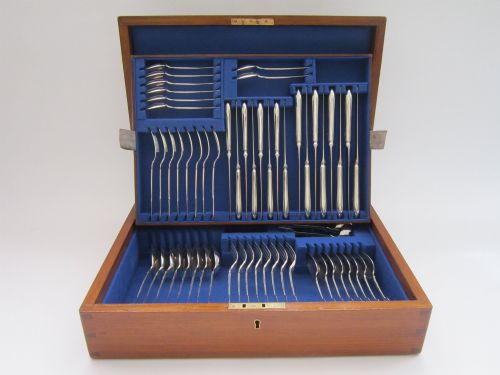
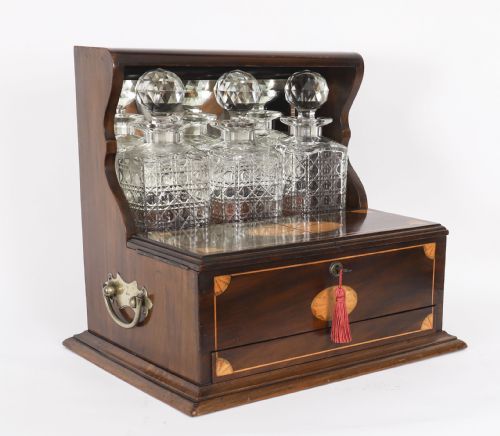
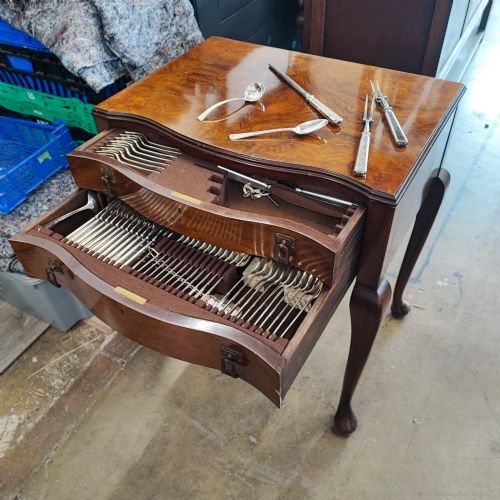
An antique mahogany canteen brings together functional dining storage and cabinet-making craftsmanship. When you search for an antique mahogany canteen, you meet several distinct forms across this page, ranging from tabletop knife boxes and fitted chests to console tables and tantalus sets.
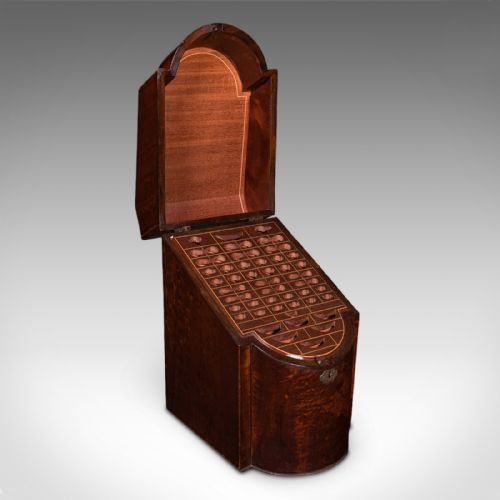
The pieces on this page span the Georgian period, the Victorian era, and early twentieth-century revivals including Chippendale and Queen Anne styles. Earlier examples often take the form of knife boxes with sloping lids, while later items expand into full dining canteens and console tables.
Most entries pair rich mahogany timber with internal fittings of felt, brass, and velvet. Some pieces house sterling silver or silver plate flatware, while others provide standalone storage or combine drinks decanters with games compartments.
How they were made
Makers constructed these canteens using solid mahogany and carefully selected veneers over secondary woods. Cabinet-makers utilised brass for carrying handles, escutcheons, and locking mechanisms, adding structural durability to the timber housings.
Interiors required precise carpentry to create slotted trays and individual compartments that secured forks, spoons, and knives. Linings of felt and baize protected the metalware from scratching, while exterior surfaces received polished finishes that highlighted the grain of the wood.
Some nineteenth-century hosts hid their best claret inside a locked tantalus while keeping the games compendium right next door.
What varies in quality
The standard of a canteen rests upon the depth of the mahogany grain and the precision of the internal joinery. Finer boxes display thoughtful timber selection and tight dovetail joints that have remained square through decades of use.
Hardware and fitments mark another distinction between ordinary production and superior workshop output. Original brass locks, working keys, and intact felt linings elevate a piece, alongside complete, matching sets of cutlery where present.
Elkington & Co·Walker & Hall
The Antique Mahogany Canteen Glossary
- Canteen
- A fitted box, chest, or cabinet designed specifically to hold and protect a set of cutlery. These containers range from portable tabletop boxes to substantial floor-standing tables.
- Knife Box
- A upright Georgian container with a sloping lid, designed originally to store dining knives vertically. They frequently appear in pairs to flank a sideboard.
- Escutcheon
- A protective plate surrounding a keyhole, usually fashioned from brass in these pieces. It prevents the wood around the lock from splitting during regular use.
- Fiddle Pattern
- A traditional nineteenth-century flatware handle design featuring a distinctive tapered shape with shoulders near the terminal. It is commonly found on Victorian silver sets housed within these chests.
- Tantalus
- A locking drink cabinet that displays decanters while preventing unauthorised access to the contents. Some mahogany examples combine this function with games storage and cutlery compartments.
Antique Mahogany Canteen: Frequently Asked Questions
What is an antique mahogany canteen used for?
These pieces were built to store, organise, and protect sets of dining cutlery and flatware. Many houses relied on them to keep silver and steel utensils secure between formal meals.
Today, collectors utilise them both for their original purpose and as decorative furniture pieces that double as storage for household items.
How do I tell a Georgian knife box apart from later revivals?
Georgian knife boxes typically feature serpentine or sloping fronts with distinct inlaid details and period brass hardware. They were made to sit on sideboards during eighteenth-century dining.
Later revival pieces often incorporate twentieth-century construction methods or heavier console table formats while imitating earlier Georgian styles.
Are the cutlery sets usually original to the canteen?
Some canteens retain their matching period flatware sets, such as Victorian silver fiddle pattern cutlery. Other pieces are sold as empty storage chests or have been reunited with compatible cutlery over time.
Checking the internal layout and slot sizes helps determine if the current contents match the original design of the box.
How should I care for mahogany and brass furniture?
Mahogany benefits from occasional dusting with a soft cloth and minimal exposure to direct sunlight or rapid temperature changes. Avoiding harsh chemical polishes preserves the natural finish and grain of the timber.
Brass hardware can be left unpolished to maintain its aged appearance or gently cleaned with a non-abrasive metal cleaner if required.