


Georgian Mahogany Knife Urn
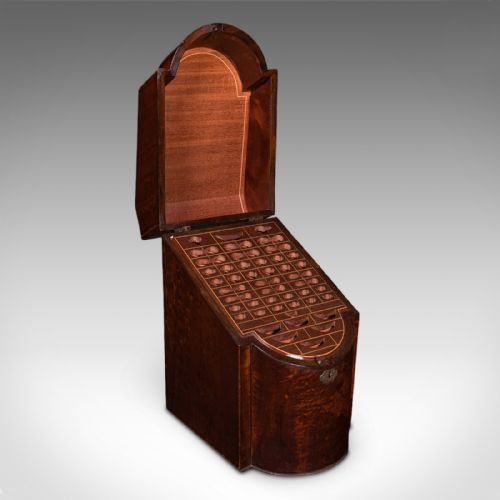
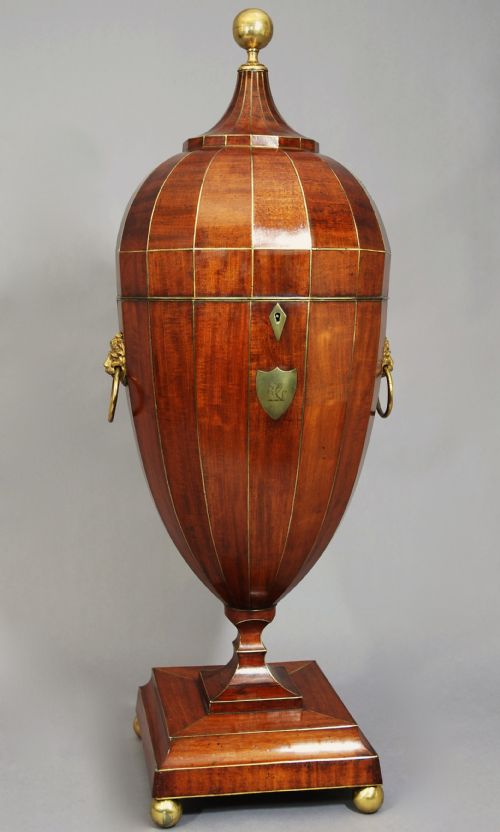
A georgian mahogany knife urn brings architectural presence to a dining room, designed to store flatware with classical symmetry.
Georgian Mahogany Knife Urn
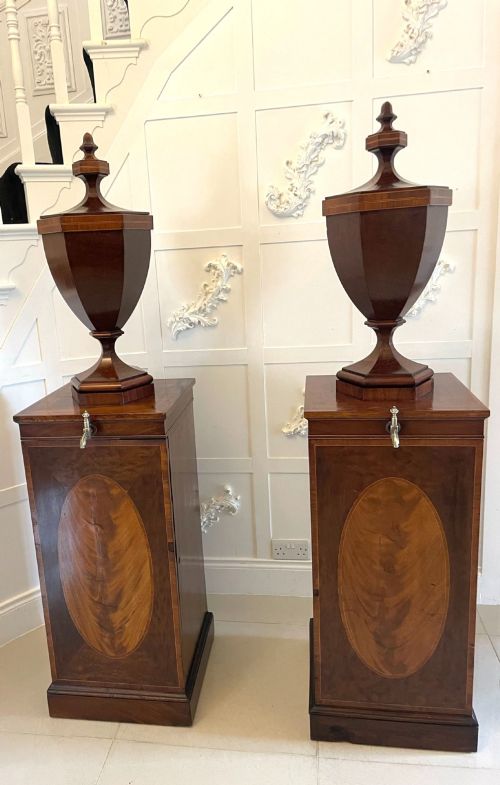
When you search for georgian mahogany knife urn, you are looking at formal dining accessories shaped like classical vessels to hold cutlery during the eighteenth and nineteenth centuries. These pieces stand on sideboards or dedicated pedestals, displaying tall, slender profiles that mimic Greek and Roman urns.
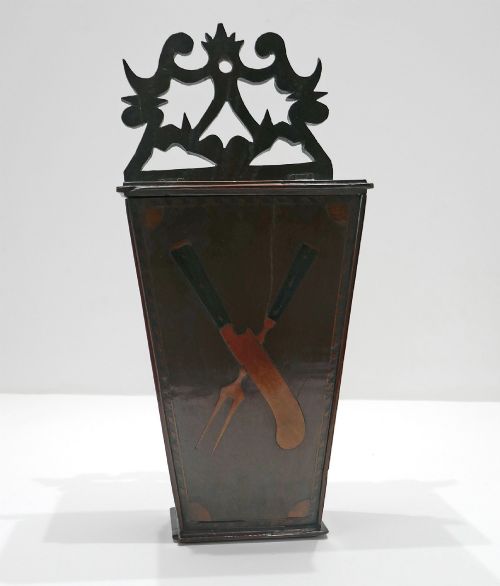
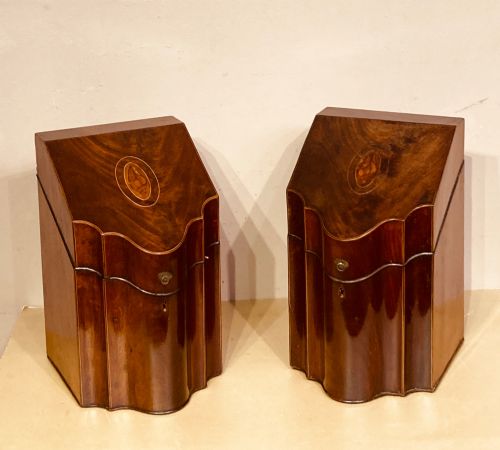
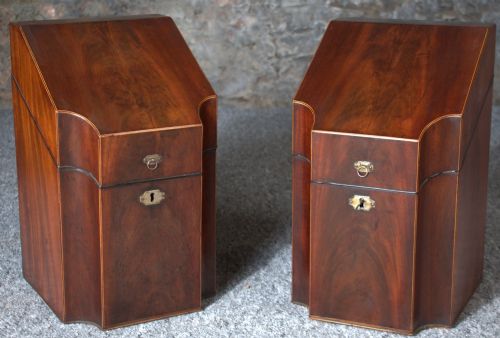
The versions most likely to meet you on this page date from the Georgian and George III periods, executed in figured mahogany with serpentine fronts or tapering bodies. Many appear as matched pairs, designed to flank a central serving table or sideboard in a wealthy dining room.
Makers fashioned these storage vessels with lift-off covers or pivoting lids that conceal internal partitions slotted to hold individual knife handles upright. While some take the traditional urn silhouette, others present as slant-front knife boxes or serpentine storage chests.
How They Were Made
Cabinet makers built these pieces using solid mahogany and dense mahogany veneers, often selecting figured timber for the main exterior surfaces to catch the light. They reinforced corners and curved fronts with accurate joinery to maintain the strict geometric lines demanded by neoclassical design.
Craftsmen applied decorative stringing and contrasting details in boxwood, ebony and satinwood inlay to define the edges and panel outlines. They finished the woodwork with cast brass mounts, escutcheons and handles, and occasionally fitted pieces with solid silver hardware.
The inventory combines traditional urn silhouettes with serpentine knife boxes and fitted cutlery storage chests.
What Varies in Quality
Quality rests upon the selection of the mahogany timber and the crispness of the serpentine curves or urn turning. Superior examples display highly figured grain patterns and precise proportions that maintain architectural harmony.
The intricacy and execution of the boxwood and satinwood inlay differentiate standard workshop output from exceptional commissions. Original brass fittings, well-preserved interior partitions and untouched surface patina elevate the standing of a piece.
The Georgian Mahogany Knife Urn Glossary
- Serpentine
- A furniture front curving outward in the centre and inward at the sides, creating a gentle S-shape. This contour requires skilled hand-shaping of the solid mahogany timber.
- Inlay
- A decorative technique where contrasting woods like boxwood or ebony are set into recesses flush with the main mahogany surface. It defines panels and edges on formal furniture.
- Escutcheon
- A protective metal plate surrounding a keyhole, usually cast in brass on these storage pieces. It prevents the wood from splitting around the lock mechanism.
- Pedestal
- A structural base or column that supports an urn, often housing a cupboard compartment in matched dining room suites. These elevate the cutlery storage to serving height.
- Stringing
- Thin, linear inlay work used to create contrasting borders and geometric patterns across the exterior wood surface. It frames the panels of eighteenth-century boxes.
Georgian Mahogany Knife Urn: Frequently Asked Questions
What was a georgian mahogany knife urn used for?
These vessels stood on dining room sideboards to hold steel-bladed knives and forks when dining tables were cleared between courses. Servants accessed the fitted interior compartments to distribute and collect cutlery during formal meals.
The vertical internal slots kept delicate blades separated and protected from moisture in the air. By the nineteenth century, many functioned primarily as decorative display items or stationery storage.
How do I tell an 18th century piece from a later copy?
Eighteenth-century examples show hand-cut dovetails, older secondary woods inside, and natural beeswax patination built up over generations. The construction methods reveal the hand tools and joinery techniques typical of Georgian workshops.
Later Victorian reproductions often use machine-cut elements, different interior lining materials, or modern adhesives. Examining the timber shrinkage and the wear around the brass mounts helps clarify the true age.
Where should I place a knife urn in my home?
These pieces suit sideboards, console tables, or dedicated pedestals in a dining room or study, echoing their original domestic context. Their vertical proportions draw the eye upward and anchor corners or wall spaces effectively.
Keep them away from direct sunlight and strong heat sources to protect the mahogany veneer and delicate boxwood inlay from drying out or splitting.
Are pairs of urns more desirable than single pieces?
Matched pairs command greater interest because dining rooms of the period relied on symmetrical arrangement flanking a sideboard or serving table. Finding two pieces that have survived together with matching timber grain is uncommon.
Single items still function well as sculptural accent pieces on furniture tops, offering the same neoclassical silhouette without requiring symmetrical placement.