




Inlaid Wood Hall Table
When you need an inlaid wood hall table, you are looking at surfaces that greet visitors with timber and contrast.
Inlaid Wood Hall Table
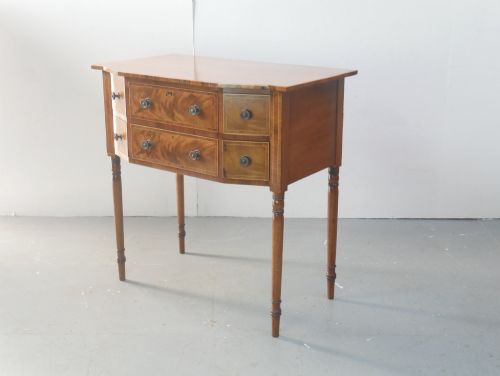
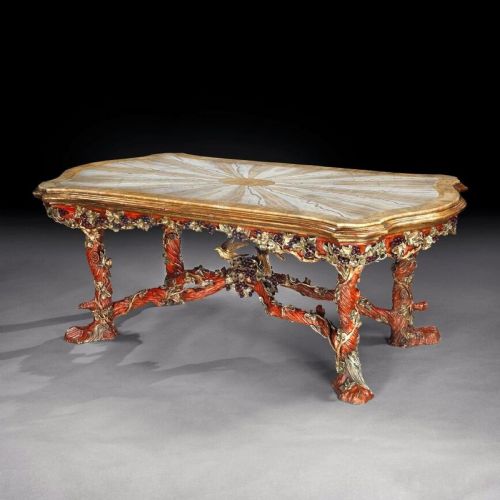
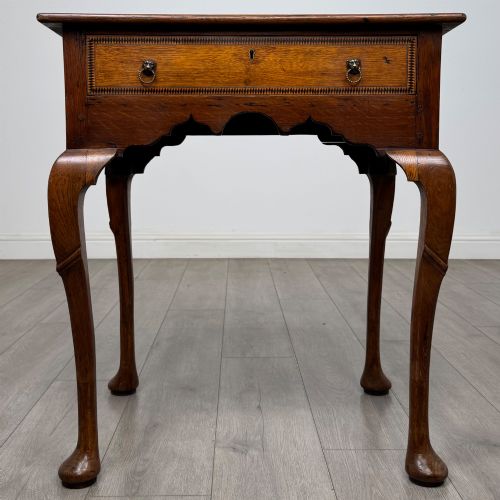
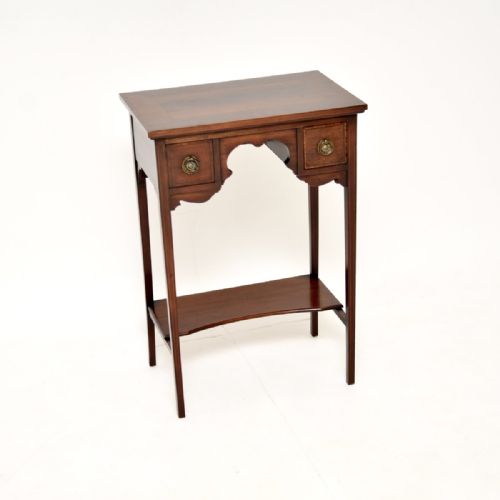
An inlaid wood hall table provides a narrow surface placed against an entrance wall to hold letters, keys, or a lamp. These pieces span periods from the Georgian and Regency eras through the Victorian and Edwardian decades, reflecting the shifting tastes in domestic reception spaces.
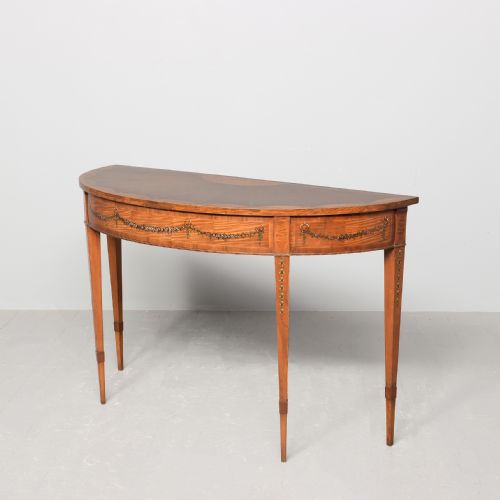
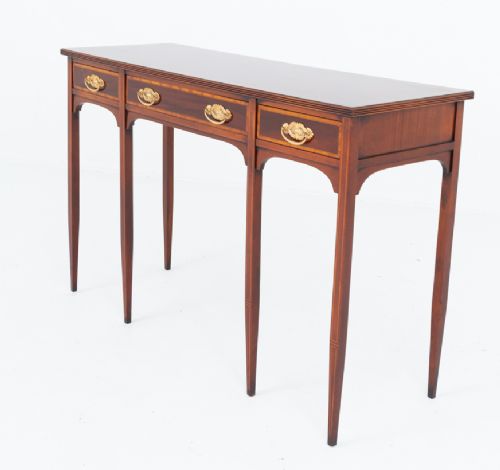
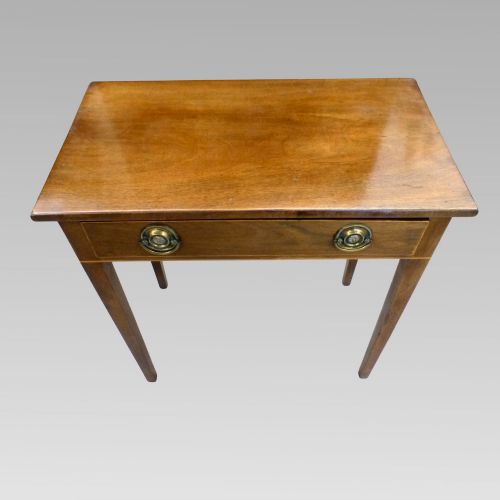
The most common formats met on this page are side tables, console tables, and serving tables shaped with straight, serpentine, or D-shaped fronts. Makers tailored these forms specifically for narrow hallways and corridors where floor space remained at a premium.
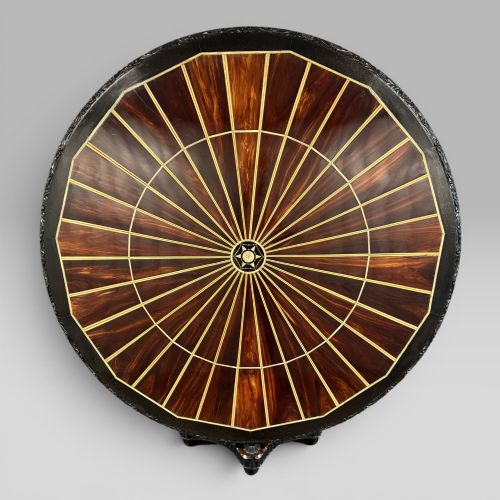
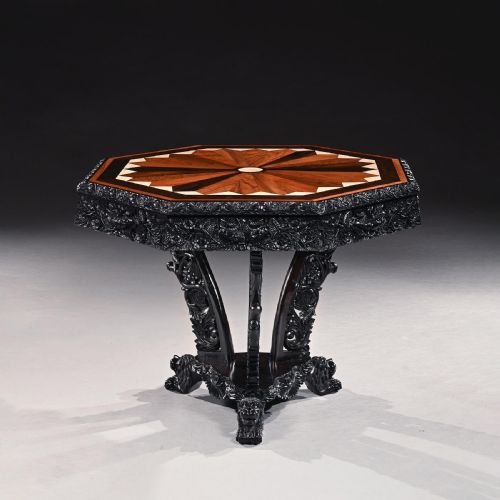
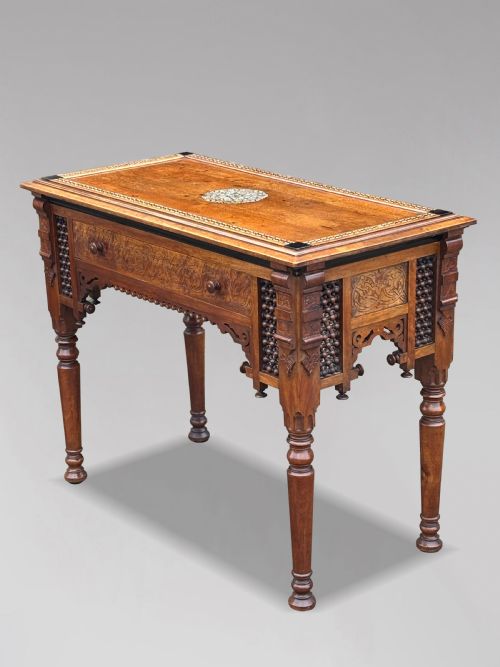
Timbers such as mahogany, satinwood, rosewood, and walnut form the primary carcases, decorated with contrasting stringing, banding, and pictorial marquetry. Such work elevates a utilitarian entrance piece into a structured display of joinery.
How they were made
Cabinetmakers constructed the main bodies of these tables using solid native and imported hardwoods like mahogany, oak, and walnut, often applying finely figured veneers to table tops and drawer fronts. Secondary framing timbers provided structural stability to support the heavy loads placed upon them.
Wood inlay and marquetry techniques involved cutting recesses into the primary timber ground and fitting contrasting light and dark woods, such as boxwood, satinwood, and fruitwood, flush into the surface. Brass inlay appeared in select Regency examples, embedded into rosewood grounds to form geometric motifs and linear borders.
Listings feature pieces spanning the eighteenth, nineteenth, and early twentieth centuries in mahogany, satinwood, rosewood, walnut, and oak.
What varies in quality
The standard of execution in the inlay work dictates the overall tier of the piece, separating sharp, tightly fitted botanical motifs and stringing from loose, heavily filled joints. Precision in the hand-cut wood segments reveals the workshop's underlying skill.
Selection of timber grain and figure defines the upper echelon, where cabinetmakers matched veneers symmetrically across the top and frieze. Poorer examples rely on plain, unfigured boards with minimal attention to visual balance across the piece.
Amleto Bertoni·Egan Workshop
The Inlaid Wood Hall Table Glossary
- Marquetry
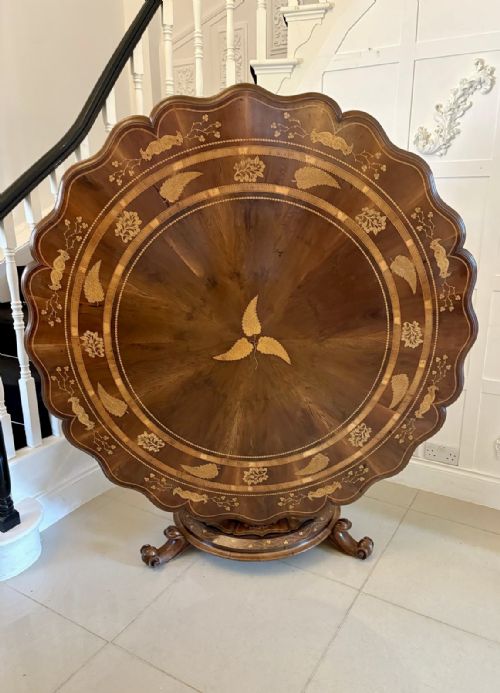
- Decorative patterns formed by fitting together small pieces of veneer to create pictorial or abstract designs. This technique covers entire table tops with complex flora and architectural scenes.
- Stringing
- Thin strips of contrasting wood embedded into channels cut into the surface of the carcase. It creates delicate geometric borders around table edges and drawer fronts.
- Cross-banding
- Border veneer laid with the grain running perpendicular to the central panel. It frames the main timber surface and adds structural containment to the edge.
- D-shaped
- A table top configuration featuring a straight back edge against the wall and a semicircular front curve. This profile reduces the physical footprint in narrow entrance halls.
- Serpentine
- A table front shaped in a continuous undulating curve that bows outward in the centre and curves inward at the sides. It demands advanced joinery to shape both the timber frame and the corresponding inlay.
Inlaid Wood Hall Table: Frequently Asked Questions
What is a hall table?
A hall table is a narrow piece of furniture designed to stand against an entrance wall without blocking the flow of movement. It provides a convenient surface for everyday items upon entering the house.
These tables frequently incorporate drawers for small storage and feature decorative wood inlay to catch the eye of arriving visitors.
How do I date an inlaid hall table?
Dating relies on observing the primary timber species, leg profiles, and the style of the inlay work. Georgian and Regency pieces favour mahogany and rosewood with linear stringing, while Edwardian examples often employ satinwood and lighter marquetry.
Construction methods inside the drawers and the thickness of the veneers also offer clear chronological clues for attribution.
Where should I place a console table?
Console tables sit best against flat wall spaces in hallways, corridors, or entrance vestibules where floor depth is limited. Placing a mirror or a lamp above the surface completes the traditional arrangement.
Because many historical examples were designed to be freestanding or secured against a wall, checking the finish on the back helps determine the optimal placement.
What is the difference between a side table and a console table?
Side tables are generally four-legged, freestanding pieces designed to stand against any room perimeter. Console tables historically relied on wall fixings or decorative brackets for structural support, though many later iterations stood on independent bases.
In modern usage, both terms often describe narrow entrance tables, but the presence of rear wall brackets points to a traditional console design.