


Indian Carved Tripod Table
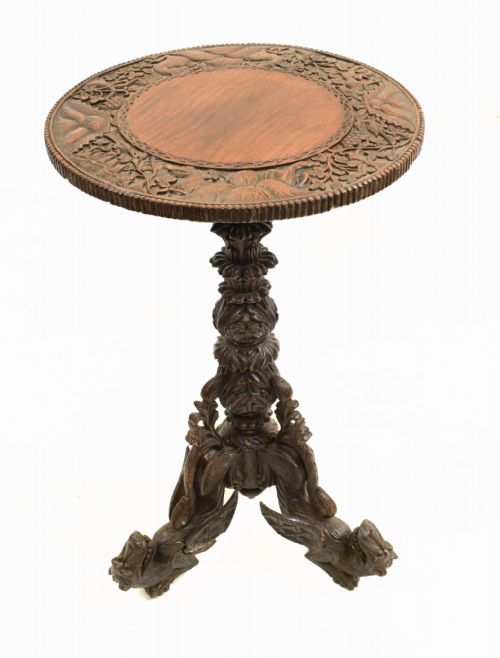
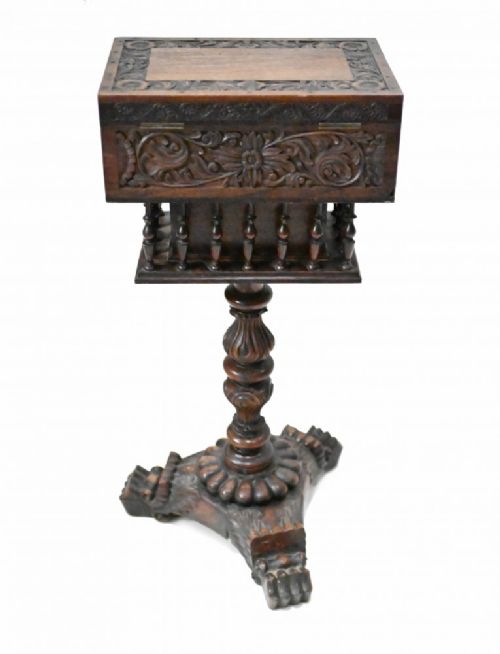
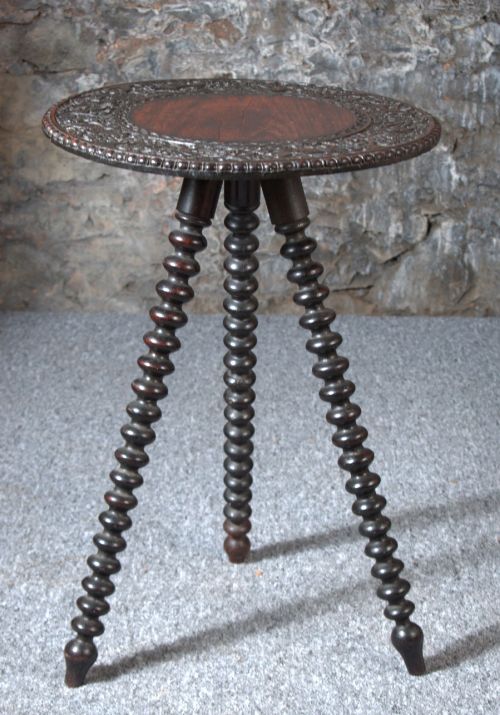
An indian carved tripod table brings intricate colonial craftsmanship into a room, offering a sturdy pedestal base beneath heavily decorated circular or shield-shaped surfaces.
Indian Carved Tripod Table
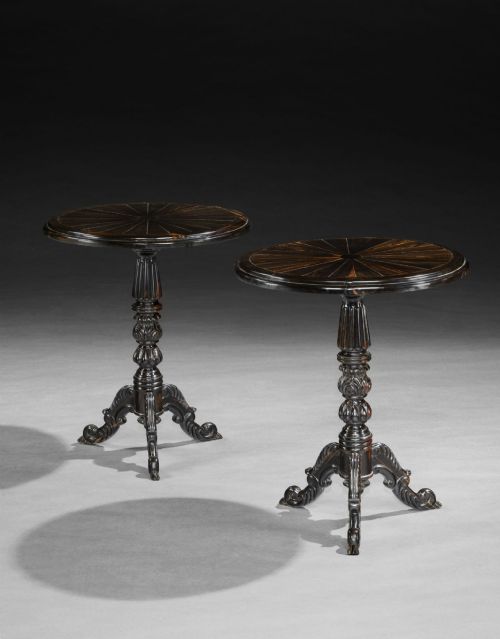
An indian carved tripod table typically manifests as an occasional, side, or centre piece designed for domestic display during the nineteenth and early twentieth centuries. These items emerge from various regional workshops across the subcontinent, including Bombay, Ceylon, and Northern India, alongside Burmese centres of production.
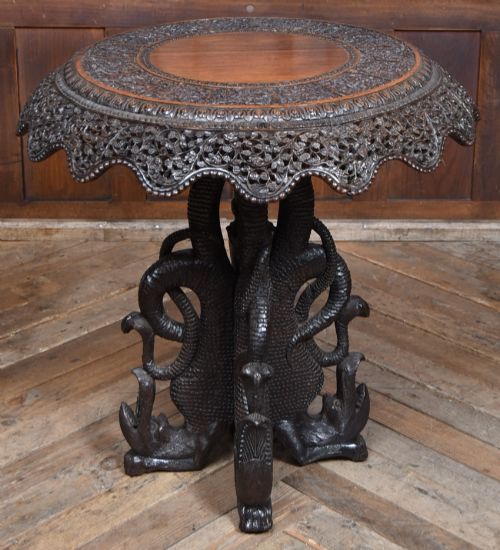
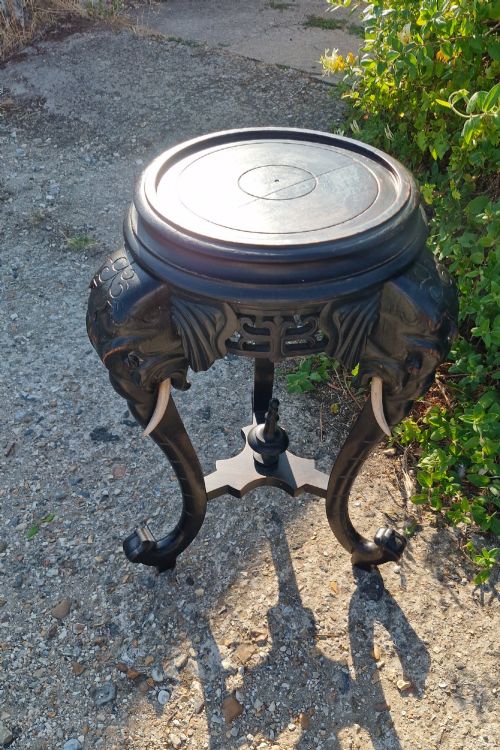
The most common formats on this page are circular tilt-top occasional tables and pedestal designs supported by three legs. Many incorporate distinct regional motifs such as animal figures, notably elephant heads complete with tusks, alongside dense foliate carving.
The aesthetic bridges domestic British furnishing requirements of the Victorian era with traditional oriental export craftsmanship. Buyers encounter forms ranging from compact plant stands to larger tea or coffee tables created for colonial residences.
How they were made
Artisans utilised dense tropical timbers such as teak, padouk, ebony, rosewood, and hardwood for the primary structure of each table. These woods provided the necessary stability for deep, intricate relief carving across the tops and pedestals.
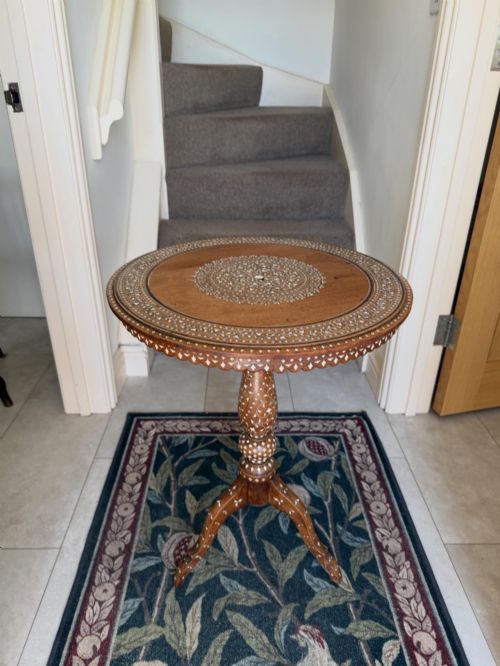
Surface decoration frequently incorporated contrasting materials set into the timber base. Bone, bone inlay, and mother-of-pearl embellish specific examples, creating geometric patterns or architectural motifs associated with Hoshiarpur production.
Construction techniques combined traditional joinery with folding or tilting mechanisms on tripod bases. Master carvers worked entirely by hand to produce high-relief foliage, scrollwork, and figural supports without mechanical duplication.
The furniture forms represented span side tables, centre tables, occasional tables, tilt-top mechanisms, and plant stands.
What varies in quality
Material selection dictates much of the physical weight and visual richness of an object. Dense ebony, figured padouk, or finely grained satinwood elevate the status of a piece compared to plain domestic hardwoods.
The complexity of supplementary decoration, such as intricate bone inlay or mother-of-pearl work, denotes higher workshop skill. Integration of specialised mechanisms, including stable tilt-top actions and well-balanced tripod legs, further distinguishes superior execution.
The Indian Carved Tripod Table Glossary
- Tripod base
- A support structure featuring three legs radiating from a central pillar. This configuration ensures stability on uneven floors.
- Tilt-top table
- A furnishing fitted with a mechanism that allows the surface to pivot into a vertical position when not in use. This design saved space in nineteenth-century drawing rooms.
- Hoshiarpur
- A region in Northern India renowned for producing wooden tables densely inlaid with bone or ivory. These items often feature intricate geometric or floral patterns.
- Padouk
- A heavy, durable tropical hardwood with a distinctive reddish-brown tone. It was frequently utilised by colonial cabinetmakers for carved occasional furniture.
- Teapoy
- A small occasional table or stand traditionally used for serving tea. In colonial contexts, the term often describes finely carved pedestals.
Indian Carved Tripod Table: Frequently Asked Questions
Where were these tables made?
Production occurred across various workshops in the Indian subcontinent, Ceylon, and Burma during the nineteenth and early twentieth centuries. Specific regional centres included Bombay and Hoshiarpur.
Items were largely created for the colonial export market, blending local carving traditions with British domestic furniture forms.
How do I care for the wood?
Maintain the timber by keeping the piece away from direct heat sources and strong sunlight, which can dry out dense hardwoods like ebony and padouk. Dust regularly with a dry cloth.
Avoid using heavy liquid polishes that might seep into carved recesses or damage delicate bone inlay.
How do I identify the wood type?
Examine the colour, grain, and weight of the surface beneath any carved decoration. Timbers range from the deep black tones of ebony to the rich reddish-brown of padouk and the warm grain of teak.
Inlaid sections often utilise contrasting light bone or mother-of-pearl to stand out against the darker background wood.