




19th Century Elephant Table
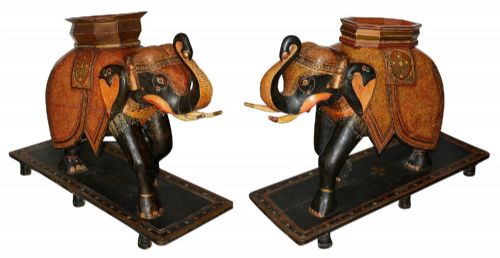
These 19th century elephant table pieces bring heavily carved Anglo-Indian colonial character and distinctive animal supports into a room.
19th Century Elephant Table
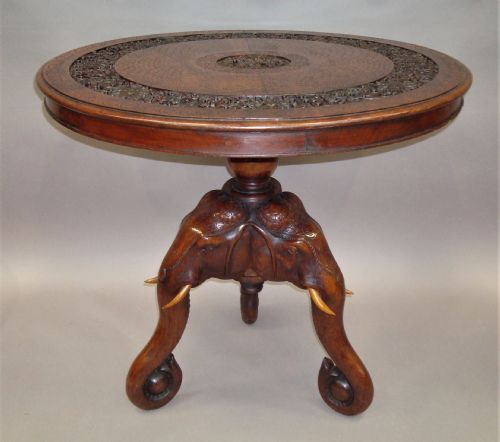
When searching for a 19th century elephant table, buyers encounter heavily carved occasional and side tables originating from the Anglo-Indian and Victorian colonial periods. These striking items typically feature structural supports formed as carved elephant heads and legs, reflecting the craftsmanship of regions such as the Bombay Presidency.
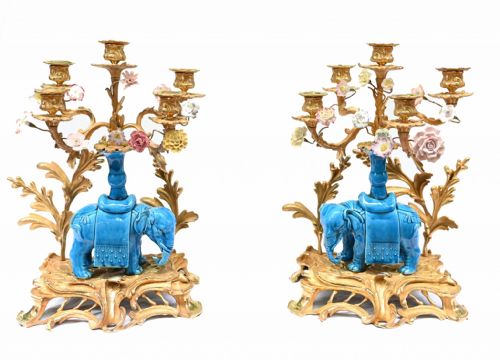
The surviving pieces on this page span styles like Anglo-Indian, Victorian Colonial, and Anglo-Burmese, utilising dense timbers. Alongside occasional tables, the selection includes related forms with elephant legs, all sharing the distinct sculptural woodwork of the nineteenth century.
How they were made
Maker workshops relied on dense tropical timbers including teak, rosewood, and general hardwoods that provided the necessary strength for intricate, deep-relief carving. Artisans utilised hand chisels and gouges to shape realistic elephant heads, trunks, and tusk details directly into the structural legs of the furniture.
Surfaces frequently received elaborate geometric or foliate ornamentation, sometimes enhanced with lacquer or pigment to highlight the carved motifs. Construction methods combined sturdy mortise and tenon joinery to support heavy timber tops, whether octagonal, rectangular, or hexagonal in shape.
19th Century Elephant Table Retail Price Guide 2026
Typical asking prices for 19th century elephant table among the pieces listed under this phrase on Sellingantiques today, from the lower quarter to the upper quarter. They describe what is for sale here now, not the wider market.
Listings demonstrate forms primarily rooted in the 19th century and Victorian periods, executed in teak, rosewood, and carved hardwood.
What varies in quality
Quality in these tables rests upon the depth, sharpness, and anatomical accuracy of the carved elephant figures supporting the top. Superior examples demonstrate skilled hand work where the expression of the animal and the integration of the legs into the overall frame display real sculptural confidence.
The selection of timber and the preservation of the original surface finish also dictate the tier of the piece. Denser hardwoods that retain crisp detailing without excessive shrinkage or replacement parts represent the finer end of the surviving range.
The 19th Century Elephant Table Glossary
- Anglo-Indian
- Describing furniture made in India during the British colonial period, combining traditional local carving skills with European furniture forms. These pieces often feature dense tropical hardwoods.
- Bombay Presidency
- A historical administrative subdivision of British India known for distinctive regional furniture production. Workshops here specialised in heavily carved teak and rosewood occasional tables.
- Hardwood
- Dense timber derived from broad-leaved trees, used extensively in nineteenth-century colonial furniture. Materials such as teak and rosewood provided durability for intricate carving.
- Occasional table
- A small, movable table designed for specific, intermittent use in a principal room. In this context, the form serves as a decorative stand supported by carved animal figures.
19th Century Elephant Table: Frequently Asked Questions
What is a 19th century elephant table?
A 19th century elephant table is a colonial occasional or side table featuring structural legs or supports carved in the form of elephants.
These pieces typically originate from regions such as the Bombay Presidency and showcase dense tropical hardwoods.
How do I date an elephant table?
Dating relies on stylistic markers, timber analysis, and construction methods associated with the nineteenth century.
Evidence points towards periods including Victorian colonial production and specific decades like eighteen-ninety.
What woods were used for these tables?
Maker workshops utilised dense timbers native to the regions where the furniture was produced.
Teak, rosewood, and general carved hardwoods form the primary structural materials seen across the surviving items.
Where were elephant tables made?
These tables were produced across the Indian subcontinent and Burma during the British colonial era.
Anglo-Indian and Anglo-Burmese workshops combined local carving traditions with forms suited to European homes.