
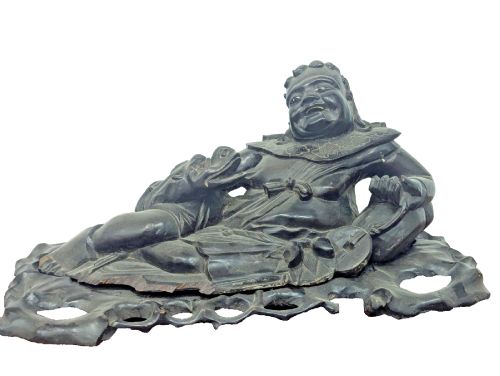


Hardwood Elephant Table
A hardwood elephant table is a heavily carved colonial piece that brings dramatic zoomorphic form and intricate woodwork into a room.
Hardwood Elephant Table
A hardwood elephant table draws the eye with supporting legs carved as full elephant figures or heads, often carrying a circular or shaped top. These works stem from nineteenth-century production under colonial influence, spanning Anglo-Indian, Anglo-Burmese, and Chinese workshops.
The version most commonly met on this page is the circular occasional or side table featuring deep relief carving around the apron and base. Such tables serve practical purposes as plant stands or bedside surfaces while functioning primarily as decorative focal points.
Materials and Construction
Carvers utilised dense timbers such as teak, rosewood, and general hardwood that allowed for extreme depth and crispness in relief work. Selected surfaces incorporated bone inlay to accent the patterns running across the tops and edges.
Joinery methods combined traditional pegged construction with heavy carving where the elephant supports integrate directly into the structural framework. Ebonised finishes were occasionally applied to alter the natural tone of the timber.
Several tables feature hidden bone inlay eyes that seem to watch visitors as they navigate the room.
Factors of Quality
Timber selection dictates weight and stability, with closely grained rosewood and teak outlasting softer varieties. The integration of bone inlay without missing sections separates well-preserved specimens from heavily restored alternatives.
The Hardwood Elephant Table Glossary
- Anglo-Indian
- Pertaining to decorative arts produced in India during the period of British rule, combining local craftsmanship with European furniture forms. These items frequently display dense floral and animal carving.
- Occasional table
- A small, movable table designed for minor uses in various rooms rather than central dining. They appear frequently in nineteenth-century domestic interiors.
- Ebonised
- Wood treated with a dark stain or finish to imitate the appearance of ebony. This technique gained popularity during the Victorian era for accentuating carved details.
- Pedestal
- A structural support or stand raised from the floor to display plants, sculptures, or smaller tables. In this context, they share forms with heavy plant stands.
Hardwood Elephant Table: Frequently Asked Questions
What is an elephant table used for?
These pieces serve as occasional side tables or plant stands within domestic spaces.
Their sturdy timber construction allows them to hold lamps, decorative objects, or small plants securely.
How old are these tables?
The available pieces date primarily from the nineteenth century through the early twentieth century.
Stylistic markers and colonial trade periods help narrow down the exact decade of manufacture.
What wood are they made from?
Carvers utilised dense regional timbers including teak, rosewood, and general ebonised hardwood.
These heavy woods provided the structural strength needed for detailed zoomorphic legs.
Where were they made?
Production centred in colonial workshops across India, Burma, and China during periods of British influence.
Local artisans adapted traditional motifs to suit European domestic tastes.