




Hongmu Marble Top Table
A hongmu marble top table brings solid dense timber and cool stone together for plant stands, centre tables, and side tables.
Hongmu Marble Top Table
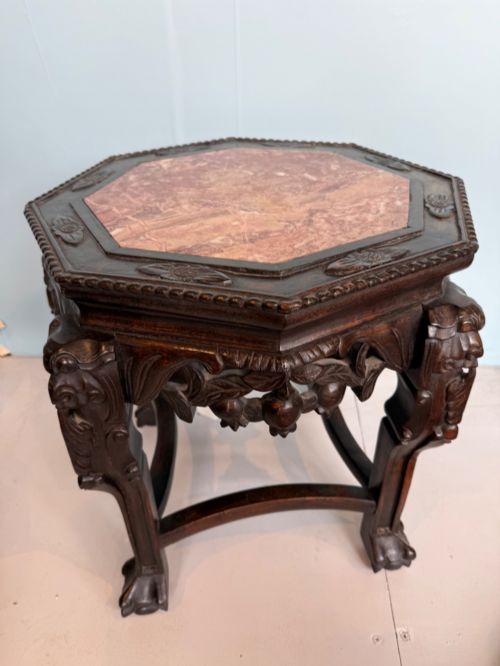
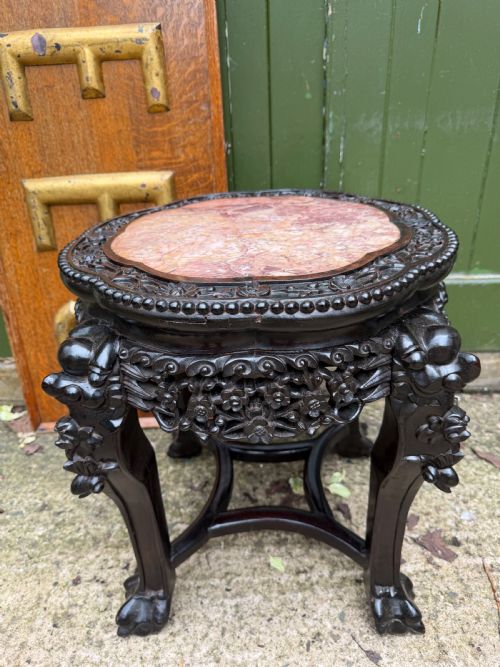
A hongmu marble top table combines heavy carved timber with an inset stone panel, taking forms such as plant stands, centre tables, occasional tables, and low jardiniere stands. These pieces appear across the nineteenth century, including Qing Dynasty and Republic Period Chinese examples, alongside Victorian era items.
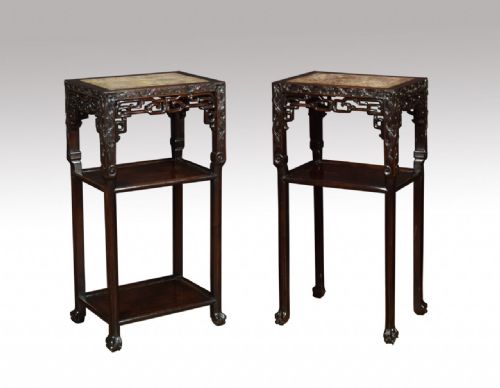
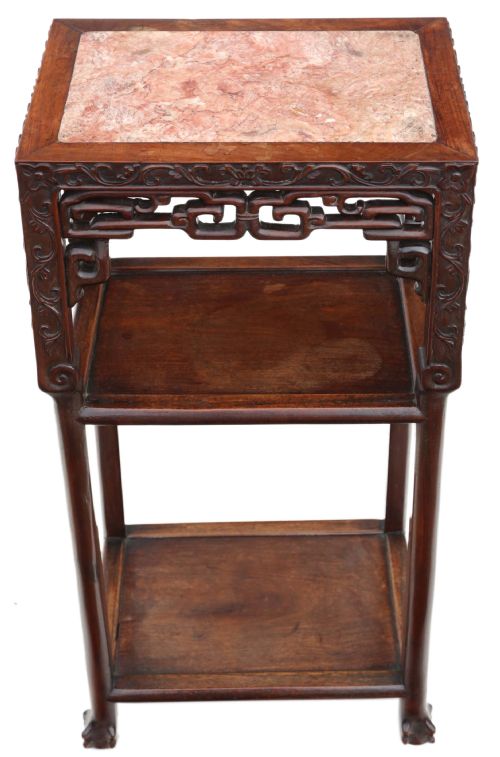
Buyers encounter versatile shapes ranging from rectangular centre tables and side tables to tall pedestal stands, low barrel-form occasional pieces, and matched pairs of urn stands. The timber frameworks feature intricate carving, supporting smooth marble inserts in rouge and variegated colourways.
Materials and construction
Craftsmen utilised dense hardwoods, specifically hongmu and rosewood, renowned for their heavy weight and deep natural tones. These timbers provide the structural strength required for intricate hand-carving along aprons, legs, and frames.
An inset panel of marble, often in rouge or variegated stone, sits flush within the wooden top to create a cool, durable surface. Joinery traditions of the Qing Dynasty and Chinese Export workshops ensure stability without relying on modern fasteners.
Listings feature items spanning the nineteenth century, including specific years like 1850, 1860, 1880, 1890, and 1930, alongside Victorian and Qing Dynasty examples.
Judging the quality
The standard of carving dictates much of the distinction, separating stiff, shallow incision from deep, undercut relief work that displays crisp detailing on foliage and motifs. Timber selection also plays a role, with heavier, more uniform hongmu grain commanding attention over mixed or patched hardwoods.
Condition of the inset marble panel matters significantly, with unbroken, richly patterned stone indicating superior preservation. Furthermore, the overall crispness of the joinery and the balance of multi-tiered structures define the finer examples on the market.
The Hongmu Marble Top Table Glossary
- Hongmu
- A traditional Chinese term for dense hardwoods, prized for dark colour and heavy weight. It forms the primary structural material for these carved tables.
- Jardiniere stand
- A tall or low support designed specifically to hold heavy plant pots or floral arrangements. These stands frequently feature inset marble surfaces to resist moisture.
- Qing Dynasty
- The imperial dynasty of China spanning from the seventeenth to the early twentieth century. Many carved hardwood tables on this page date to the later decades of this period.
- Rouge marble
- A type of decorative stone featuring red, pink, and white mineral veining. This material provides a colourful, smooth contrast against dark carved timber.
- Centre table
- A freestanding piece finished on all sides to stand in the middle of a room rather than against a wall. These larger tables often incorporate rectangular marble panels.
Hongmu Marble Top Table: Frequently Asked Questions
How do I use a plant stand?
A plant stand provides an elevated platform to display potted plants, urns, or decorative objects within a room.
The inset marble top protects the wooden structure from water damage caused by watering plants.
How do I date a Chinese hardwood table?
Dating relies on stylistic markers associated with periods like the Qing Dynasty, Chinese Export traditions, or the Republic Period.
Construction methods, timber patination, and carving depth also help distinguish nineteenth-century examples from later twentieth-century pieces.
Where should I place a centre table?
A centre table works best positioned in an open space where it can be viewed from all sides, as these pieces are finished uniformly.
They serve well in larger hallways or principal reception rooms to display lamps, vases, or decorative items.