






Handwoven Rug Cushion Cover
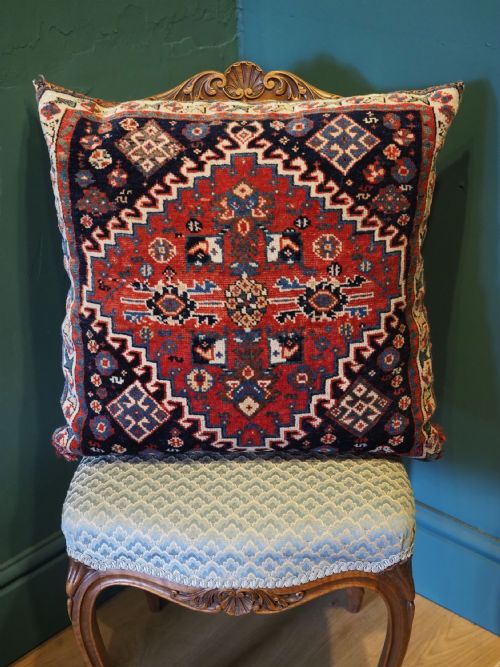
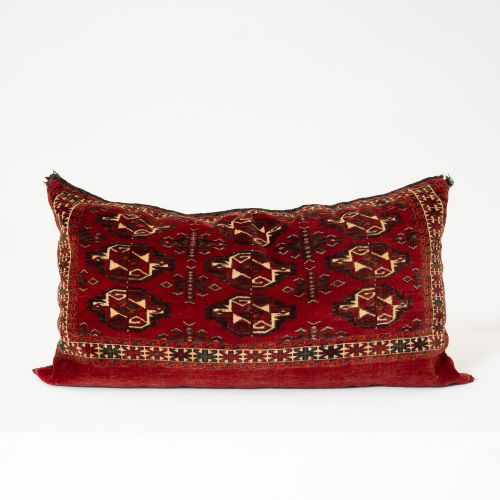
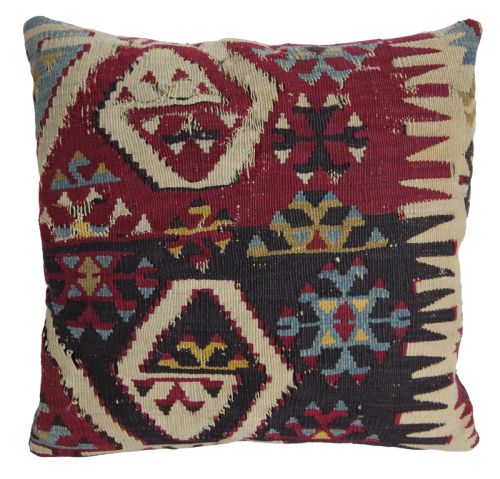
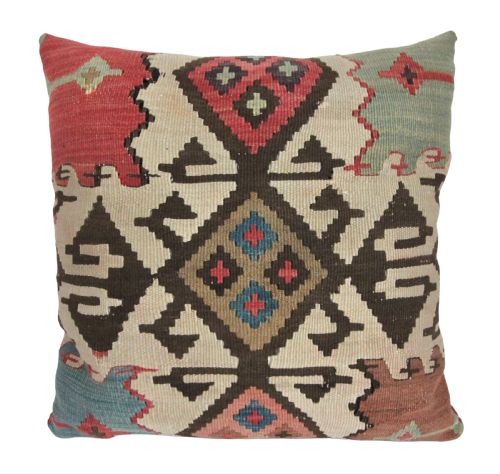
A handwoven rug cushion cover brings tactile history into a room, formed from repurposed tribal bag faces and flatweaves crafted across Anatolia, Persia, and Central Asia.
Handwoven Rug Cushion Cover
A handwoven rug cushion cover repurposes historic nomadic textiles, transforming utilitarian objects such as saddlebags, salt bags, and flatweaves into decorative home furnishings. These pieces originate from tribal and nomadic groups including the Qashqai, Turkmen, Bakhtiari, Baluch, and Shahsavan, spanning the nineteenth and early twentieth centuries.
The most common variations encountered on this page are constructed from antique kilim fragments or complete bag faces, specifically yastiks, chuvals, mafrashs, and torbas. Each cover retains the original structural weave of the nomadic textile, paired with either a plain weave back or finished edges suitable for contemporary seating.
How they were made
The materials recorded in these pieces rely entirely on natural components, predominantly wool and hand-spun wool, occasionally incorporating cotton and goat hair. Artisans utilised natural dyes derived from local plants and minerals to colour the fleece before spinning and weaving.
Techniques range from flatweave kilim construction to weft work and banded designs, executed on portable horizontal looms set up in nomadic camps. The resulting textiles were originally built for durability, designed to withstand daily use in transport and domestic storage.
Materials documented across the inventory include wool, cotton, goat hair, and hand-spun wool dyed with natural substances.
What varies in quality
Quality in these textiles rests upon the integrity of the original weave, the fineness of the knotting or flatweave precision, and the vibrancy of the natural dyes. Pieces retaining their original bag faces or complete structures command attention for their historical completeness.
The skill of the tribal weaver dictates the complexity of the geometric motifs and the harmony of the palette. Condition varies according to how much historic wear the textile accumulated before its conversion into a cushion.
The Handwoven Rug Cushion Cover Glossary
- Kilim
- A flatwoven textile produced without a pile, forming the primary face for many nomadic cushions. This technique allows for sharp geometric patterns.
- Bag face
- The decorative front panel of a nomadic storage bag or saddlebag, salvaged and repurposed as a cushion cover. These panels display the finest tribal designs.
- Yastic
- A traditional Anatolian cushion or pillow face, typically smaller in format. They were originally used for leaning against on raised seating platforms.
- Chuval
- A large tent storage bag made by Turkmen tribes, featuring characteristic gul motifs. Fragments of these bags are frequently adapted into cushion covers.
- Natural dyes
- Colourants sourced from roots, plants, and insects prior to the introduction of synthetic alternatives. They age gracefully, developing a rich patina over decades.
Handwoven Rug Cushion Cover: Frequently Asked Questions
How do I clean a rug cushion cover?
Professional textile cleaning is recommended for antique wool pieces to preserve the natural dyes and hand-spun fibres. Regular gentle surface vacuuming without a beater bar helps remove dust.
Avoid immersion in water or chemical spot treatments, which can cause bleeding in older natural dye lots. Localised professional attention ensures the historic structure remains undisturbed.
Are these cushion covers made from old rugs?
The pieces are constructed from historic nomadic textiles, specifically nineteenth and early twentieth-century tribal bags, flatweaves, and saddlebag faces. Artisans repurpose these authentic fragments rather than newly manufactured rugs.
This method gives functional a second life to older material culture from traditions such as Baluch, Qashqai, and Yomut Turkmen weaving.
How do I choose the right inner pad?
A feather or down pad slightly larger than the cushion cover dimensions provides a full, traditional look that fills the corners properly. Stiff foam inserts can strain the aged seams of antique flatweaves.
Allowing the cushion to settle naturally against the structure of the vintage wool respects the flexibility of the original textile art.
Can I use these cushions on daily seating?
Nomadic weaving was originally engineered for hard domestic use, making these textiles surprisingly resilient for everyday environments. Placing them on armchairs or sofas allows them to function as practical seating accents.
Rotating the cushions periodically distributes wear evenly across the antique wool and flatweave surfaces.