
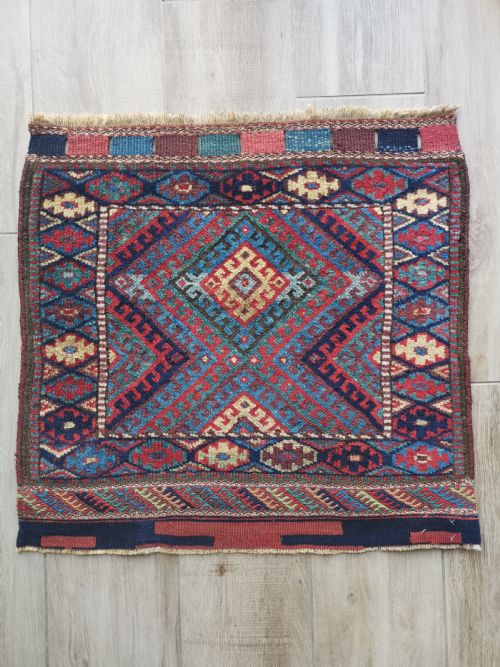


Antique Khorjin Cushion
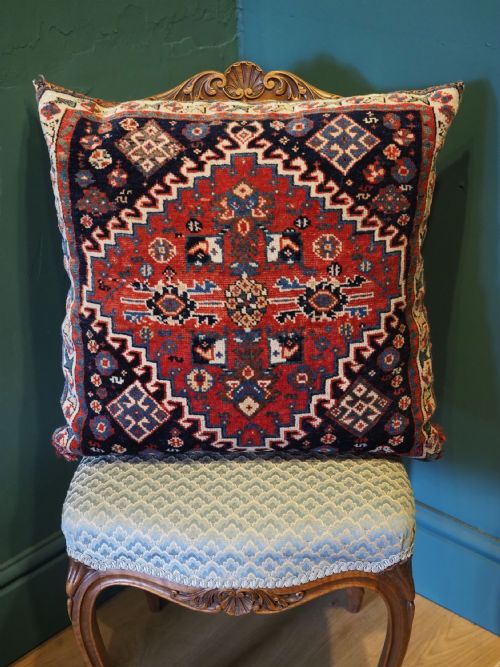
An antique khorjin cushion brings the woven geometry of Persian nomadic baggage directly into modern seating.
Antique Khorjin Cushion
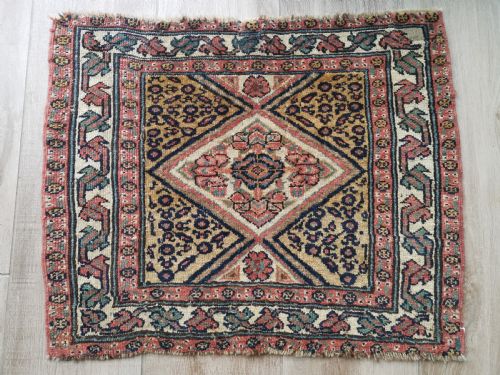
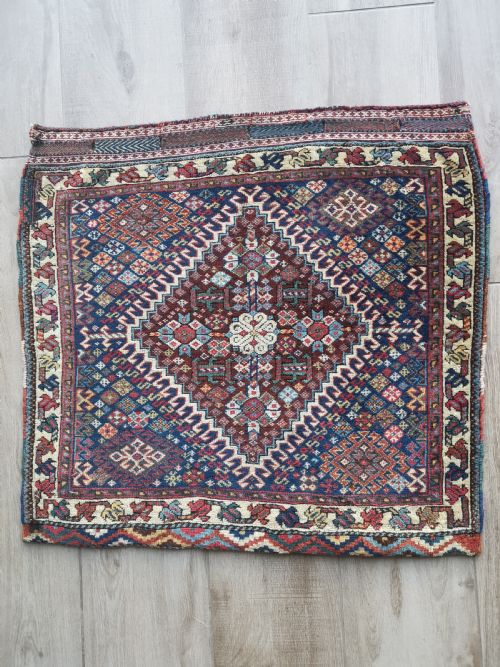
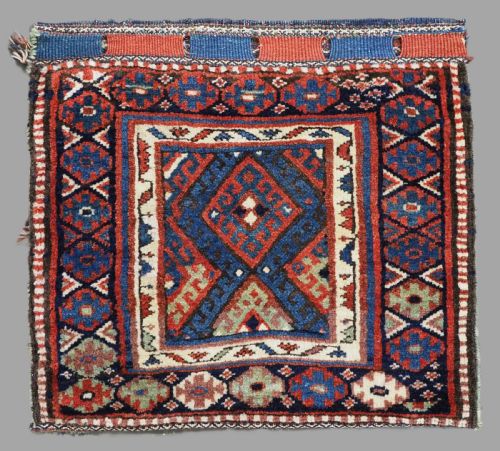
The pieces seen here are predominantly bag faces or complete saddlebags adapted into cushions, maintaining their original tribal character. Makers utilised sturdy wool and goat hair to withstand the rigours of nomadic migration.
Tribal groups including the Qashqai, Shahsavan, Afshar, Khamseh and Kurdish tribes produced these distinctive textiles. Each group employed specific design repertoires, from geometric medallions to stylised boteh motifs and animal figures.
How they were made
Weavers relied on hand-spun wool for the pile and foundation, often supplemented by cotton and durable goat hair for structural edges. Natural dyes derived from plants and minerals provided the rich palette seen across these pieces.
Construction techniques varied between pile knotting and flatweave methods such as soumak and kilim. Artisans executed these structures entirely by hand on portable horizontal looms set up in tribal camps.
Camels carried these bags across rugged terrain before they found a second life softening modern sofas.
What varies in quality
Quality rests primarily in the fineness of the weave, the clarity of the tribal motifs and the depth of the natural dyes. Superior examples exhibit tightly packed knots or precise soumak wrapping alongside well-preserved original backs.
The handle and lustre of the wool dictate tactile merit, with high-lanolin fleeces yielding a brighter, more resilient surface. Regional design complexity and the intactness of secondary borders further separate standard utility pieces from exceptional tribal weaving.
Qashqai nomads·Shahsavan tribes·Afshar nomads·Kurdish tribes
The Antique Khorjin Cushion Glossary
- Khorjin
- A traditional Persian double saddlebag used by nomadic tribes for storage and transport during migrations. These textiles are frequently adapted into cushions for modern interiors.
- Bagface
- The decorative front panel of a tribal saddlebag or storage bag. This portion displays the primary iconography and pile or flatweave design.
- Boteh
- An almond-shaped or paisley motif with a curved upper end, frequently utilised in Persian tribal weaving. It symbolises life and eternity.
- Plain weave
- A simple interweaving of warp and weft threads without pile. It typically forms the back sections or structural borders of nomadic bags.
Antique Khorjin Cushion: Frequently Asked Questions
What is a khorjin cushion?
A khorjin cushion is created from the textile face of an antique Persian tribal saddlebag. These pieces were originally woven by nomadic groups for daily transport and storage.
Today, they are cleaned, lined and stuffed to serve as decorative cushions while retaining their authentic tribal patterns and materials.
How do I care for my cushion?
Antique wool textiles require gentle maintenance to preserve their natural fibres and vegetable dyes. Vacuuming with a low-suction attachment removes surface dust safely.
Professional specialist cleaning is recommended for deeper maintenance. Keep the textile away from direct, prolonged sunlight to prevent fading.
How do I identify different tribal styles?
Tribal attribution relies on specific design vocabulary, colour combinations and weaving structures. Qashqai pieces often display medallion layouts, while Shahsavan items frequently utilise crisp soumak technique with geometric motifs.
Afshar and Khamseh weavings have distinct palettes and border arrangements that connect them to specific regions in Persia.
Are the backs original?
Many listings preserve the original plain weave back of the nomad bag, often constructed from wool or goat hair. Others feature newly added fabric backs designed to support everyday use as a cushion.
Check individual descriptions to see whether the piece retains its original utilitarian backing or has been professionally finished with a complementary fabric.