


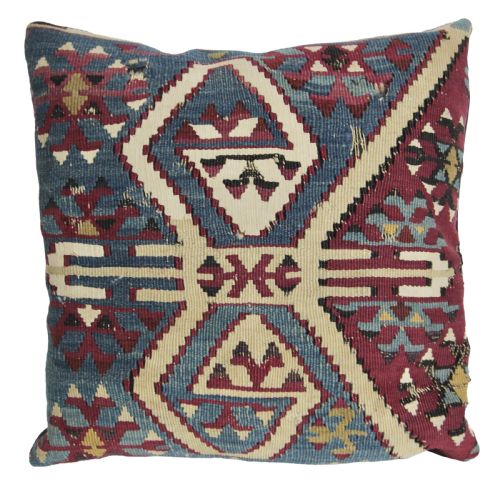
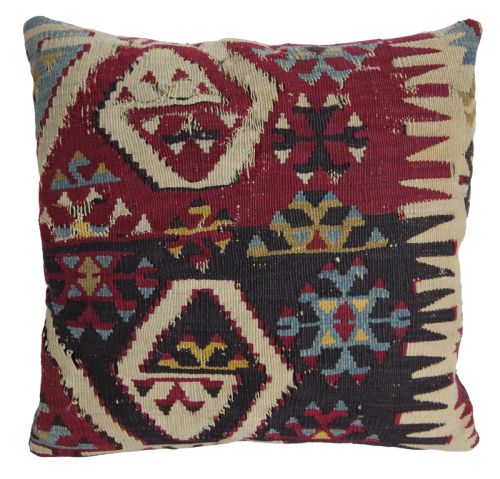


Vintage Oriental Cushion
These vintage oriental cushion pieces are hand-woven tribal textiles and rug fragments repurposed into soft furnishings, sought after for their rich history and authentic nomadic character.
Vintage Oriental Cushion
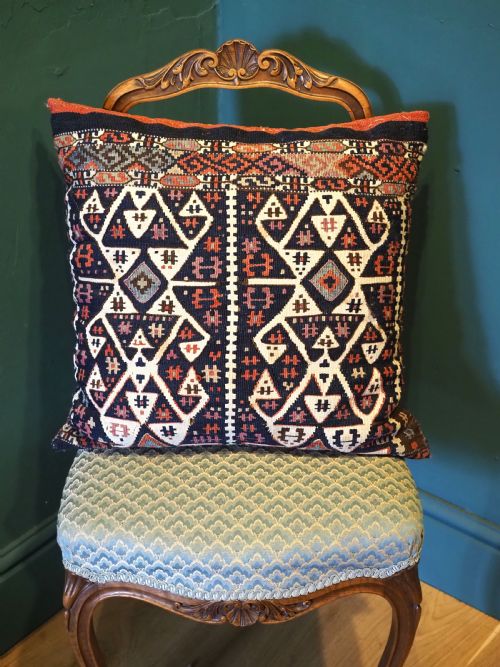
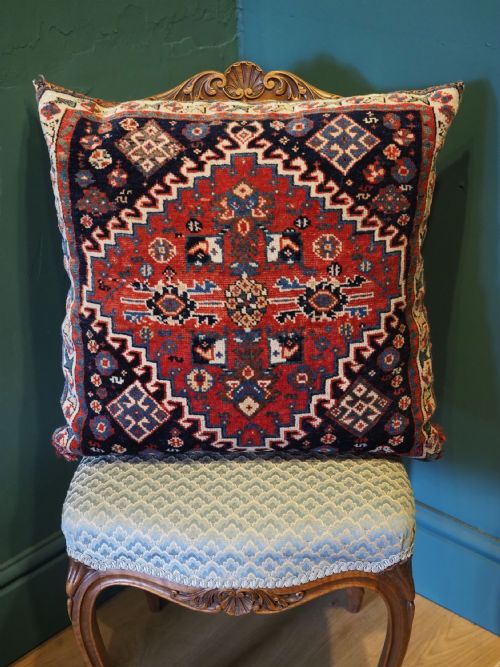
A vintage oriental cushion typically originates from tribal and nomadic weaving traditions across the Near East and Central Asia. Buyers searching for this phrase encounter repurposed fragments, saddle bags, bag faces, and torbas transformed into functional scatter cushions and throw pillows. These items draw on distinct regional styles including Anatolian, Persian, Kurdish, and Turkmen traditions.
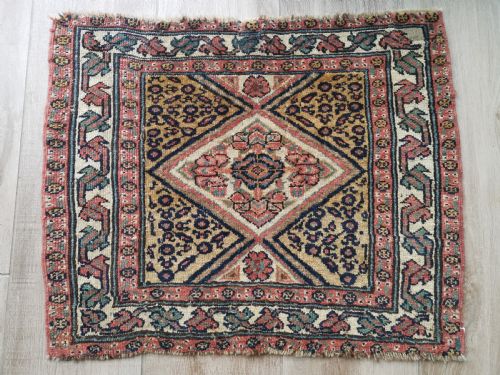
The objects span periods from the mid-nineteenth century through to the early twentieth century. Many examples derive from utilitarian items such as storage bags, saddle bags, and rug fragments that have been carefully fashioned into soft furnishings. This gives each cushion a distinct provenance rooted in traditional tribal craftsmanship.
How they were made
These textiles rely principally on hand-spun wool combined with cotton, manipulated through traditional weaving techniques like kilim flatweave and soumak work. Artisans utilised natural dyes and vegetable dyes to achieve deep, enduring colours across the patterned surfaces. The resulting fabrics combine structural durability with intricate geometric and tribal motifs.
Makers constructed these pieces as functional items for nomadic life, employing tight knotting and flatweaving methods to withstand daily use. Bag faces and storage containers were later adapted into cushions while retaining their original structural borders and banded weft work designs.
Listings feature pieces spanning the mid-nineteenth century to the early twentieth century, utilising hand-spun wool and natural dyes.
What varies in quality
Quality rests upon the fineness of the weave, the clarity of the tribal motifs, and the integrity of the materials used. Pieces featuring complex iconography such as boteh, bird, or dragon designs display a higher degree of technical skill by the original weaver. The retention of original backs and early natural dye palettes further elevates the standing of an individual cushion.
The condition of the wool pile and the precision of the hand-spun fibres distinguish standard examples from superior ones. Well-preserved bag faces with intact structure and vibrant vegetable dyes demonstrate the highest level of craftsmanship from regions such as Anatolia and Persia.
The Vintage Oriental Cushion Glossary
- Kilim
- A flatwoven carpet or textile produced without a pile, frequently utilised in the creation of these cushions. This technique yields a lightweight, durable fabric with sharp geometric patterns.
- Bag Face
- The decorative front panel of a nomadic storage bag or saddle bag. These panels are frequently repurposed into cushions to showcase the intricate weaving.
- Soumak
- A flatweave technique involving wrapping weft threads over warps to create a raised, durable surface. It often results in elaborate bird or dragon motifs.
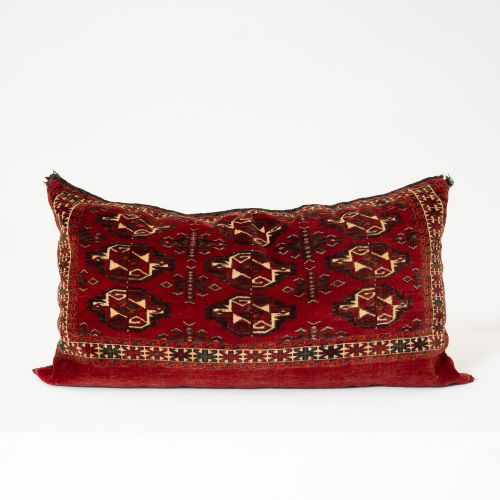
- Torba
- A small Turkmen storage bag traditionally hung inside a tent. Surviving examples are often converted into cushions.
- Natural Dyes
- Colourants derived from plants, insects, and minerals rather than synthetic compounds. They produce rich, variable tones that mellow gracefully over time.
Vintage Oriental Cushion: Frequently Asked Questions
What is a vintage oriental cushion made from?
These pieces are constructed primarily from hand-spun wool and cotton, often utilising natural and vegetable dyes for the coloured motifs. The fabrics originate from older tribal weavings rather than modern manufactured textiles.
Many examples repurpose genuine nineteenth-century and early twentieth-century rug fragments, saddle bags, and storage pouches into soft furnishings while preserving the original flatweave or pile construction.
How do I care for a tribal cushion?
Maintenance requires gentle handling due to the age of the historical wool and cotton materials. Regular light vacuuming with a low suction attachment helps remove surface dust without disturbing the weave.
Professional specialist cleaning is recommended for any deeper maintenance to protect the natural dyes and hand-spun fibres. Keeping the cushions away from direct, prolonged sunlight also prevents the natural colours from fading.
How are different tribal styles identified?
Identification relies on observing the specific geometric patterns, colour palettes, and weaving structures characteristic of different regions. Turkmen pieces often display distinct guls, while Kurdish and Afshar examples show unique tribal motifs and border designs.
The specific construction method, such as soumak work or simple flatweaving, also points towards the particular nomadic group responsible for the original textile.
Were these cushions made originally as pillows?
Most of these items were not initially made as cushions or pillows for domestic seating. They started life as functional utilitarian objects like saddle bags, storage sacks, and torbas used by nomadic tribes.
Over time, these durable bag faces and rug fragments were professionally adapted and backed to serve as decorative soft furnishings for modern homes.