
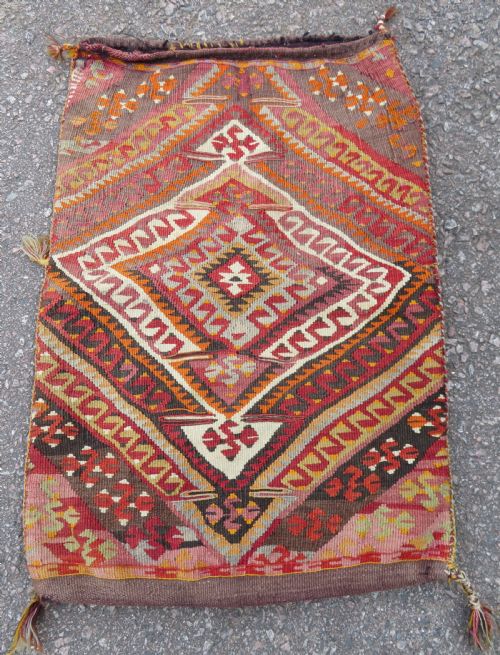
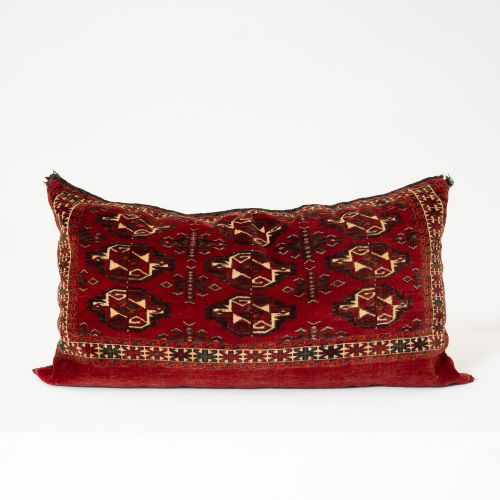


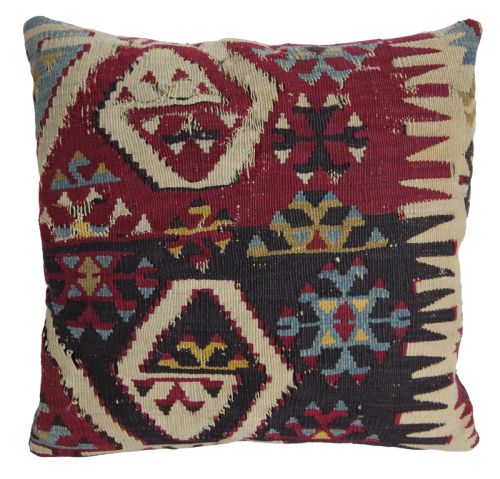

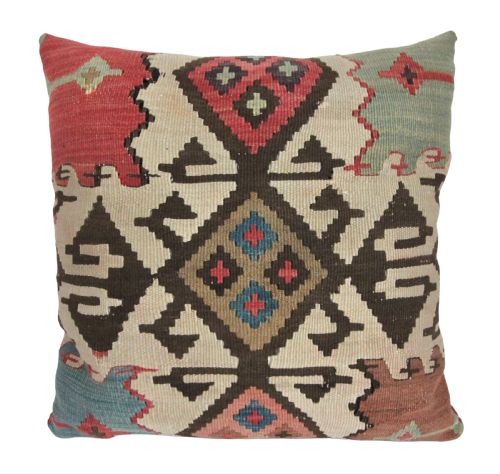


Red Wool Kilim Cushion
These red wool kilim cushion examples bring genuine nomadic textiles into modern rooms as striking floor and sofa furnishings.

Red Wool Kilim Cushion
When you search for a red wool kilim cushion, you are looking at antique tribal weavings repurposed into soft furnishings. The pieces listed here span the nineteenth and early twentieth centuries, originating from Anatolian, Turkmen, Persian, and Central Asian nomadic groups.
You are most likely to meet repurposed bag faces, chuvals, torbas, and saddlebags transformed into cushions. These functional tribal items retain their original flatweave character while serving as durable decorative objects.

How they were made
These textiles rely on hand-spun wool and natural dyes, often combined with cotton or goat hair structures. Artisans utilised traditional flatweave techniques to create sturdy structures designed for daily nomadic life.
Weavers constructed bag faces and storage sacks using tight slit-tapestry methods and banded weft work designs. This technique produced robust surfaces that easily transition into heavy-duty cushion covers.
Materials recorded across the available selection include hand-spun wool, cotton, goat hair, and natural dyes.
What varies in quality
The standard of a red wool kilim cushion depends on the fineness of the flatweave and the complexity of the tribal design. Tightly packed wool and well-preserved natural dye palettes distinguish superior examples.
Integrity of the original bag face or textile fragment dictates the overall appeal. Pieces retaining complete borders, tassels, and sound structural foundations represent the higher end of the range.

The Red Wool Kilim Cushion Glossary
- Kilim
- A flatwoven carpet or rug made without pile. This technique produces a smooth surface ideal for cushions and soft furnishings.
- Chuval
- A large tent storage bag produced by Turkmen nomads. Fragments of these pieces frequently form cushion faces.
- Torba
- A smaller storage bag made by tribal groups. These items display banded flatweave patterns suited for decorative pillows.
- Mafrash
- A rectangular storage sack used for bedding or baggage in nomadic households. The panels are often repurposed into cushions.
Red Wool Kilim Cushion: Frequently Asked Questions
What is a red wool kilim cushion?
A red wool kilim cushion is a decorative pillow made from antique flatwoven nomadic textiles, such as bag faces and storage sacks.
These pieces originate from tribal regions including Persia, Anatolia, and Central Asia, dating from the nineteenth and early twentieth centuries.
How do I care for a kilim cushion?
Caring for an antique textile cushion requires gentle maintenance to protect the historic wool fibres and natural dyes.
Professional dry cleaning or careful surface vacuuming helps preserve the structural integrity of the flatweave fabric.
How do I identify tribal styles?
Tribal styles are identified by distinct geometric motifs, structural weaving techniques, and specific regional colour palettes.
Turkmen, Kurdish, Qashqa'i, and Anatolian groups each utilised characteristic patterns and banding methods in their flatweaves.