
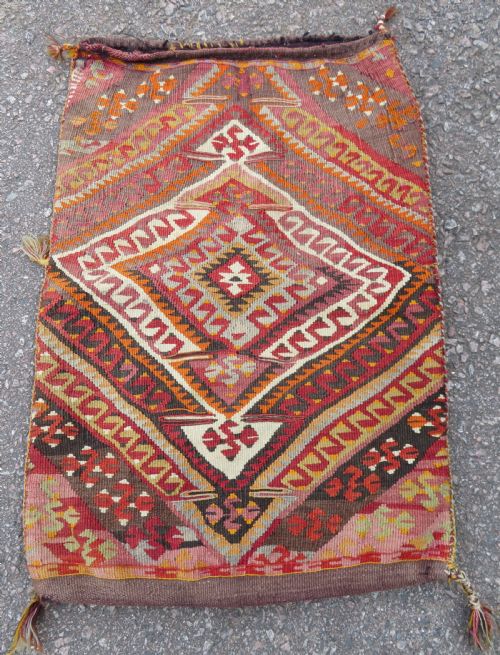
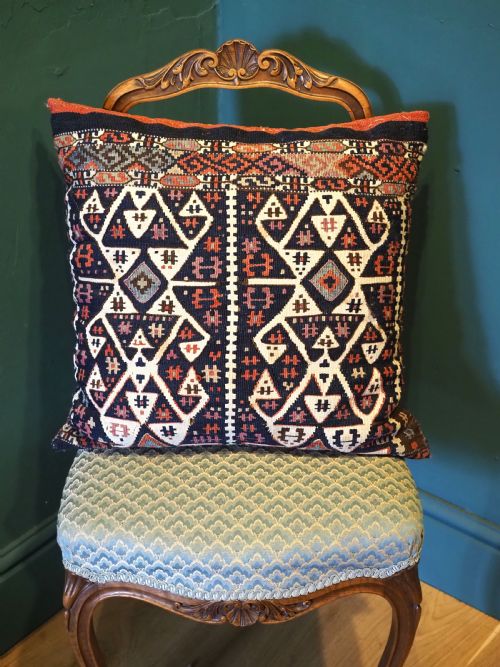


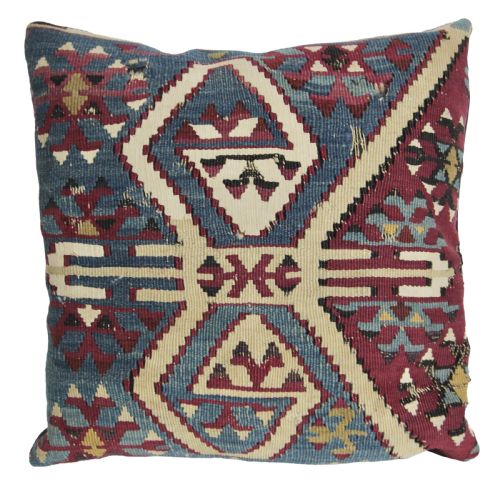


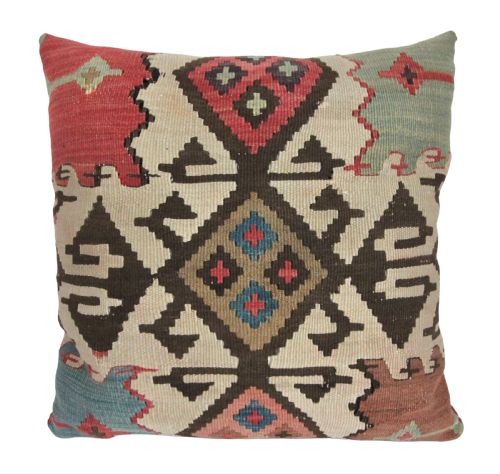
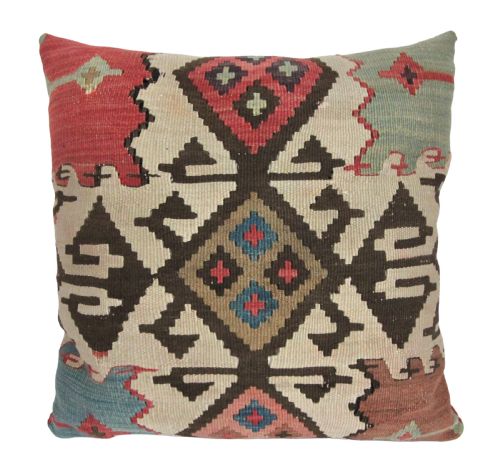

Anatolian Flatweave Cushion
An anatolian flatweave cushion brings tangible textile history into a room, fashioned from authentic tribal rugs.
Anatolian Flatweave Cushion
An anatolian flatweave cushion transforms historical floor coverings and storage bags into functional home accessories. The forms appearing on this page include throw cushions, pillows, and specific variations derived from larger textiles.
The objects stem from distinct periods ranging from the mid-nineteenth century through to the early twentieth century. Buyers encounter classic kilim cushions alongside examples repurposed from Turkish Malatya saddle bags and Kurdish juvals.
The underlying styles span traditional Anatolian and tribal aesthetics. These pieces retain the geometric motifs and flatweave structures of the original utilitarian items.
Construction and materials
The primary material used across these pieces is wool, often supported by cotton for structural integrity. Makers constructed the original flatweaves by interweaving warp and weft threads without a pile, producing a flat surface.
Older examples utilise handspun wool dyed with traditional natural colorants. Artisans then repurposed these durable woven panels into cushion formats.
Some cushions owe their sturdy existence to nineteenth-century horse tack and camel bags.
Assessing quality
Quality depends on the integrity of the flatweave textile and the authenticity of the period materials. Finer examples retain tight weaves and distinct tribal patterns from the original nineteenth or early twentieth-century date.
The skill involved in repurposing antique saddle bags and kilims affects the overall success of the piece. Superior construction honours the original textile while providing a durable cushion form.
The Anatolian Flatweave Cushion Glossary
- Kilim
- A flatweave carpet or textile produced without a pile. These form the primary fabric used for the cushions on this page.
- Juval
- A large tribal storage bag created by nomadic peoples. Examples are often repurposed into decorative cushions.
- Malatya
- A region in Turkey known for distinct regional weaving traditions. Items from this area exhibit specific geometric motifs.
- Flatweave
- A textile technique where the design is created by interweaving warp and weft threads. This method results in a smooth, unraised surface.
- Warp
- The vertical threads held in tension on a loom. They form the structural foundation of the textile.
Anatolian Flatweave Cushion: Frequently Asked Questions
What is an anatolian flatweave cushion?
An anatolian flatweave cushion is a decorative home accessory made from historical Turkish carpets, kilims, or nomadic bags.
These pieces repurpose durable flatwoven textiles dating from the nineteenth and early twentieth centuries into usable soft furnishings.
How were these cushions used originally?
The materials used for these cushions started life as functional nomadic items such as saddle bags, storage sacks, or floor coverings.
Nomadic groups utilised these woven pieces for transport, storage, and tent decoration before they were later adapted into cushions.
How do I date an antique cushion?
Dating relies on examining the materials, weave structure, and stylistic motifs present in the textile. Pieces on this page span from eighteen-fifty to nineteen-twenty.
Earlier examples from the mid-nineteenth century often display specific handspun wool qualities and traditional tribal palettes distinct from later twentieth-century production.
Are these cushions made from new wool?
The textiles utilised for these pieces are historical fabrics rather than newly manufactured materials. Wool and cotton from the eighteen-fifties to nineteen-twenties form the primary physical components.
This age gives each cushion a distinct character derived from genuine nomadic and traditional Anatolian weaving traditions.