




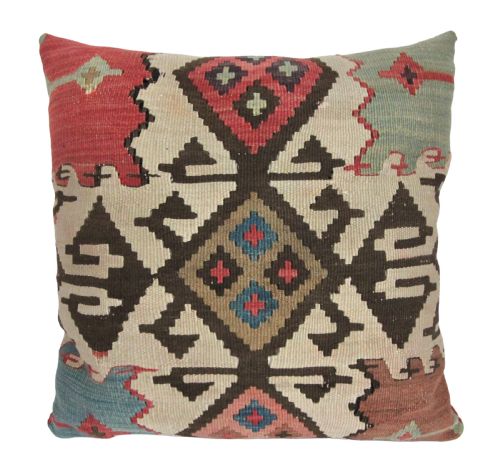


Turkish Kilim Pillow Cover
A turkish kilim pillow cover brings nomadic warmth into a room, fashioned from flat-woven textile fragments that ground modern interiors with rich texture.
Turkish Kilim Pillow Cover
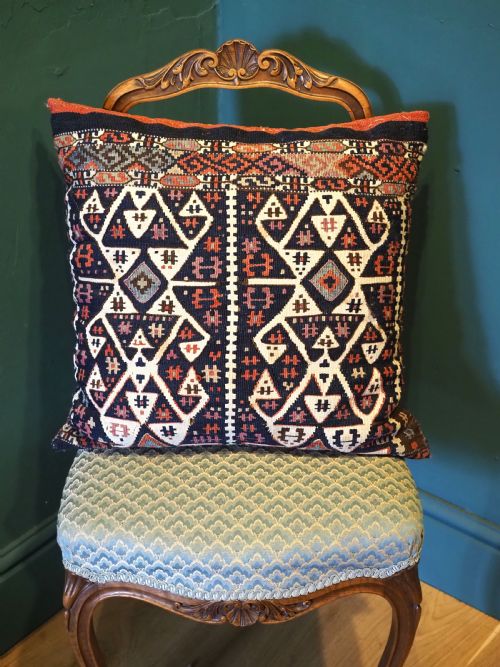
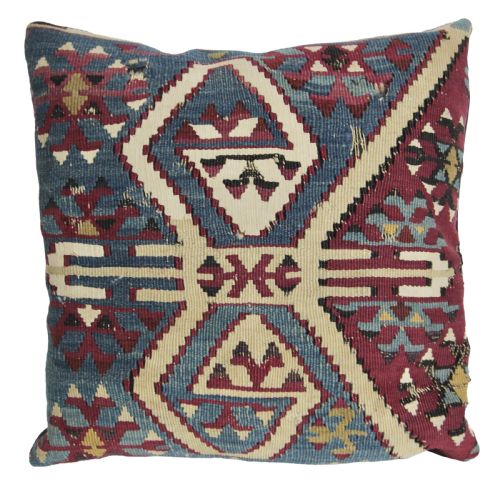
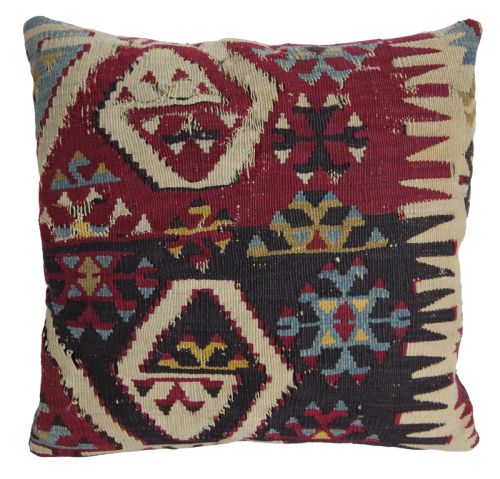
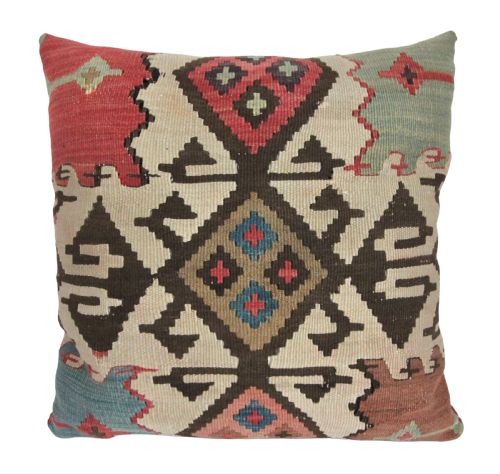
A turkish kilim pillow cover transforms antique flat-woven textiles into functional home accessories. These pieces typically originate from nineteenth-century Anatolian tribal traditions, repurposing older nomadic weaving into accessible decorative items.
Buyers browsing this selection will frequently encounter simple antique kilim cushion forms alongside repurposed saddle bag faces. These objects carry the distinct geometric patterns and earthy hues characteristic of nineteenth-century village workshops.
How they were made
The construction relies entirely on traditional hand-woven techniques using durable natural fibres. Artisans interlaced wool and cotton threads without a pile, creating a flat, sturdy textile surface designed for demanding everyday use.
Older examples incorporate hand-spun wool yarns dyed with natural pigments that mellow gracefully over decades of exposure and handling. The resulting fabric is then backed and edged to form a finished cushion.
Many of these cushions began life carrying dried grain across the Anatolian mountains inside a bouncing donkey bag.
What varies in quality
Quality rests primarily on the integrity of the original weave and the subtlety of the dye work. Tighter, finer knotting and more intricate geometric layouts elevate an example above simpler village output.
The distinction also lies in the historical character of the textile fragment itself. Original saddle bag faces with intact tribal motifs command greater interest than plain utility panels.
The Turkish Kilim Pillow Cover Glossary
- Kilim
- A flat-woven carpet or rug made in Turkey and neighbouring regions. This technique lacks a pile, resulting in a lightweight, tapestry-like fabric.
- Anatolian
- Pertaining to the historical region of Asia Minor, now part of Turkey. This descriptor denotes the geographical origin of traditional tribal weaving.
- Saddle bag face
- The decorative front panel of a nomadic animal pack. These sturdy panels are frequently salvaged to make durable cushion covers.
- Tribal
- Describing artefacts produced by indigenous nomadic or village communities rather than urban workshops. These designs follow traditional regional motifs.
Turkish Kilim Pillow Cover: Frequently Asked Questions
How do I care for my kilim cushion?
Vacuum gently using a low suction setting without a rotating brush to remove surface dust.
Professional specialist cleaning is recommended for any deeper maintenance to protect the wool fibres.
How do I date an antique kilim?
Dating relies on identifying natural dye palettes, wool characteristics, and traditional regional weaving structures.
Earlier pieces from the mid-nineteenth century often display softer, hand-spun wool textures and simpler village geometries.
Can I use these on a sofa?
These decorative covers function wonderfully as scatter cushions on sofas, armchairs, or beds.
The flat-woven wool and cotton construction provides a sturdy, textured surface suitable for everyday seating.