
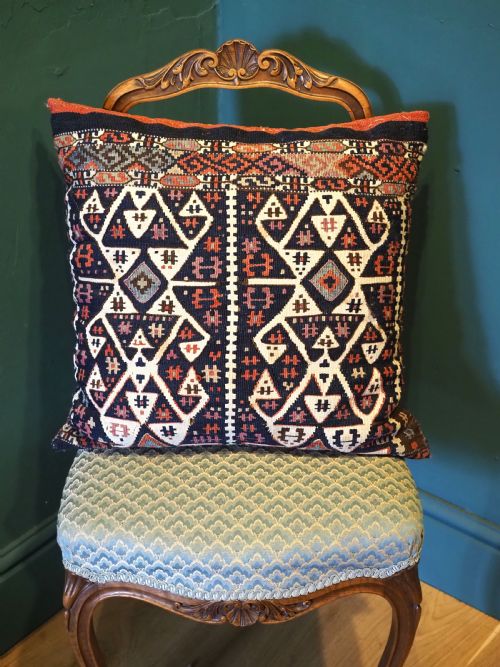
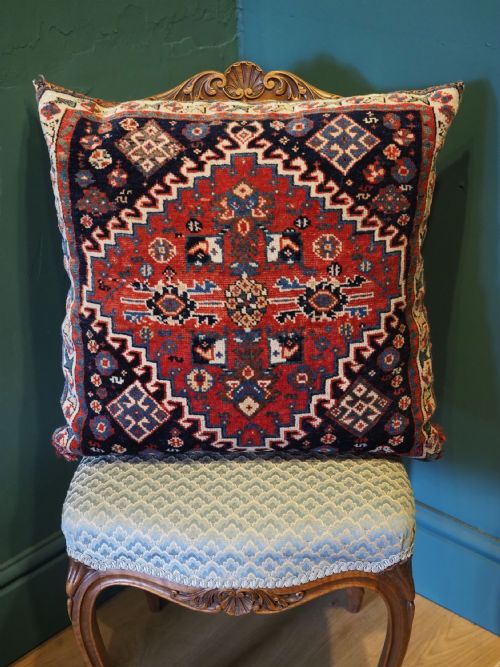
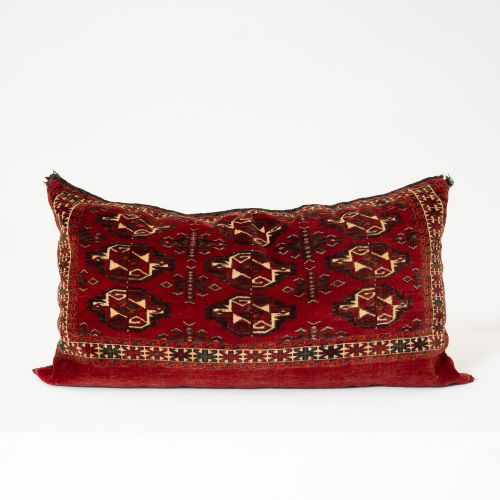


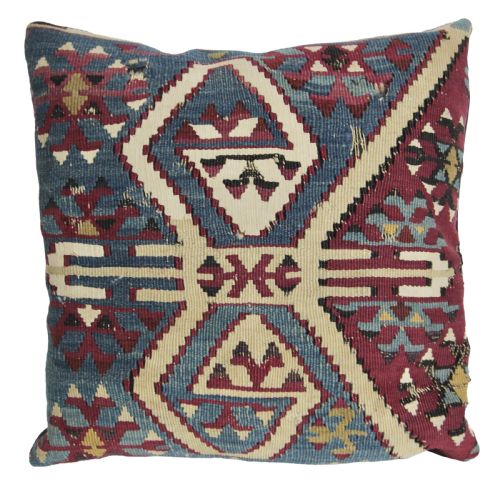
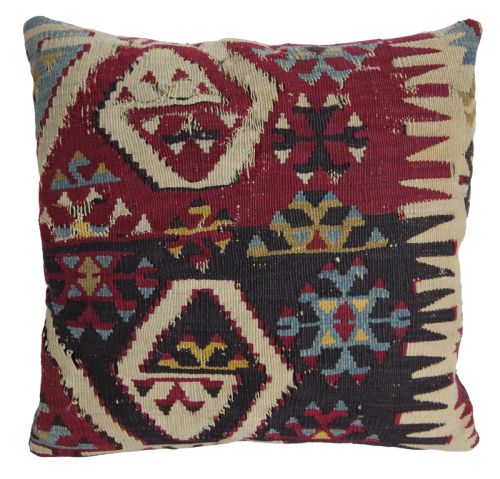


Geometric Oriental Cushion
A geometric oriental cushion brings centuries of tribal weave and nomadic pattern straight into a modern interior.
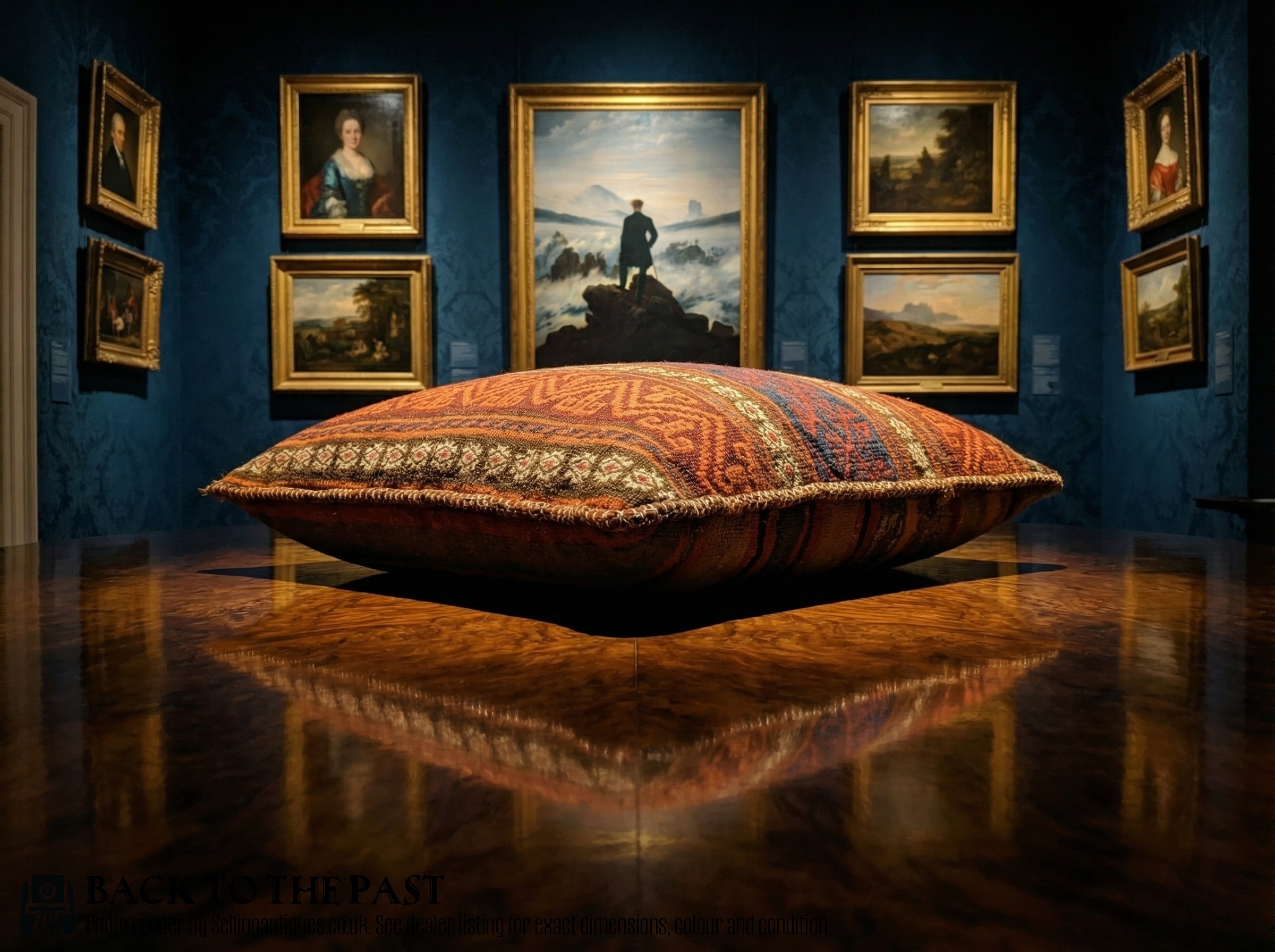
Geometric Oriental Cushion
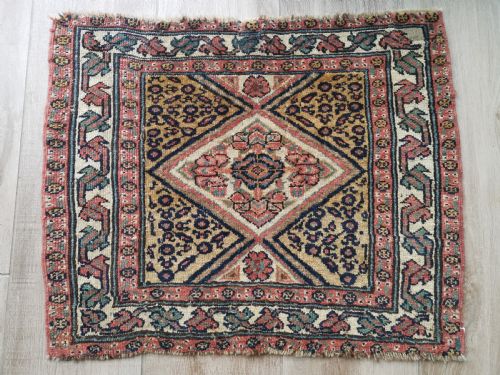
A geometric oriental cushion usually originates from repurposed nomadic and village weavings, transforming old utility items into decorative soft furnishings. When searching for a geometric oriental cushion, collectors encounter items adapted from functional pieces like saddlebags, salt bags, and rug fragments.
The objects on this page span from the mid-nineteenth century through the early twentieth century, capturing a period of traditional tribal production. Most examples take the form of square or rectangular cushions fashioned from durable bag faces and kilim panels.
Origins stretch across Anatolia, Persia, and the Caucasus, reflecting the distinct weaving traditions of groups such as the Qashqai, Baluch, Kurdish, and Turkmen tribes. Each piece bears the structural geometry typical of nomadic craft, translated into a portable format suited for domestic seating.
Materials and construction methods
These textiles rely primarily on wool and hand-spun wool, often paired with cotton foundations for stability during assembly. The spinning process leaves subtle variations in the thickness of the yarn, giving the surface a tactile depth.
Weavers utilised natural dyes to achieve rich colour palettes before the widespread adoption of synthetic alternatives in the late nineteenth century. The resulting tones mature gracefully with age, maintaining harmony across intricate geometric layouts.
Listings feature items originating from the nineteenth and early twentieth centuries, spanning periods from 1850 up to 1920.
Assessing quality in tribal fragments
Quality rests heavily on the crispness of the tribal design and the density of the weave. Tighter knotting and precise geometric execution separate standard village items from exceptionally fine tribal work.
The integrity of the wool and the preservation of the original motifs dictate the overall standing of the piece. Surviving examples with well-maintained backings and clear regional patterns command greater appreciation among serious collectors.
The Geometric Oriental Cushion Glossary
- Bag face
- The decorative front panel of a nomadic storage sack, frequently repurposed into a cushion. These panels display the primary geometric motifs intended for public display in a tent.
- Kilim
- A flat-weave textile produced without pile by tightly interweaving warp and weft strands. This technique creates sharp, geometric colour transitions.
- Chuval
- A large tent storage bag made by Turkmen tribes, often featuring distinctive guls. Fragments of these bags frequently supply the material for large square cushions.
- Torba
- A smaller storage bag traditionally used within a nomadic tent for personal items or utensils. Torba faces provide compact panels rich in tribal symbolism.
- Natural dyes
- Colourants derived from plants, insects, and minerals prior to chemical synthesis. These dyes produce complex, muted hues that age with distinct character.
Geometric Oriental Cushion: Frequently Asked Questions
How do I clean an antique cushion?
Surface dust should be removed gently using a soft brush or low-suction vacuum with a mesh guard.
Professional textile conservators should handle any deeper cleaning to protect fragile wool fibres and natural dyes.
Are these cushions made from old rugs?
Many cushions are constructed from antique bag faces, saddlebags, and kilim fragments rather than whole rugs.
This recycling preserves surviving tribal art by turning damaged or redundant utility items into usable home furnishings.
Which tribes made these textiles?
Production spans numerous nomadic and village groups including the Qashqai, Baluch, Kurdish, Shahsevan, and Turkmen peoples.
Each group employed distinct colour combinations and geometric layouts that help identify their regional origin.
How do I identify the period?
Dating relies on material characteristics, dye types, and structural wear consistent with nineteenth and early twentieth-century production methods.
Hand-spun wool and early natural dye palettes generally point towards the earlier end of this timeframe.