
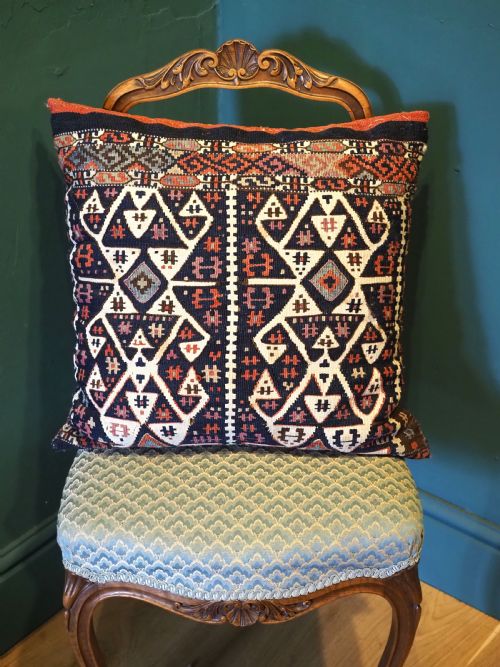
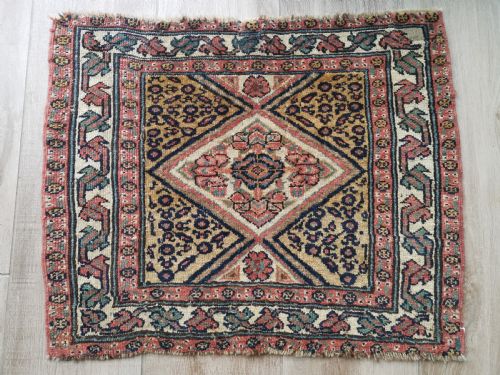
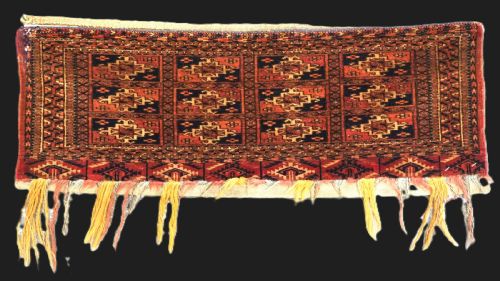


Terracotta Wool Cushion
These terracotta wool cushion pieces bring genuine tribal character into a room, formed from antique saddlebag faces and kilims.
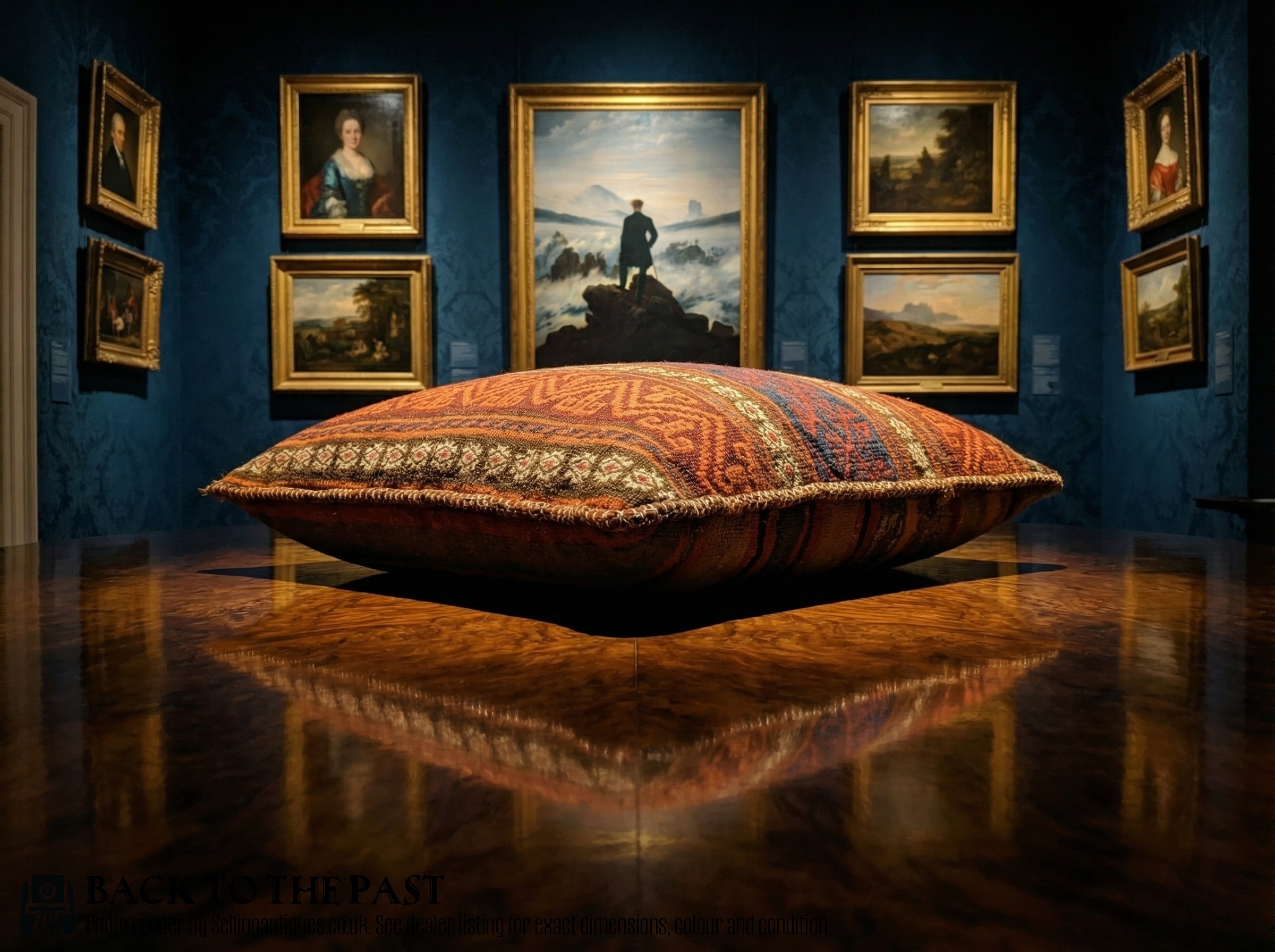
Terracotta Wool Cushion
A terracotta wool cushion represents repurposed tribal textile art, utilising fragments from nineteenth-century Anatolian, Persian, and Central Asian weaving traditions. Buyers encounter these items fashioned from antique bag faces, saddlebags, torbas, and kilims originating between the early nineteenth century and the early twentieth century.
The objects frequently take the form of square or rectangular cushions and pillows constructed from flat-woven or pile rugs. Pieces often incorporate original wool backs, tassels, and traditional tribal motifs rooted in nomadic heritage from regions such as Fars, Konya, and Heriz.
Materials and construction
These textiles rely on wool and hand-spun wool fibres, occasionally paired with cotton elements, dyed using natural dyes. Artisans constructed the original storage bags and kilims using flat-weaving techniques, Soumak work, or pile knots before later conversion into cushion form.
Nomadic weavers utilised durable looping and weaving methods suited for functional saddlebags and torbas, ensuring the surviving fragments retain structural integrity. Many examples preserve their banded weft work designs and traditional structural components alongside newly added or original backing materials.
Current listings feature nineteenth-century materials including wool, cotton, and natural dyes, showcasing Persian Tribal, Anatolian Tribal, and Central Asian Tribal styles.
Distinctions in quality
Quality rests upon the fineness of the weaving, the complexity of the tribal design, and the survival of original components such as backs and tassels. Finer execution appears in tightly knotted bag faces and precise Soumak work featuring distinct bird or dragon motifs.
The depth and nuance of the natural dyes separate superior examples from simpler pieces. Items retaining complete formats from specific nomadic groups command attention for their authentic structure and condition.
The Terracotta Wool Cushion Glossary
- Kilim
- A flat-woven carpet or rug lacking a pile, produced by tightly interweaving warp and weft strands. This technique creates a smooth surface utilised extensively in antique cushions.
- Torba
- A small storage bag produced by Turkmen nomads, frequently displaying characteristic gull motifs and geometric patterns. Surviving faces of these bags form decorative cushion fronts.
- Soumak
- A flat-weave textile technique involving wrapping weft threads around warp threads in a herringbone-like pattern. This method yields a textured and durable decorative face.
- Yastic
- A traditional small Turkish pillow or cushion shaped for lounging, often originating from centres such as Konya. These antique textiles provide authentic proportions for scatter cushions.
- Pushti
- A small Persian mat or rug designed for floor seating, occasionally adapted into cushion formats. They display regional tribal patterns distinct to specific nomadic weavers.
Terracotta Wool Cushion: Frequently Asked Questions
What is a terracotta wool cushion?
These pieces are decorative cushions constructed from authentic nineteenth-century tribal woven fragments, such as saddlebag faces, torbas, and kilims.
They transform historical nomadic textiles originating from Persian, Anatolian, and Central Asian workshops into functional home furnishings.
How were antique tribal bags used?
Nomadic tribes utilised these woven containers for storage inside tents and transport on pack animals during seasonal migrations.
Saddlebags and torbas held personal belongings, household goods, and provisions before later being repurposed as decorative textiles and cushions.
How do I identify different tribal styles?
Distinguishing styles relies on recognising specific geometric motifs, colour palettes, and weaving structures associated with groups like the Shahsavan, Qashqa'i, and Turkmen.
Each region employed distinct border patterns, structural techniques, and natural dye combinations characteristic of their tribal heritage.
How do I care for a textile cushion?
Maintain these wool and natural dye cushions through gentle surface cleaning and occasional airing away from direct sunlight.
Professional textile conservation cleaning protects the historical hand-spun fibres and prevents degradation of the antique materials.