


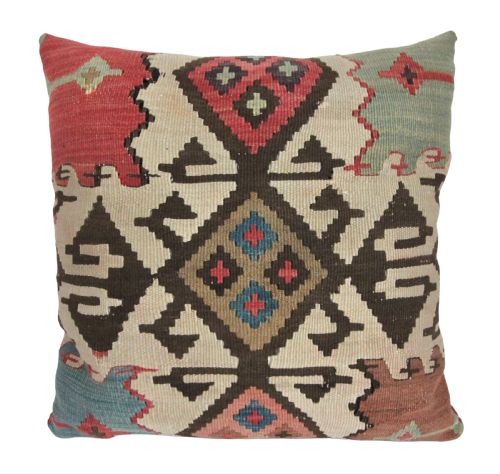


Flat Weave Wool Cushion
These flat weave wool cushion pieces bring genuine tribal character and rich traditional pattern into a room through authentic antique textiles.
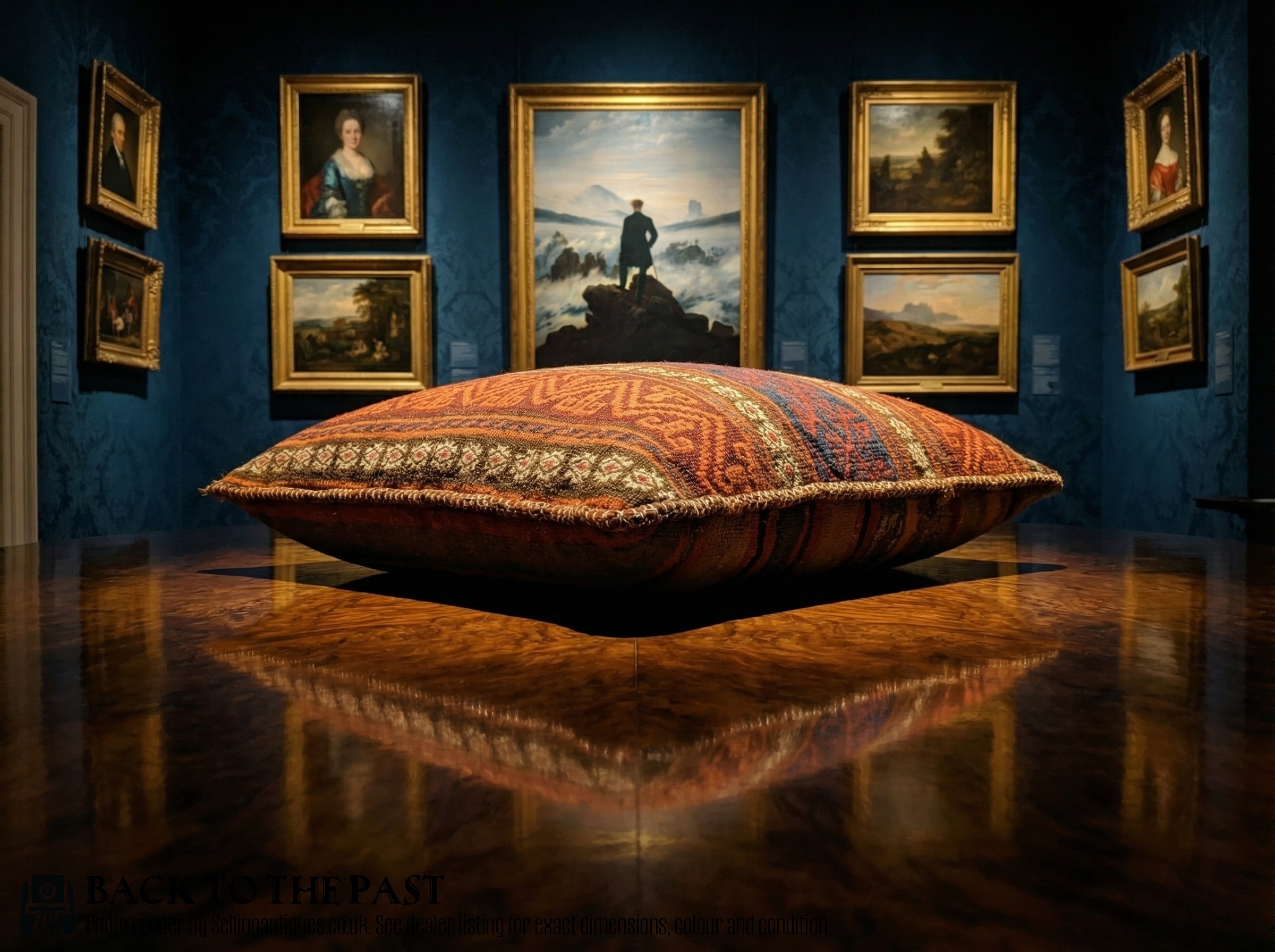
Flat Weave Wool Cushion
A flat weave wool cushion brings tactile warmth and historical textile art directly into daily interiors through repurposed tribal weavings. When you search for a flat weave wool cushion, you are looking at items created from antique bag faces, half-saddlebags, and torbas rather than standard modern soft furnishings.
Most examples found here derive from Anatolian, Shahsevan, and Turkmen tribal traditions spanning the latter half of the nineteenth century and the early twentieth century. These pieces transform nomadic utility items, such as storage sacks and torbas, into functional home accessories complete with period wool backing and tassels.
The aesthetic relies heavily on flat weave techniques where the design emerges through the interlacing of warp and weft threads without a pile. This construction method yields a sturdy, textured surface that reflects the specific regional weaving heritage of Central Asian and Anatolian nomads.
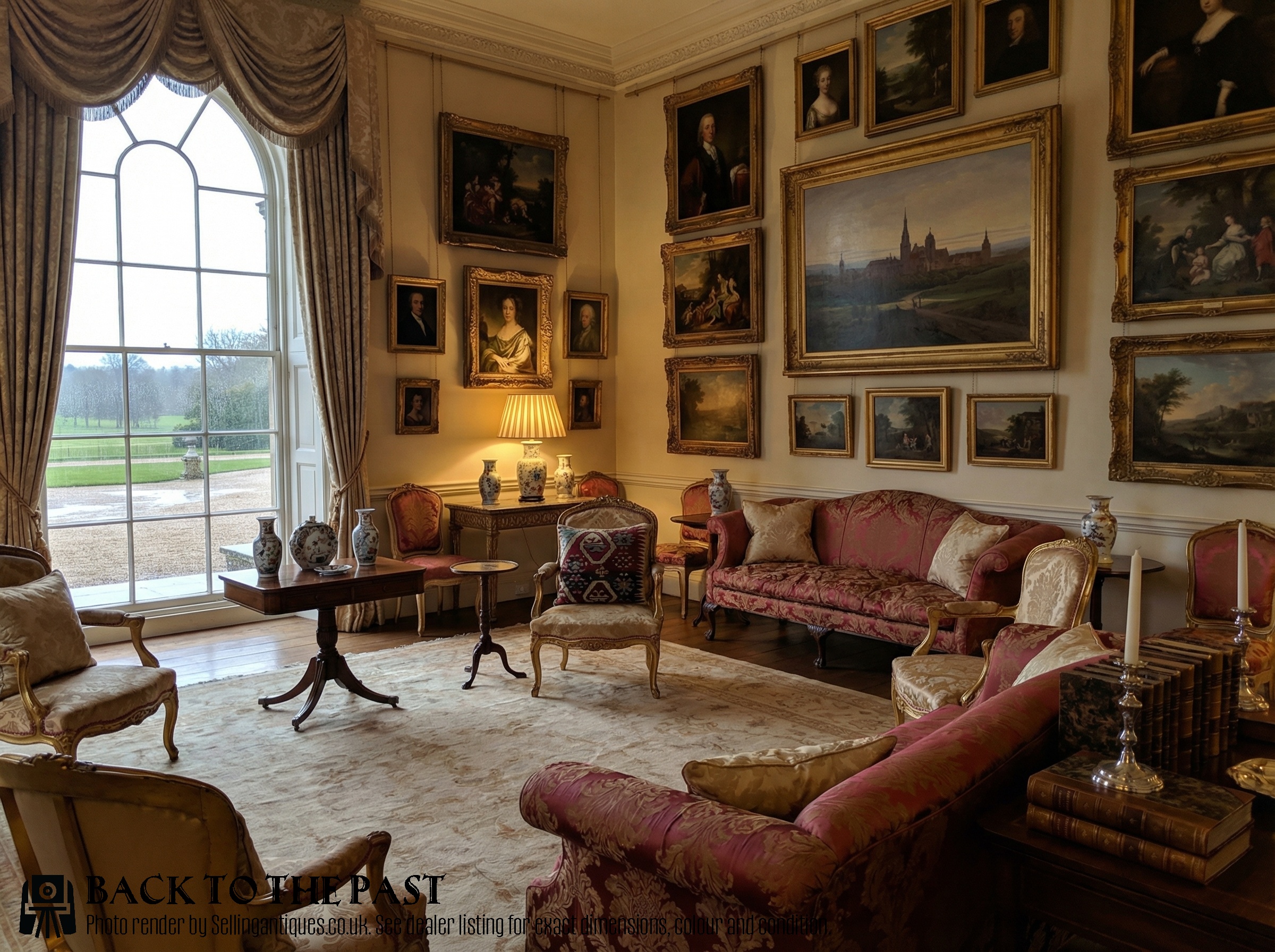
Materials and construction
These textiles utilise hand-spun wool alongside cotton foundations, employing traditional techniques passed down through generations of tribal weavers. The reliance on natural dyes ensures that the colours maintain a rich, organic depth that chemically dyed modern substitutes cannot replicate.
The construction of a flat weave wool cushion depends entirely on flat weave methods, incorporating slit tapestry or related interlocking weft techniques to form geometric and tribal motifs. Artisans finished these utilitarian bag faces and torbas with sturdy wool backs and often added traditional tassels for both decoration and structural integrity.
Nomads wove their life stories into these storage bags, meaning your cushion once kept someone's best blankets safe from dust.
Evaluating quality and authenticity
The distinction between ordinary and exceptional examples rests upon the integrity of the original tribal weaving and the subtlety of the natural dyes. Pieces that retain their full decorative field, early date characteristics, and original structural elements command greater appreciation among collectors.
Condition and conversion craftsmanship also define the standard, particularly how sensitively a historic bag face or torba is adapted into a cushion format. Superior items preserve the vitality of the tribal motifs while utilising appropriate period materials for the backing and finishing.
The Flat Weave Wool Cushion Glossary
- Flat weave
- A textile produced without knotted pile, creating a smooth, tapestry-like surface where the design forms directly from the weft threads.
- Torba
- A small Turkmen storage bag traditionally used inside a nomadic tent, often repurposed today into cushion formats.
- Shahsevan
- A confederation of nomadic tribes from northwestern Iran and Azerbaijan known for distinctive geometric and slit-weave textiles.
- Natural dyes
- Colourants derived from plants, insects, and minerals before the advent of synthetic aniline dyes in the nineteenth century.
- Bag face
- The decorative front panel of a nomadic utilitarian storage sack, frequently salvaged for use as a cushion.
Flat Weave Wool Cushion: Frequently Asked Questions
What is a flat weave wool cushion?
A flat weave wool cushion is a decorative soft furnishing created by repurposing antique nomadic textiles, such as bag faces and torbas, into usable home accessories.
These items combine historic woven art from regions like Anatolia and Central Asia with modern functional padding and backing.
How were these antique textiles used originally?
Nomadic groups utilised the original weavings as practical storage containers for bedding, household goods, or personal belongings inside tents.
Over time, collectors and dealers adapted these durable flat weave panels into cushions to preserve the artistry while allowing daily interaction.
How do I care for a flat weave wool cushion?
Maintain these textiles by gentle vacuuming with a low suction attachment through a protective mesh screen to remove surface dust.
Avoid direct sunlight to prevent natural dye fading and consult a specialist in antique textile conservation for any cleaning.
How can I tell the period of a cushion?
Dating relies on identifying the specific tribal motifs, structural characteristics, and the use of hand-spun wool and natural dye palettes typical of the nineteenth and early twentieth centuries.
Examining the construction methods and regional weaving traits helps place the textile within eras such as the 1850s, 1870s, or 1900s.