
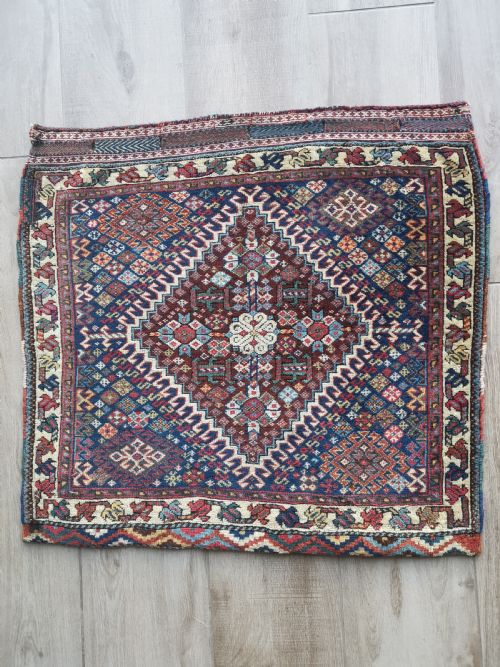
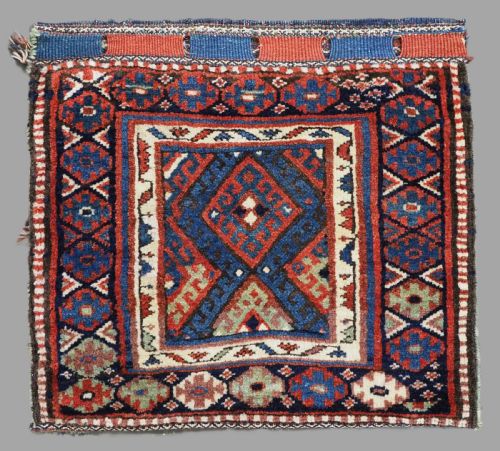

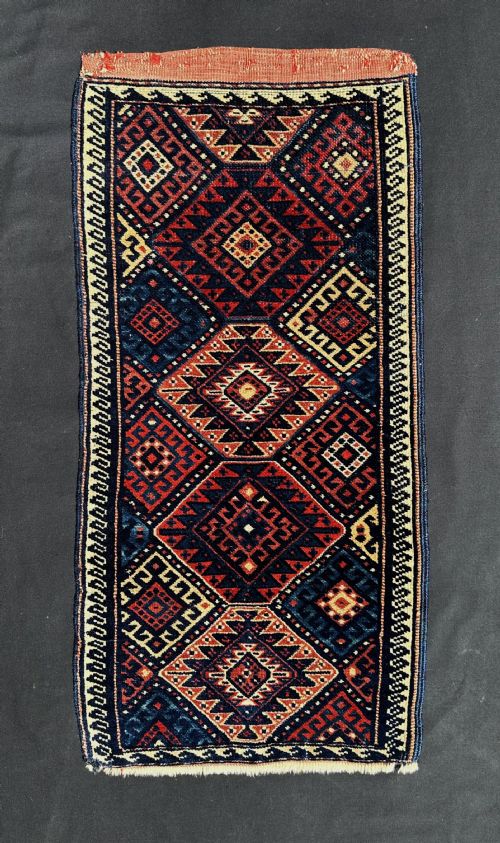


Persian Bag Face Cushion
A persian bag face cushion brings authentic nomadic textile art into a modern interior, offering a dense pile and striking tribal geometry.
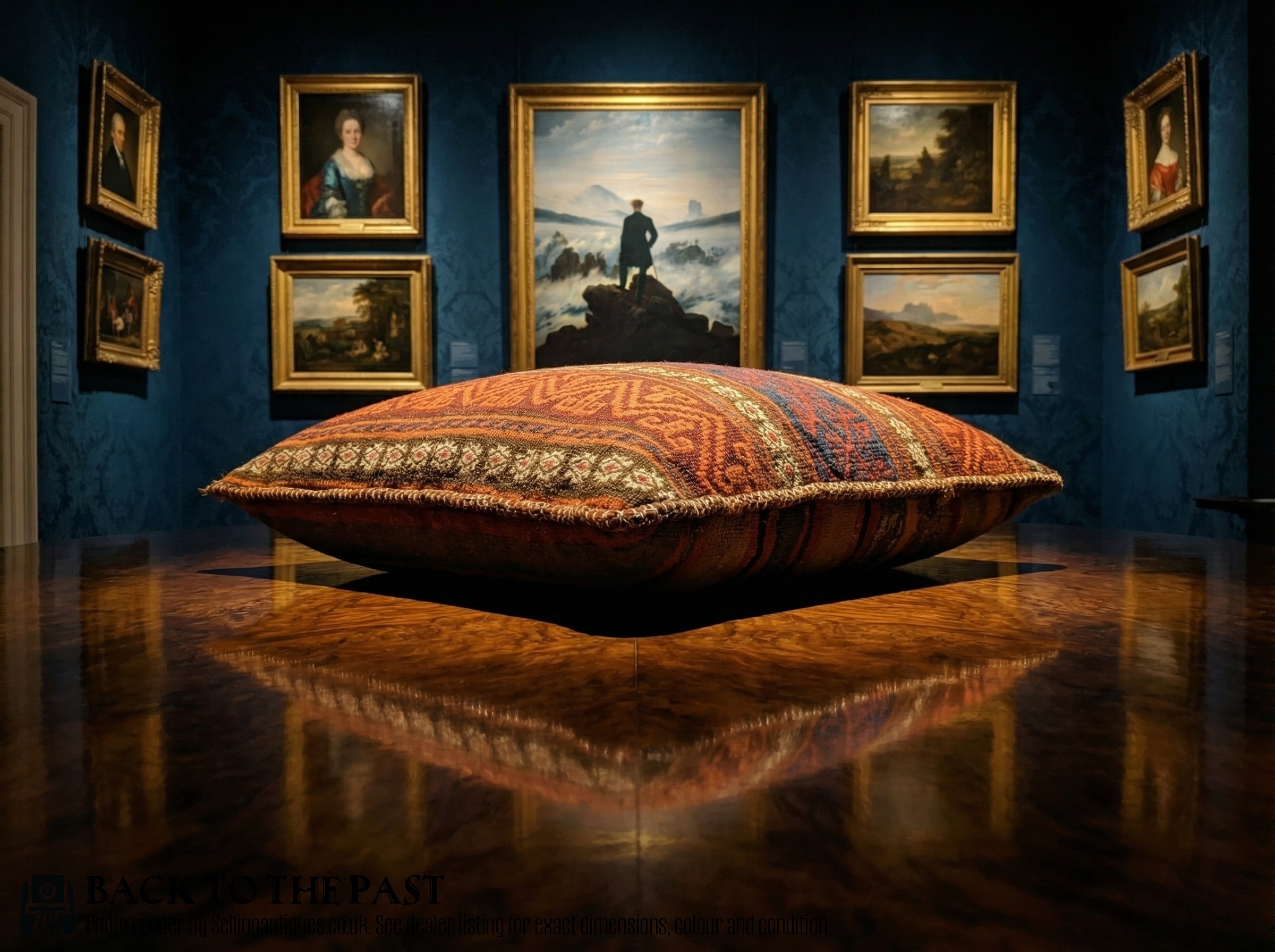
Persian Bag Face Cushion
A persian bag face cushion originates from the functional storage sacks, saddlebags, and grain containers woven by nomadic and tribal confederations across Persia during the nineteenth and early twentieth centuries. When hunters, herders, and villagers settled temporarily or migrated seasonally, they wove heavy-duty receptacles to carry possessions on pack animals, utilising geometric patterns that identified specific tribal groups.
Today, collectors encounter these textiles repurposed as cushions and pillows, formed either from the preserved front panels of larger saddlebags or from complete storage bags retaining their original flat-weave backs. The pieces on this page span from the eighteen-seventies through the nineteen-twenties, reflecting tribal weaving traditions from regions such as Fars, Khorassan, and Luristan.
Buyers seeking a persian bag face cushion engage directly with the distinct visual vocabulary of groups like the Qashqai, Afshar, Shahsavan, and Baluch. These items function as portable heritage, condensing complex cultural motifs into compact decorative squares suitable for contemporary domestic display.
Materials and construction methods
Weavers constructed these textiles predominantly from hand-spun wool, utilising natural vegetable and mineral dyes to achieve rich, saturated tones of indigo, madder, and earth hues. Cotton often appears in the structural foundations or supplementary weft work, providing stability to the heavy pile and flat-weave sections.
Techniques varied by tribe, ranging from deep pile-woven surfaces that displayed intricate boteh and medallion layouts to precise Soumak wrapping methods that produced crisp, pictorial details such as stylized birds and dragons. Artisans integrated structural plain-weave backs and banded weft work to reinforce the edges of storage sacks before their eventual conversion into cushions.
Distinctions in craftsmanship
Quality in these textiles rests upon the handle and depth of the wool, where lustrous, high-lanolin fleeces yield a luminous surface texture that absorbs light differently than commercial yarns. The tightness of the knotting and the precision of the tribal geometry dictate the structural integrity of the piece over time.
The sophistication of the dye palette further separates standard examples from exceptional ones, particularly where natural colour variations and subtleabrash demonstrate the use of traditional dyepots. Additionally, the survival of complete construction elements, such as original flat-weave backs and intact selvedges, preserves the historical context of the object.
The Persian Bag Face Cushion Glossary
- Bag face
- The decorative front panel of a nomadic storage sack or saddlebag, which was separated from its utilitarian back for display or conversion into a cushion.
- Soumak
- A flat-weave technique where coloured weft threads wrap over and under the warp threads in a herringbone pattern, creating a durable, textured surface without a pile.
- Boteh
- A traditional almond-shaped or paisley motif representing a floral spray, cypress tree, or flame, frequently found in tribal weaving across Persia.
- Abrash
- The subtle, accidental variation of colour within a single field of wool, caused by changes in dye batches or hand-spun yarn lots.
- Saddlebag
- A paired set of woven storage containers joined by a central web, designed to be draped across the backs of pack animals during tribal migrations.
Persian Bag Face Cushion: Frequently Asked Questions
What is a bag face cushion?
A bag face cushion is made from the decorative front panel of a nineteenth-century nomadic storage sack or saddlebag, which has been stuffed and backed for modern interior use.
These panels display the distinct geometric patterns and tribal motifs originally woven by Persian nomads for practical transport during seasonal migrations.
How do I identify different tribal styles?
Tribal attribution relies on specific structural techniques, colour palettes, and recurring motifs unique to each regional confederation or province.
For instance, Shahsavan pieces frequently showcase Soumak work with dragons and birds, whereas Qashqai items often feature finely knotted medallion layouts from the Fars region.
Are these cushions made from old bags?
Yes, the textiles used for these cushions originate from authentic nineteenth and early twentieth-century nomadic storage bags, saddlebags, and wheat-sacks.
Many retain their original hand-spun wool and vegetable-dyed surfaces, while some preserve portions of the flat-weave back panels alongside the decorative face.
How should I care for antique wool cushions?
These historical wool textiles require gentle maintenance, such as regular light vacuuming without a rotating brush bar to protect the pile and flat-weave areas.
Keeping them out of direct sunlight prevents natural vegetable dyes from fading, preserving the rich tones achieved by nineteenth-century tribal weavers.