

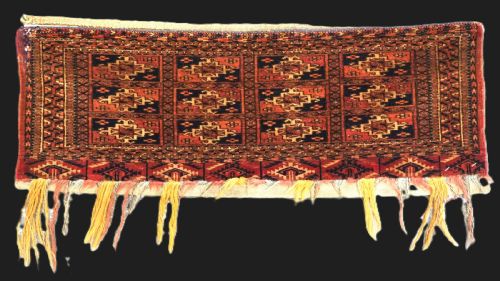


Antique Rug Cushion Cover
These pieces transform antique rug cushion cover examples from nomadic and tribal weavings into durable home furnishings.
Antique Rug Cushion Cover
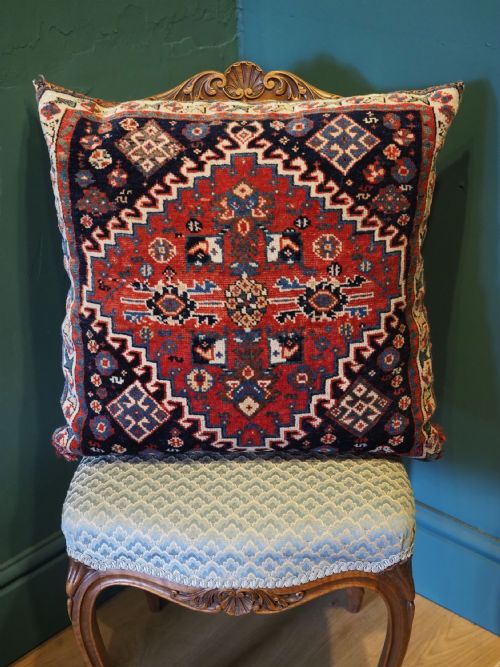
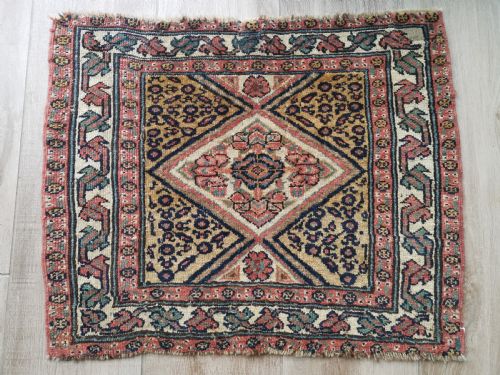
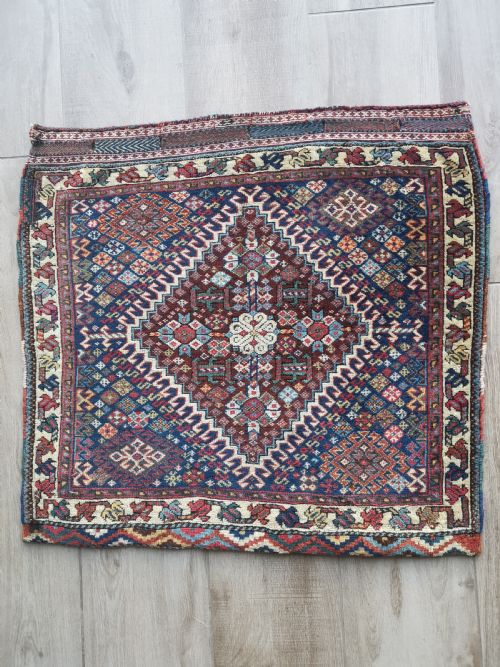
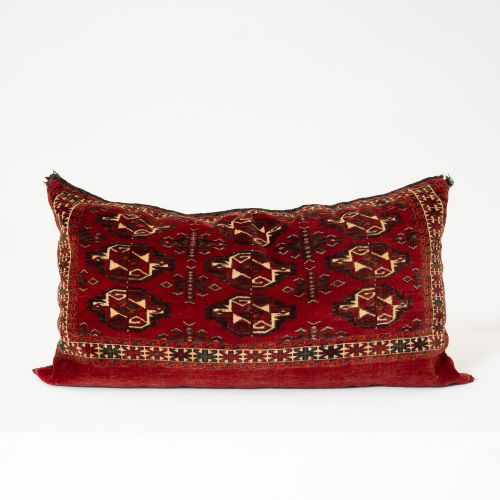
An antique rug cushion cover repurposes historical tribal weavings, predominantly sourced from Persian, Anatolian and Turkmen nomadic traditions. The selection on this page consists largely of converted bag faces, saddlebags, torbas, chuvals and yastics produced during the nineteenth and early twentieth centuries.
Tribal groups such as the Qashqai, Tekke, Baluch and Shahsevan created these utilitarian textiles for daily nomadic storage before they were later adapted into cushions. The resulting items retain the original hand-woven panels on the front, often paired with matching fabric backs to serve contemporary interior needs.
Materials and construction
Makers relied primarily on hand-spun wool and cotton foundations, occasionally incorporating goat hair for durability along the edges and selvedges. The fleece is dense and lanolin-rich, providing a heavy handle suited to domestic use on seating and floors.
Colour comes from natural dyes and vegetable dyes applied to the wool before weaving. These traditional colorants yield deep, varied tones that mellow uniformly over decades of exposure and handling.
Some bag faces still retain the original side loops that once secured them to a camel's flank before they found retirement on a sofa.
Weave density and structural integrity
Quality rests on the tightness of the knotting or flatweave structure, with finer examples displaying exceptional precision in complex tribal motifs like guls, boteh and geometric panels. Tightly packed rows create a firm, resilient face that withstands pressure without distorting the underlying design.
The degree of preservation also determines the standing of a piece, separating intact historical surfaces with minimal restoration from heavily repaired examples. Original integrity in the field rug portion maintains the historical weight of the textile.
The Antique Rug Cushion Cover Glossary
- Bagface
- The decorated front panel of a nomadic storage sack. These panels are frequently preserved and converted into cushions.
- Chuval
- A large Turkmen tent storage bag intended for bedding and household goods. Surviving faces show intricate repeating gul patterns.
- Torba
- A smaller Turkmen storage bag used in nomadic encampments. They were typically hung against tent walls or loaded onto pack animals.
- Yastic
- A traditional Anatolian small pillow or cushion face. These pieces were originally utilised for leaning against inside tribal dwellings.
- Gul
- A primary octagonal medallion used in Turkmen carpet and bag design. Each tribal group repeated distinct variations of this motif.
- Flatweave
- A textile produced by interweaving warp and weft threads without knotted piles. Examples include kilims and soumac structures.
Antique Rug Cushion Cover: Frequently Asked Questions
What is an antique rug cushion cover?
An antique rug cushion cover is a decorative textile made by mounting a historical tribal bag face onto a supportive backing. These items convert nomadic storage containers into functional home accessories.
Peculiarities in size and shape derive from the original utility of the woven bags, which carried possessions across Anatolian, Persian and Central Asian landscapes.
How were these tribal bags originally used?
Nomadic tribes utilised these woven containers for storing grain, clothing, bedding and household possessions inside tents. Their sturdy construction protected contents during seasonal migrations.
Animals carried the larger saddlebags and pack pieces, while smaller torbas and bagfaces hung from interior tent poles to keep belongings off the ground.
How do I care for an antique wool cushion?
Gentle surface cleaning and occasional airing preserve the natural wool fibres and vegetable dyes. Harsh detergents and heavy mechanical agitation cause premature wear to the historical textile.
Professional specialist cleaning is recommended for deep dirt, while routine maintenance involves light vacuuming across the grain with a protective mesh screen.
How can I tell different tribal designs apart?
Tribal designs are distinguished by characteristic colour palettes, structural techniques and repeating motifs unique to specific regions and confederations. Turkmen weavers favoured deep reds and octagonal guls, while Persian groups like the Qashqai employed varied geometric formats and animal forms.
Examining the weave density, wool quality and edge finishes provides further clues to the geographic origins of each piece.