
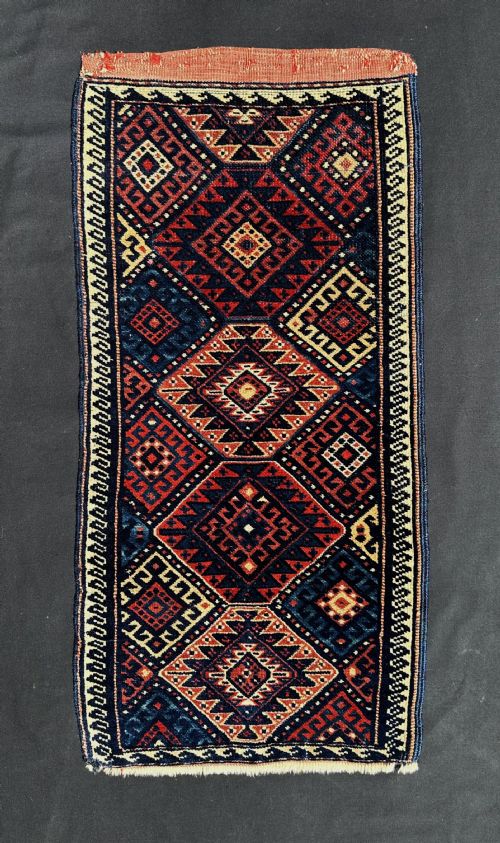


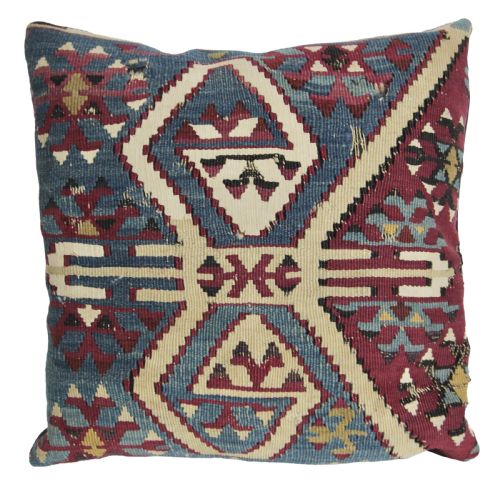

Geometric Wool Pillow
These geometric wool pillow examples bring authentic tribal textile work into modern spaces through enduring patterns and textures.
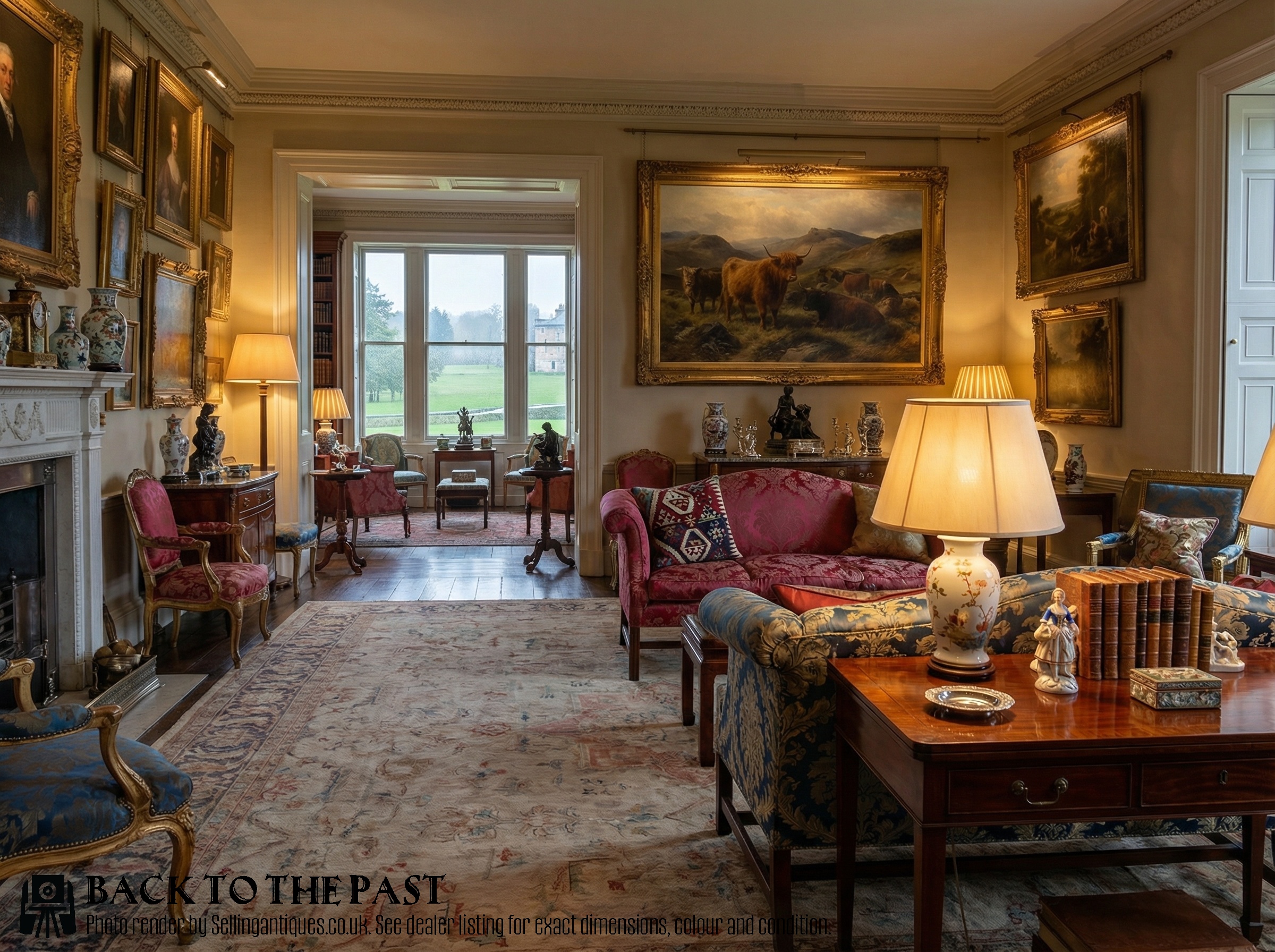
Geometric Wool Pillow
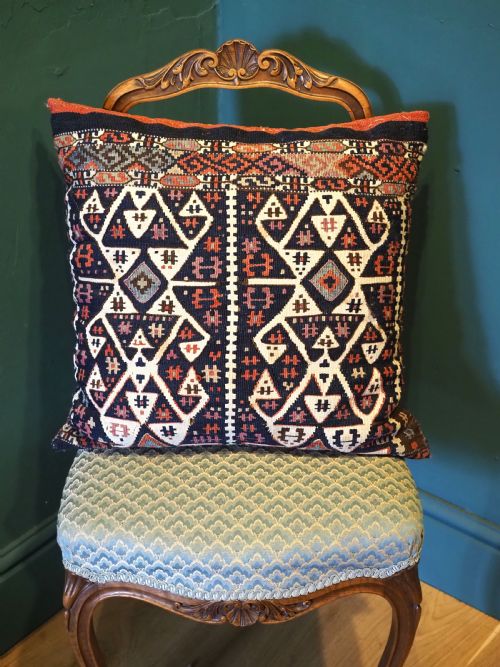
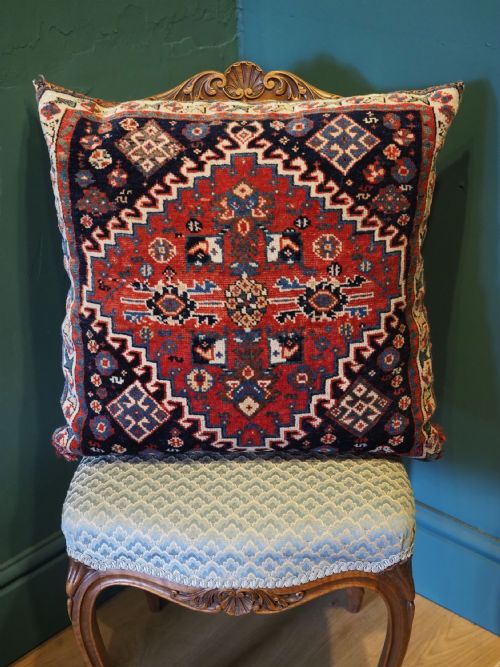
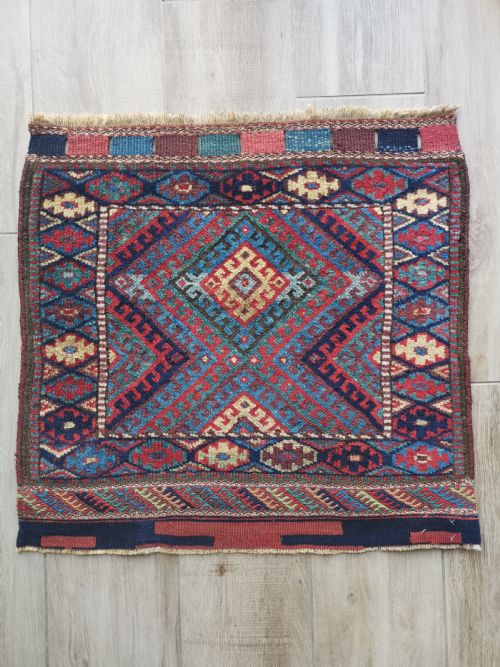
A geometric wool pillow adapts nomadic and tribal textiles into functional soft furnishings for domestic interiors. These pieces frequently derive from repurposed storage sacks, saddlebags, and rug fragments created by various regional weavers.
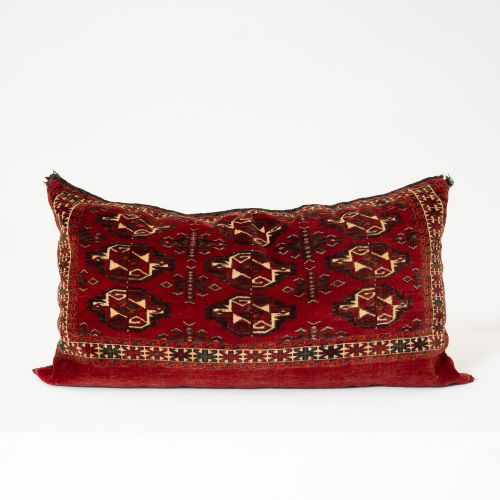
The selection here draws primarily upon nineteenth and early twentieth century examples originating from Anatolian, Persian, and Turkmen traditions. Buyers will encounter numerous kilim cushions alongside specific tribal bag faces adapted for cushion use.
Regional styles span Anatolian tribal, Kurdish, Qashqai, and Baluch aesthetics, alongside Scandinavian folk art embroidery. Each piece reflects the distinct geometric vocabulary of its weaving community.
How they were made
Makers utilised hand-spun wool and cotton yarns dyed with natural substances to create durable, flat-woven or embroidered textile surfaces. These materials provided the structural strength required for daily nomadic utility before later conversion into cushions.
Weaving techniques encompass traditional kilim flatweave construction and detailed embroidery on linen or wool foundations. Artisans arranged geometric motifs through precise structural counting and colour placement.
Listings feature periods spanning from 1850 through 1920, incorporating wool, cotton, and linen materials across diverse tribal traditions.
What varies in quality
Quality depends upon the tightness of the weave, the clarity of the geometric pattern, and the complexity of the natural dye palette. Tightly packed wool foundations endure heavy use while maintaining crisp motif definition.
The integrity of the original tribal textile fragment dictates the visual success of the finished cushion. Pieces retaining their early structural edges and complete central medallions command greater interest among collectors.
The Geometric Wool Pillow Glossary
- Kilim
- A flat-woven carpet or rug produced without a pile, forming geometric designs through interlocking weft threads. This technique creates lightweight yet durable textiles suited for cushions and floor coverings.
- Bagface
- The decorative front panel of a nomadic storage sack or saddlebag. These panels display the primary tribal motifs and are frequently converted into pillows.
- Chuval
- A large tent storage bag made by Turkmen tribes, often featuring symmetrical gul patterns. Surviving fragments provide striking geometric cushion covers.
- Balisht
- A traditional Persian term for a pillow or small sleeping bag. Balisht-faces show refined regional weaving executed by nomadic groups.
Geometric Wool Pillow: Frequently Asked Questions
How do I care for my pillow?
Care requires gentle treatment appropriate for antique wool and natural dyes, typically involving professional dry cleaning or careful surface dusting.
Avoiding direct sunlight preserves the rich colours derived from natural dyeing processes over decades of use.
Where do these textiles originate?
The textiles originate from traditional weaving regions including Anatolia, Persia, and Central Asia, created by groups such as the Qashqai, Kurdish, and Baluch communities.
Specific examples also include Scandinavian folk art embroidery from the mid-nineteenth century.
How are periods identified?
Periods are determined by examining the weave structure, natural dye variations, and traditional tribal motifs characteristic of specific decades between 1850 and 1920.
Structural details and regional wool characteristics help specialists place pieces within the nineteenth or early twentieth century.